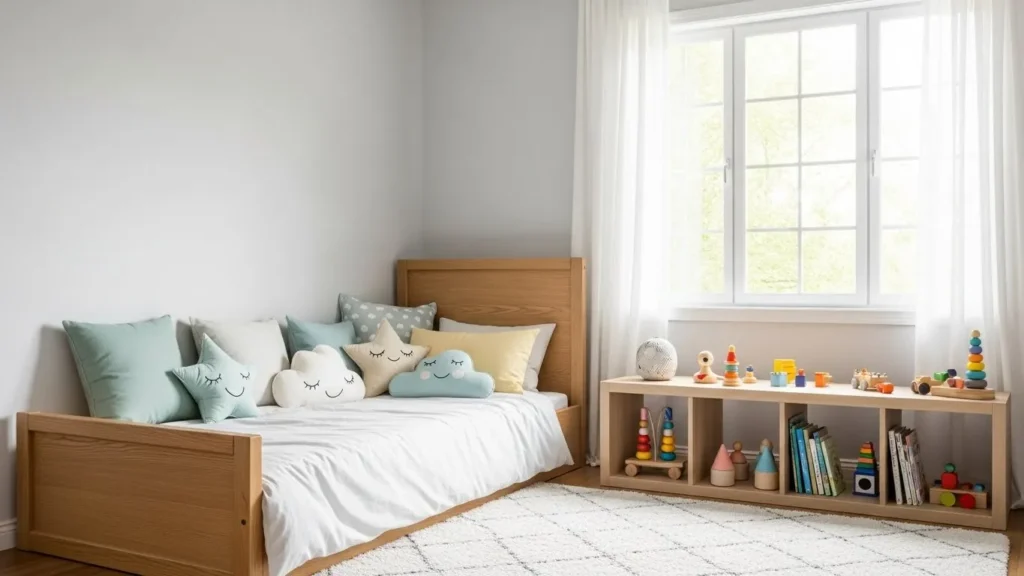
Kids grow fast—and their tastes change even faster. One year it’s dinosaurs everywhere, the next it’s space, art, or cozy reading corners. The trick is creating a room that feels fun now without locking you into a total redesign every couple of years. With a few smart choices, you can design a space that adapts as your child grows.
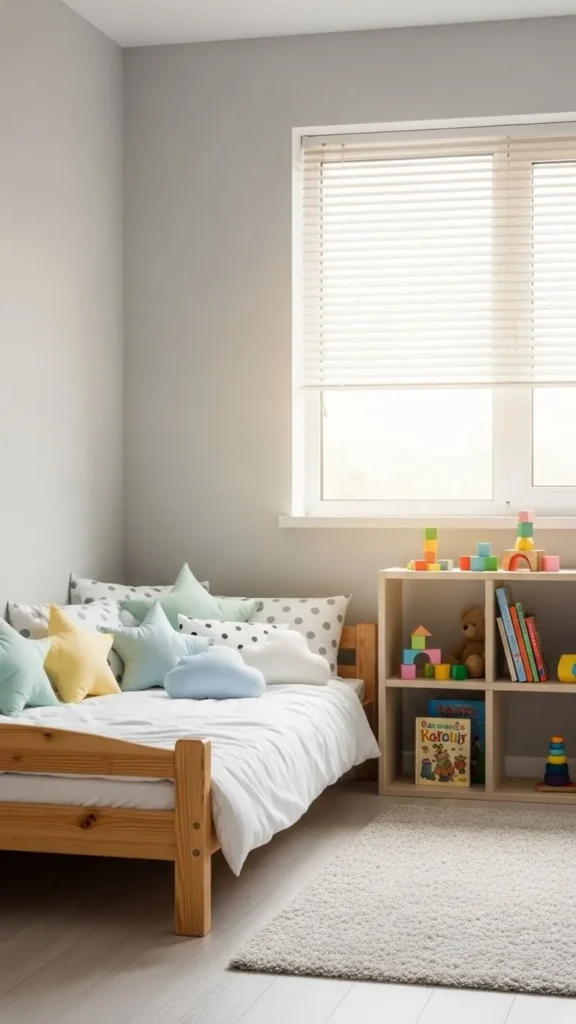
Below are practical, budget-friendly ideas to help you decorate a kids’ room that evolves beautifully from toddler years to teens.
Start With a Neutral Foundation
The easiest way to future-proof a kids’ room is to keep the basics simple. Walls, floors, and large furniture pieces set the tone—and they’re the hardest to change later.
Think of the room like a blank canvas.
- Choose neutral wall colors like warm white, light gray, beige, or soft sage
- Stick with classic flooring (wood tones or simple rugs)
- Invest in a timeless bed frame or dresser that won’t feel “babyish” later
Neutral doesn’t mean boring. It means flexible. You can layer in personality through smaller items that are easy to swap as interests change.
Use Removable Decor for Big Personality
Instead of painting murals or committing to themed furniture, rely on decor that’s easy to update.
Wall decals, posters, and framed art can change with a single afternoon refresh.
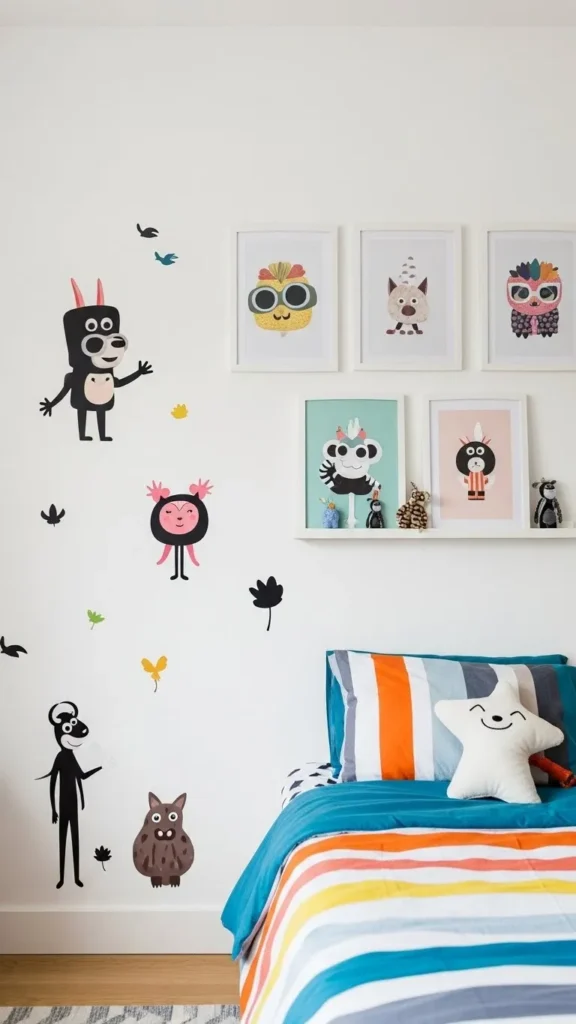
Easy-to-switch ideas include:
- Removable wall decals
- Peel-and-stick wallpaper on one accent wall
- Framed art that can be rotated seasonally
- Clip rails or cork boards for drawings and photos
This approach lets kids express who they are right now—without permanent changes.
Choose Furniture That Adapts Over Time
Furniture that grows with your child saves money and space in the long run.
Look for pieces that serve more than one purpose or can be adjusted as needs change.
- Convertible cribs that become toddler beds
- Adjustable desks that work for crafts, homework, and later studying
- Storage benches that double as seating
- Modular shelving that can be rearranged
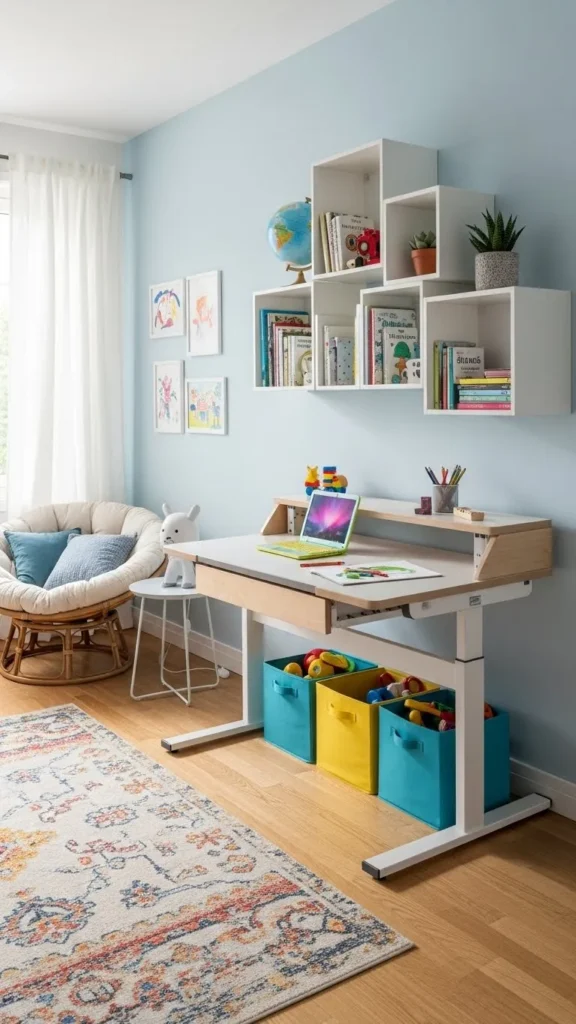
If possible, avoid character-shaped furniture. Simple silhouettes age far better and can be styled up or down with accessories.
Let Textiles Do the Talking
Textiles are where you can have the most fun—and change things often.
Bedding, rugs, curtains, and pillows instantly set the mood of a room.
- Swap themed bedding for solid colors as kids grow
- Use layered rugs to adjust style and comfort
- Add throw pillows in favorite colors or patterns
- Choose washable fabrics for real-life messes
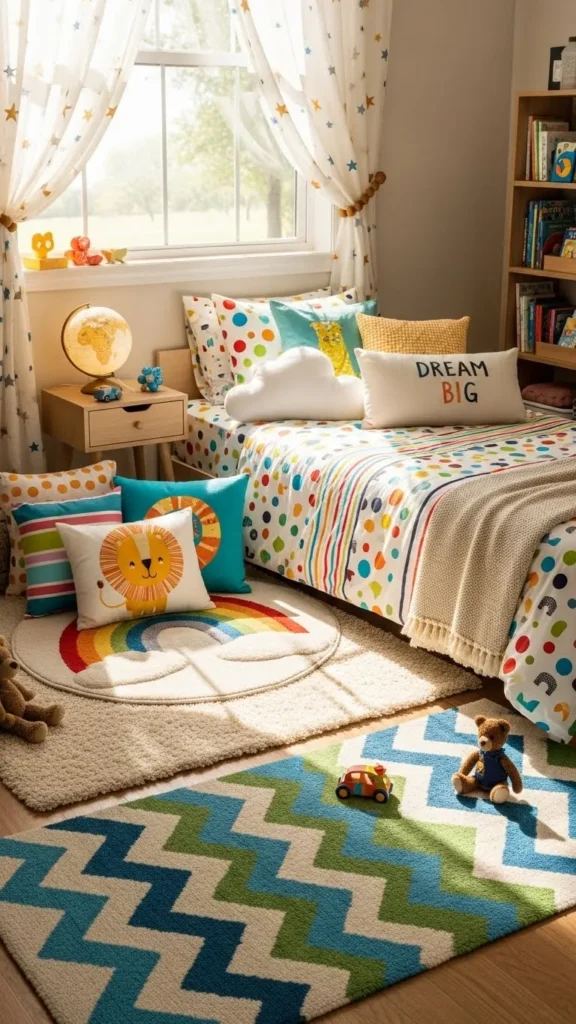
When interests change, you can refresh the whole room just by changing fabrics.
Create Zones Instead of Themes
Instead of decorating around a single theme, divide the room into zones. This makes the space more functional—and easier to update.
Common zones include:
- Sleep zone with calming colors
- Play or creative zone with open floor space
- Reading nook with soft lighting
- Study zone for school-age kids
As your child grows, zones can shift. A play area might become a homework station. A reading nook can turn into a music corner.
This flexible layout helps the room grow naturally with your child’s routines.
Make Storage Simple and Visible
Good storage keeps rooms calm and makes cleanup easier for kids of all ages.
Open storage encourages independence and helps kids learn organization early.
- Clear bins for toys and supplies
- Low shelves kids can reach on their own
- Labeled baskets for quick cleanup
- Closet systems that adjust over time
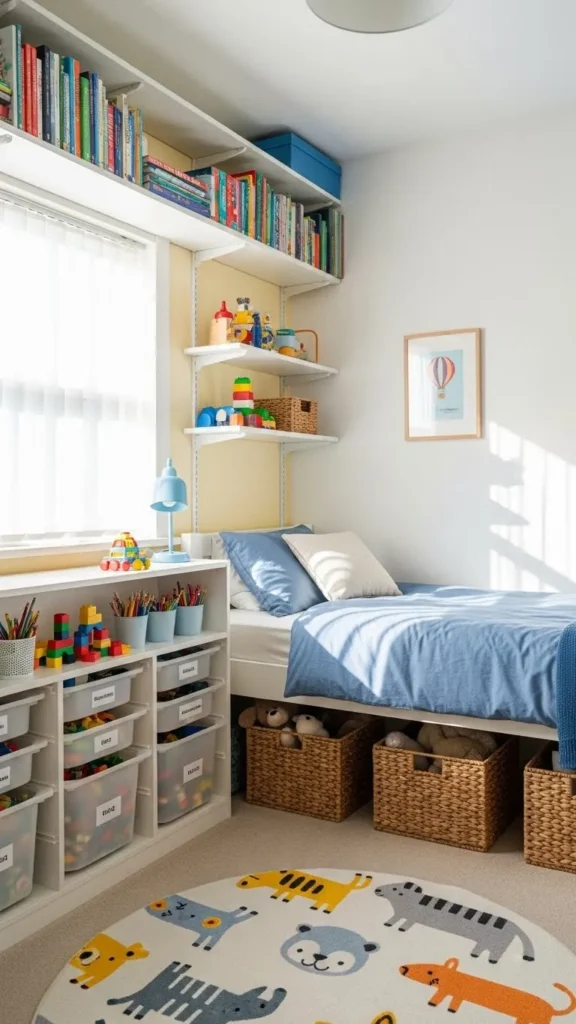
As kids get older, swap toy bins for book storage, hobby supplies, or display shelves.
Let Kids Have a Say (Within Limits)
A room should feel like theirs. Giving kids some choices helps them feel proud of their space.
Offer controlled options instead of full control:
- Choose between two wall art styles
- Pick bedding colors from a curated palette
- Let them help arrange shelves or displays
This balance keeps the room cohesive while still reflecting your child’s personality.
Think Long-Term With Lighting
Lighting often gets overlooked, but it plays a big role in how a room feels over time.
Layered lighting works best:
- Soft overhead light for general use
- A reading lamp by the bed
- A desk lamp for schoolwork
Choose simple fixtures that don’t lean too young. Lighting is one detail kids rarely outgrow when done right.
Final Takeaway
Designing a kids’ room that grows with them is all about flexibility. Start with neutral basics, invest in adaptable furniture, and let personality shine through decor that’s easy to change.
Small updates over time beat full room makeovers every year.
Save this guide for later and use it as your go-to checklist the next time your child’s style starts to change.