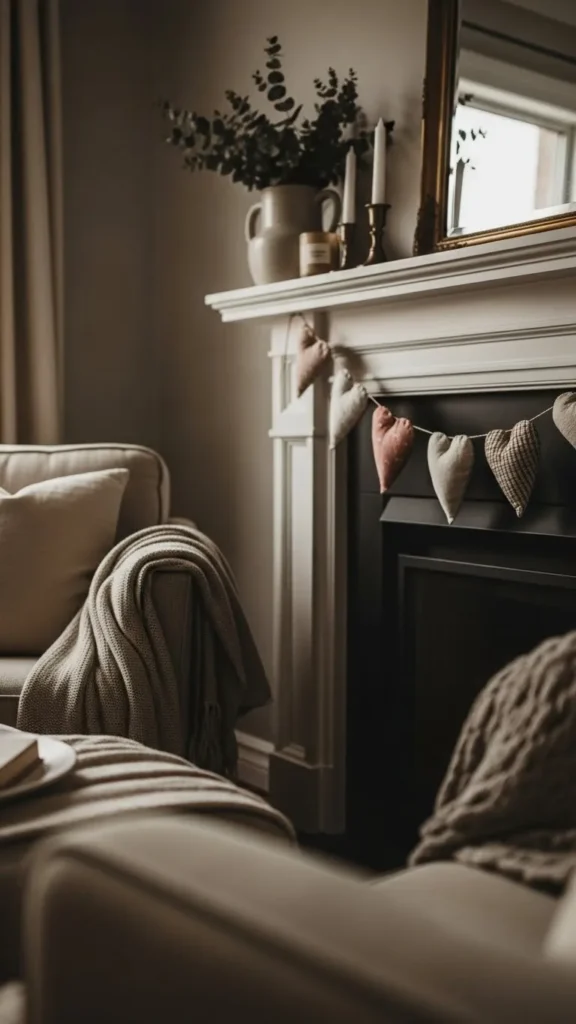
Soft heart garlands bring warmth, comfort, and a gentle decorative touch to everyday spaces. They work well for seasonal décor, cozy corners, celebrations, or simple home styling. This guide focuses on easy, affordable ideas using fabric, yarn, felt, paper, and natural textures. Each option keeps things practical, beginner-friendly, and budget-aware, while still feeling thoughtful and inviting.
1. Felt Heart Garland With Neutral Layers
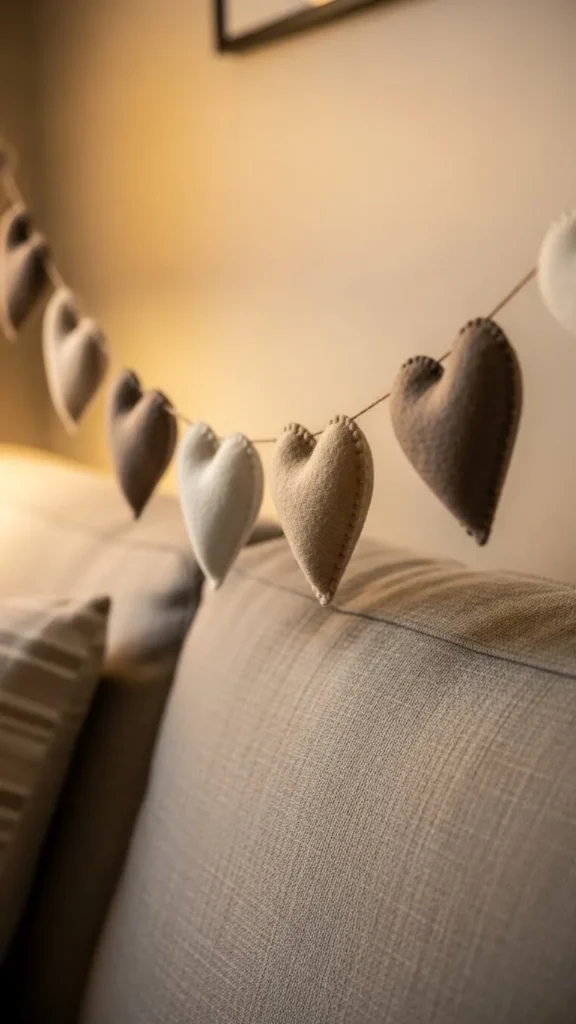
Felt hearts are simple to cut and forgiving for beginners. Neutral shades help the garland blend into many rooms without feeling seasonal. Use craft felt sheets, scissors, and twine. Cut hearts in slightly varied sizes to keep the strand relaxed rather than stiff.
Stitch or glue two felt pieces together for light padding. A thin layer of cotton batting adds softness without bulk. Space the hearts evenly or cluster them in pairs for a relaxed look.
This style works well above couches, shelves, or windows. Budget tip: felt sheets are inexpensive, and leftovers store easily for later projects. If sewing feels intimidating, fabric glue still holds well for indoor décor. Keep the color range tight for a calm, cozy finish.
2. Yarn-Wrapped Heart Garland
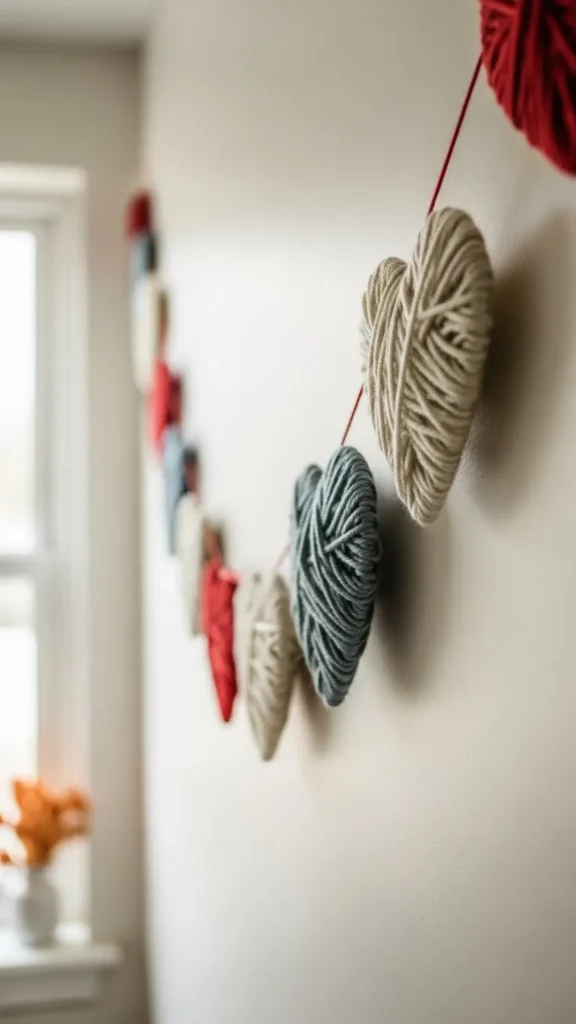
Yarn-wrapped hearts bring texture without complex steps. Cut heart shapes from cardboard or thin foam board. Wrap yarn around each shape, changing direction often so the base stays hidden.
Soft yarns feel comforting and work well in cooler months. Neutral or dusty tones keep the look calm. Secure the ends with glue on the back.
Thread the finished hearts onto string or twine. This garland feels light yet textured, making it ideal for bedroom walls or reading corners. Budget tip: use leftover yarn from other projects. Even small amounts go a long way with this method.
3. Linen Fabric Heart Garland
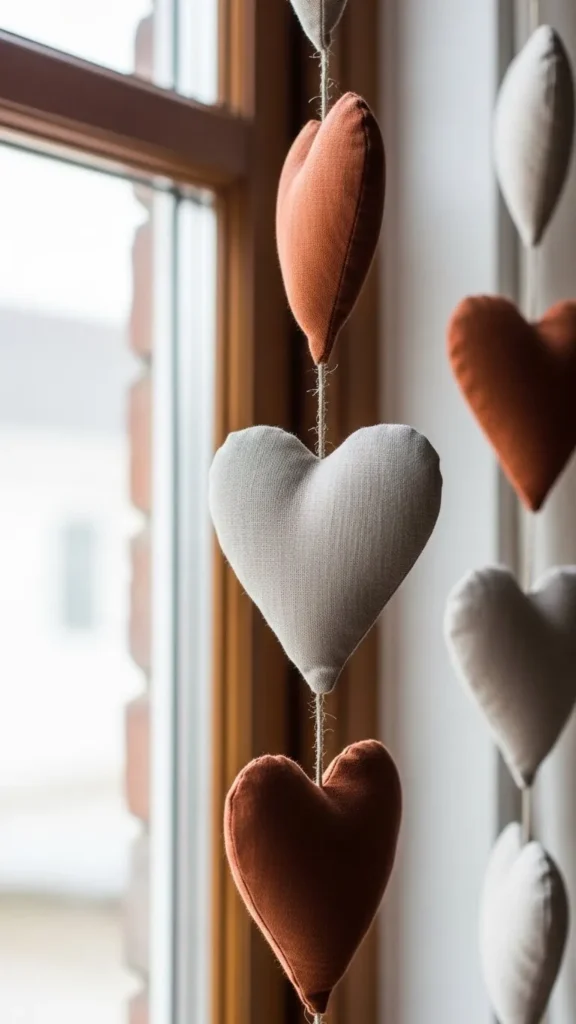
Linen fabric adds a relaxed, lived-in feel. Cut hearts slightly oversized to allow for seams. Stitch two pieces together, leaving a small opening for turning.
Lightly stuff with cotton filling. The result looks soft without appearing puffy. Linen wrinkles add charm rather than distraction.
Hang the garland with simple string or ribbon. This style fits well in kitchens, bedrooms, or entryways. Budget tip: repurpose old linen napkins or table runners instead of buying new fabric.
4. Knit Heart Garland
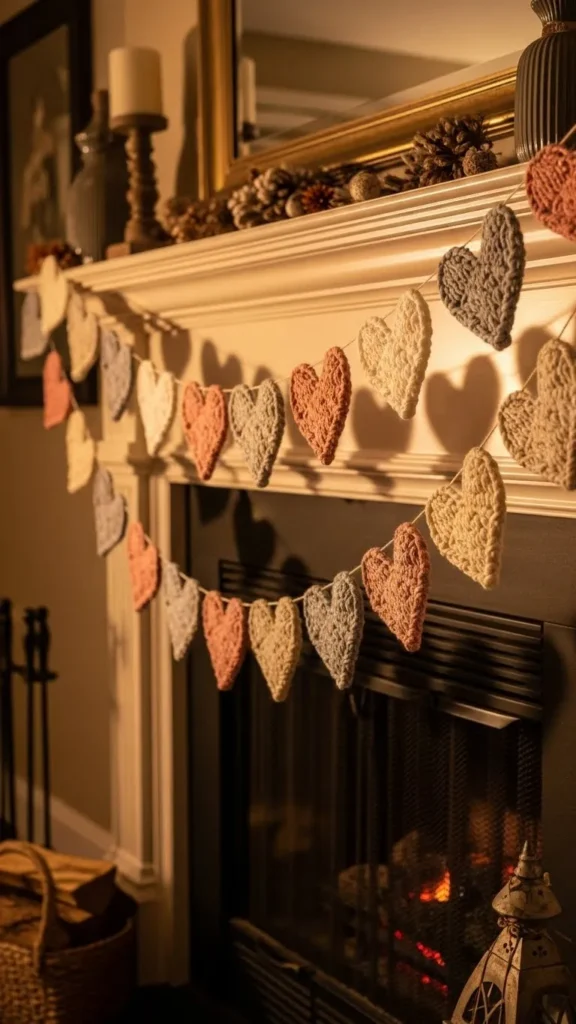
Small knit hearts add warmth and hand-crafted charm. Use simple patterns suitable for beginners. Light stuffing helps them keep shape.
Choose yarn that feels soft against the skin. Chunky yarns create a relaxed look with fewer stitches. String the hearts together once finished.
This option works well for winter décor or cozy seasonal displays. Budget tip: knit with leftover yarn ends combined for subtle color variation.
5. Cotton Fabric Scrap Garland
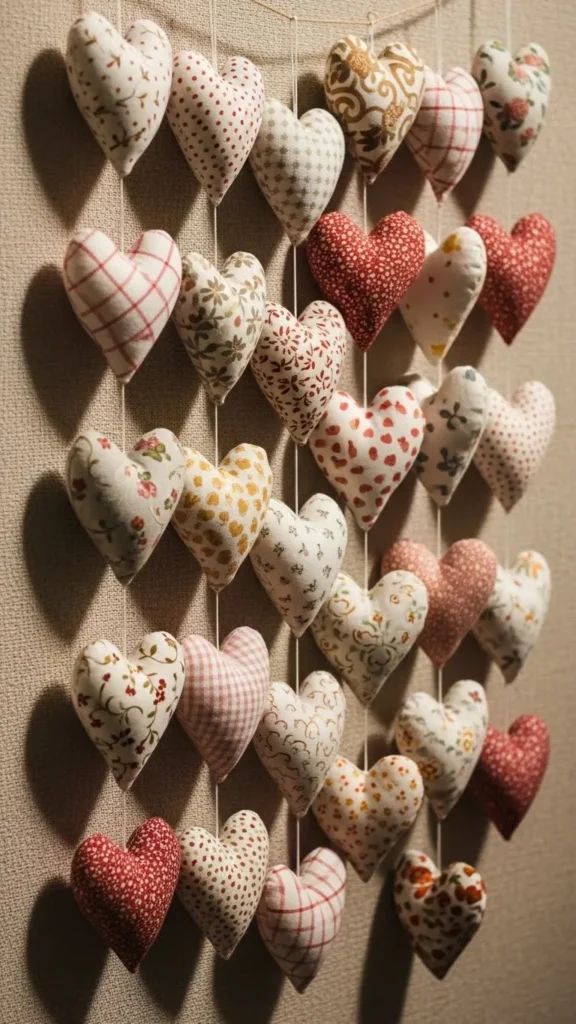
Fabric scraps turn into something useful with heart garlands. Mix small prints with solids for a casual feel. Keep the color palette soft to avoid visual clutter.
Cut hearts freehand for an organic look. Sew or glue layers together. Slight size differences make the strand feel handmade.
Hang across shelves or peg rails. Budget tip: this project works well with leftover quilting fabric or worn clothing pieces.
6. Wool Felt Puffy Hearts
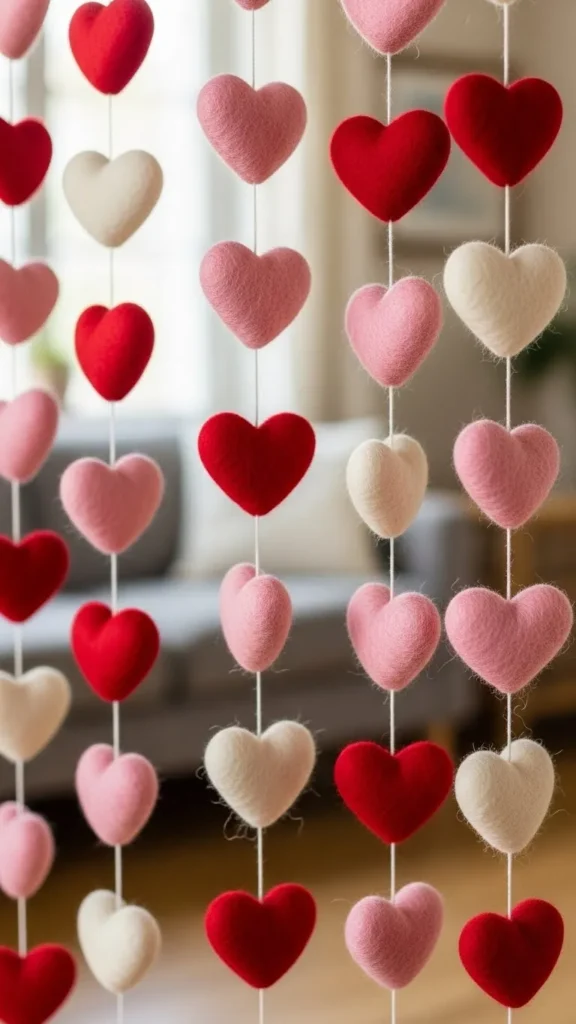
Wool felt offers thickness and softness in one material. Stitch around the edges with visible thread for charm. Add light stuffing before closing.
These hearts hold shape well and last over time. Use embroidery floss for contrast stitching if desired.
Hang evenly spaced for a clean look. Budget tip: small felt sheets are often sold in multipacks, perfect for this project.
7. Crochet Heart Garland
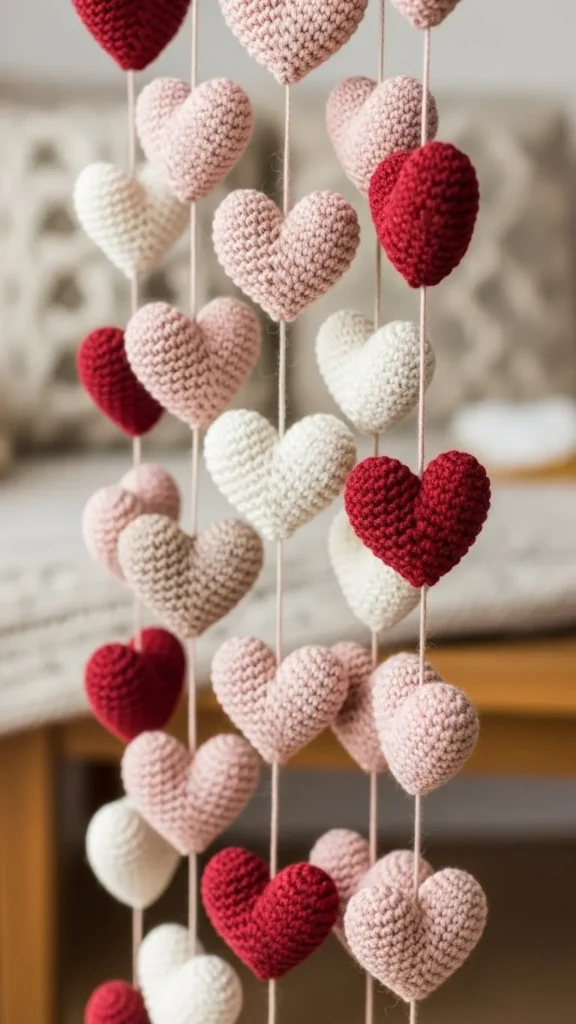
Crochet hearts feel soft and flexible. Simple patterns keep the process approachable. Blocking the hearts helps them lie flat.
Choose gentle colors for everyday use. Attach hearts with small loops or sew directly onto string.
This garland suits nursery walls or cozy craft rooms. Budget tip: crochet hearts use minimal yarn, making them cost-friendly.
8. Muslin Heart Garland
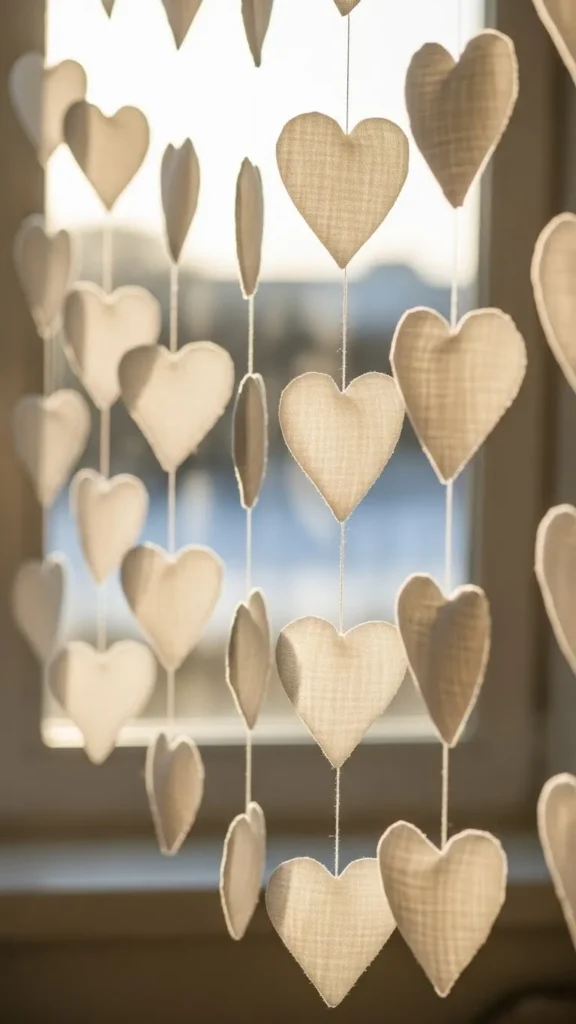
Muslin creates an airy, relaxed feel. Cut double layers and sew loosely. Light stuffing keeps the hearts soft and slightly slouchy.
Muslin pairs well with wood beads or cotton string. This garland works nicely in bright rooms.
Budget tip: muslin is affordable and often sold by the yard, making it practical for larger projects.
9. Paper-With-Fabric Heart Garland
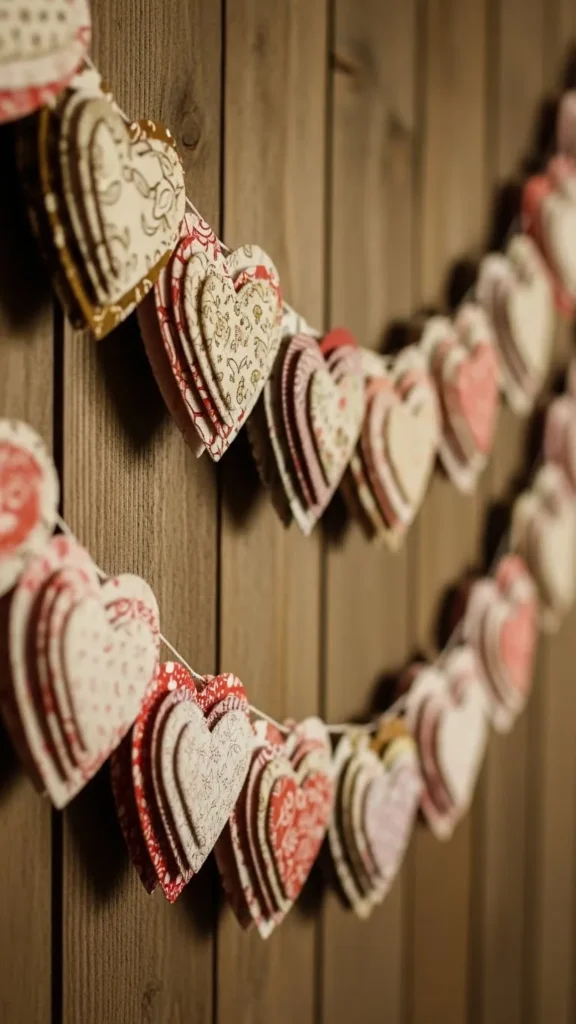
Layering paper with fabric adds contrast. Use sturdy cardstock as a base and glue fabric on top. Trim edges neatly.
This approach keeps costs low while still adding softness through texture. Hang with twine or ribbon.
Budget tip: reuse wrapping paper or book pages for the base layer.
10. Burlap and Cotton Heart Garland
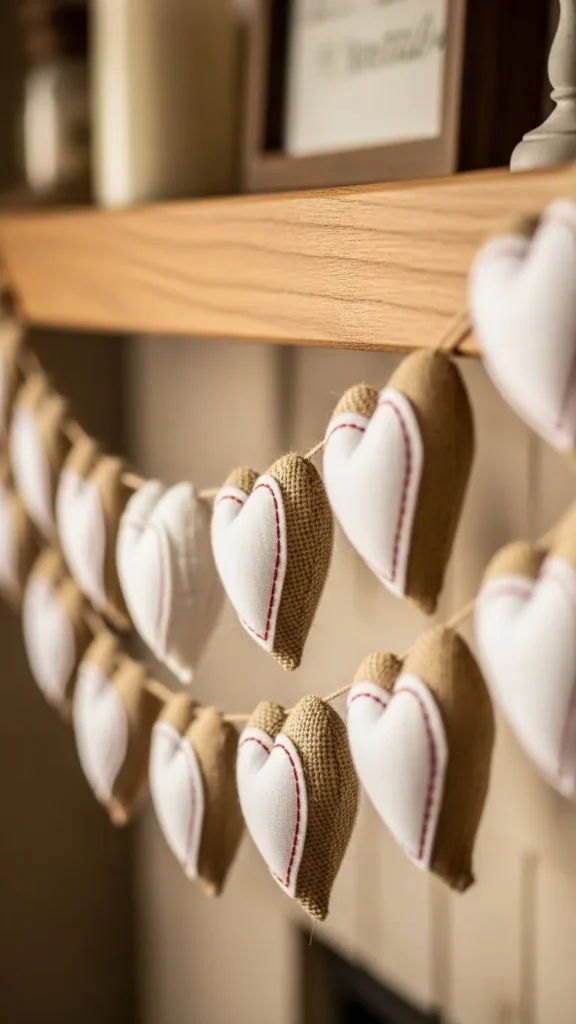
Burlap adds structure, while cotton softens the look. Line burlap hearts with fabric backing to prevent fraying.
Keep shapes simple and evenly spaced. This garland suits rustic or farmhouse spaces.
Budget tip: small burlap pieces often come from gift bags or packaging.
11. Stuffed Jersey Fabric Hearts

Jersey fabric stretches and feels soft to the touch. Cut slightly larger hearts to allow for shrinkage while stuffing.
These hearts drape gently and feel relaxed. They suit casual spaces well.
Budget tip: old t-shirts make excellent jersey material.
12. Lace-Trimmed Heart Garland
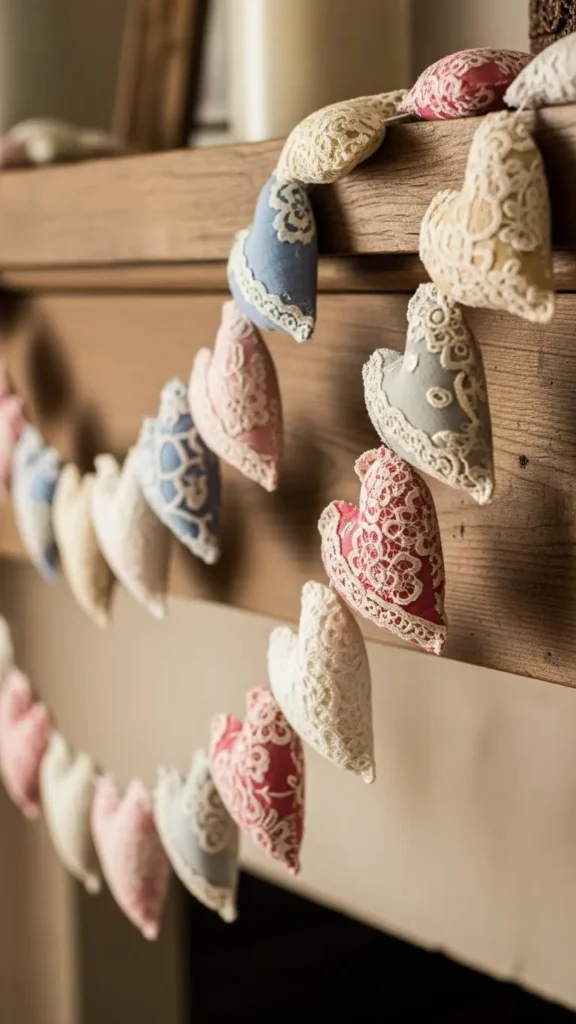
Lace adds gentle detail without feeling busy. Use it as edging or overlay. Keep heart shapes simple.
This style works well for bedrooms or soft décor moments. Budget tip: reuse lace from old garments.
13. Quilted Heart Garland
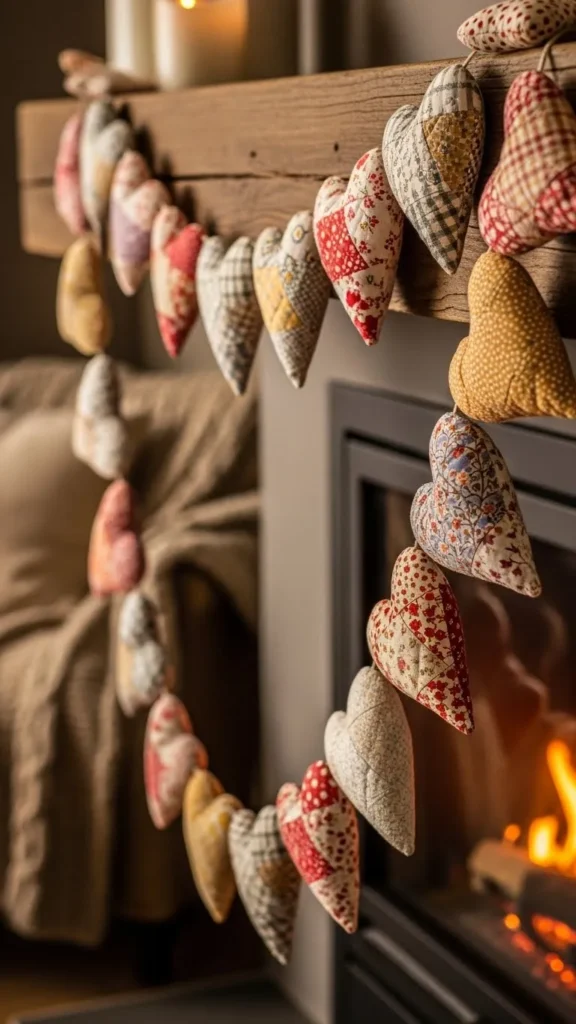
Quilted hearts add warmth and texture. Use small fabric squares stitched together. Light batting adds shape.
This garland feels comforting and works well year-round. Budget tip: quilting scraps are ideal here.
14. Boho Fringe Heart Garland
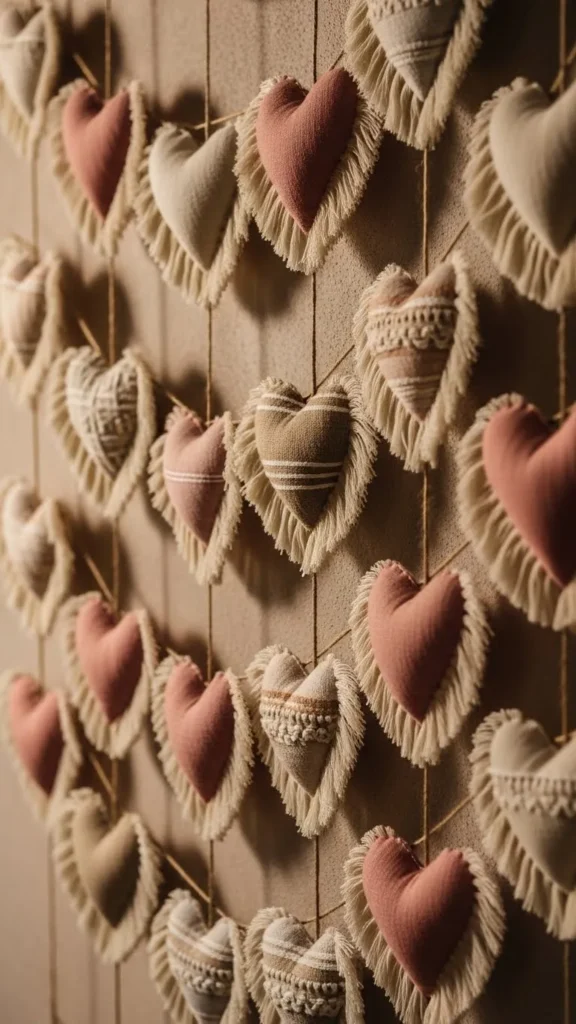
Add fringe along the bottom of fabric hearts for movement. Keep fringe short for a tidy look.
This style adds interest without clutter. Budget tip: fringe can come from unraveling fabric edges.
15. Minimal White Heart Garland
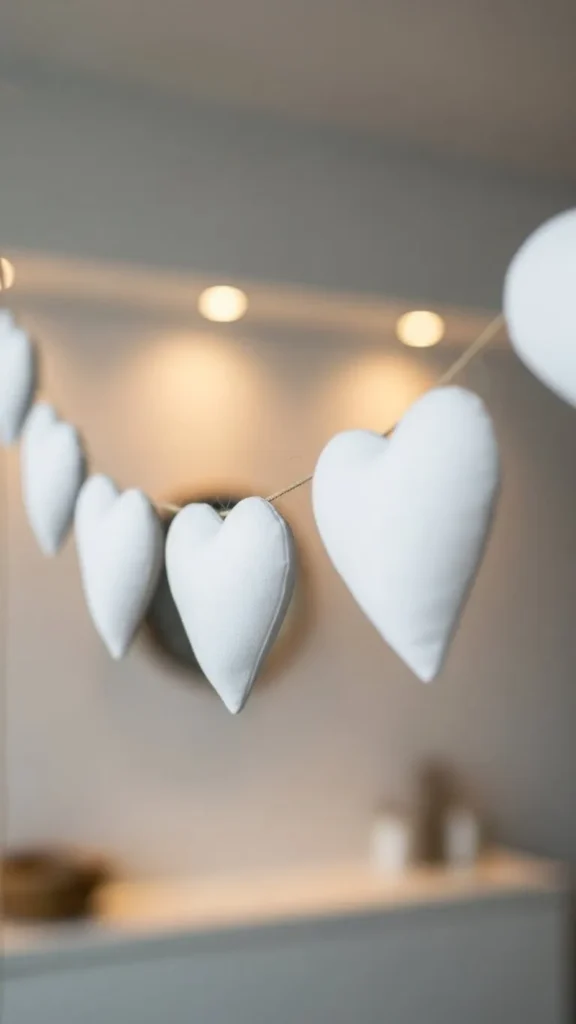
White fabric hearts keep spaces calm. Slight texture prevents the look from feeling flat.
Hang evenly for a clean finish. Budget tip: white fabric remnants work perfectly.
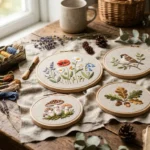
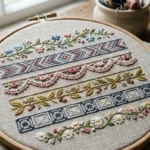
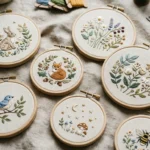
16. Hand-Stitched Embroidery Heart Garland
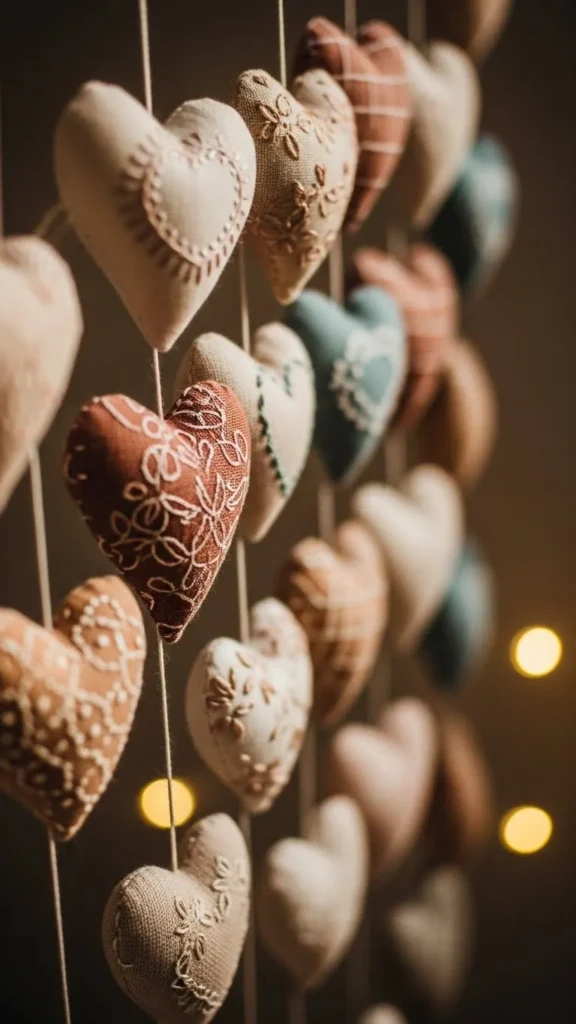
Simple stitched patterns add charm. Keep designs minimal to avoid visual clutter.
This works well as a slow craft project. Budget tip: embroidery floss lasts through many projects.
17. Double-Layer Felt Heart Garland
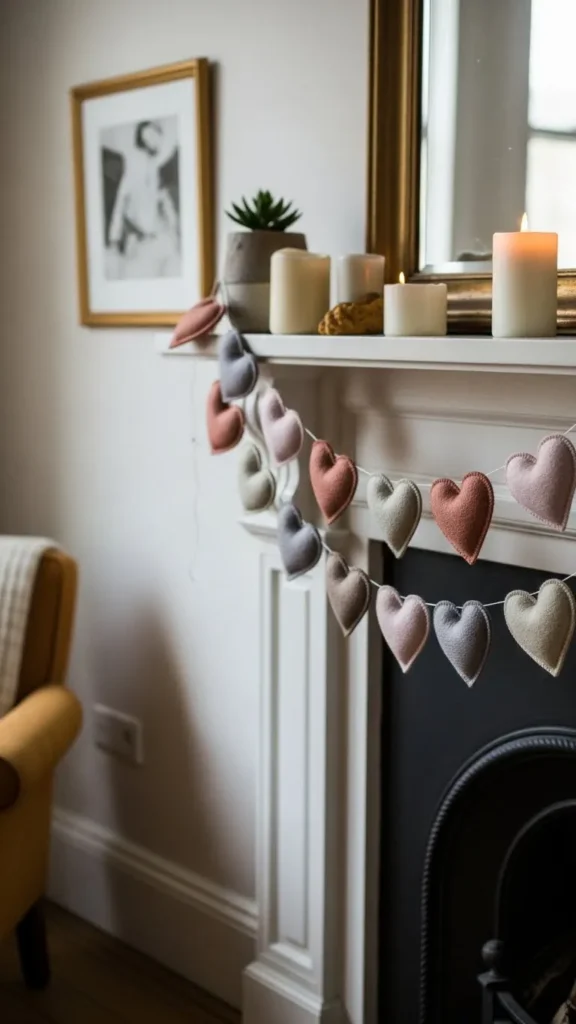
Layer two colors of felt for depth. Offset slightly for interest.
This adds dimension without extra work. Budget tip: felt scraps work well here.
18. Velvet Fabric Heart Garland

Velvet brings softness and subtle sheen. Use small hearts to keep it light.
Works best in low-light rooms. Budget tip: velvet ribbon remnants can substitute fabric.
19. Patchwork Heart Garland
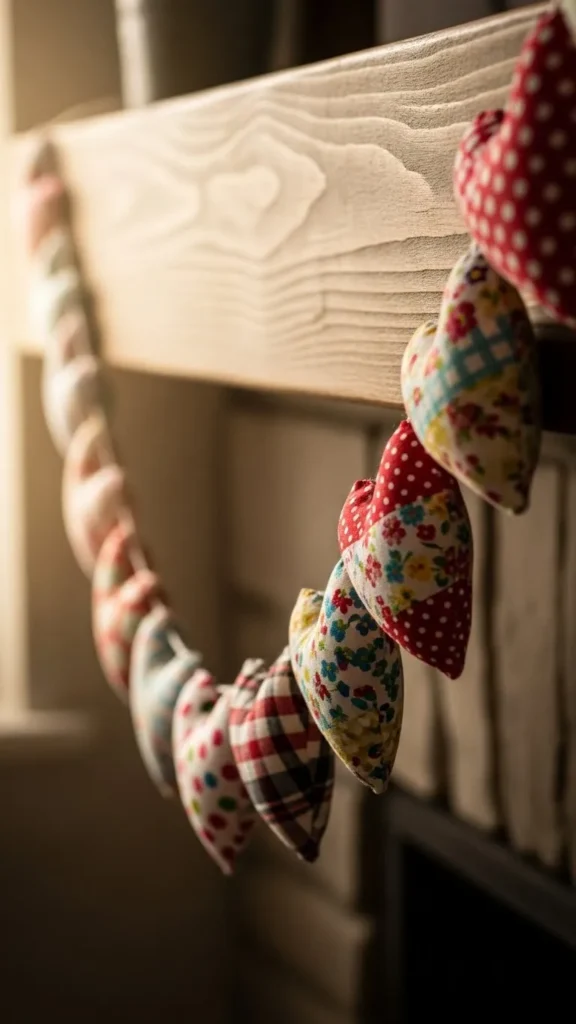
Patchwork hearts mix patterns gently. Stick to a limited color palette.
This adds personality while staying cozy. Budget tip: fabric leftovers shine here.
20. Flannel Heart Garland
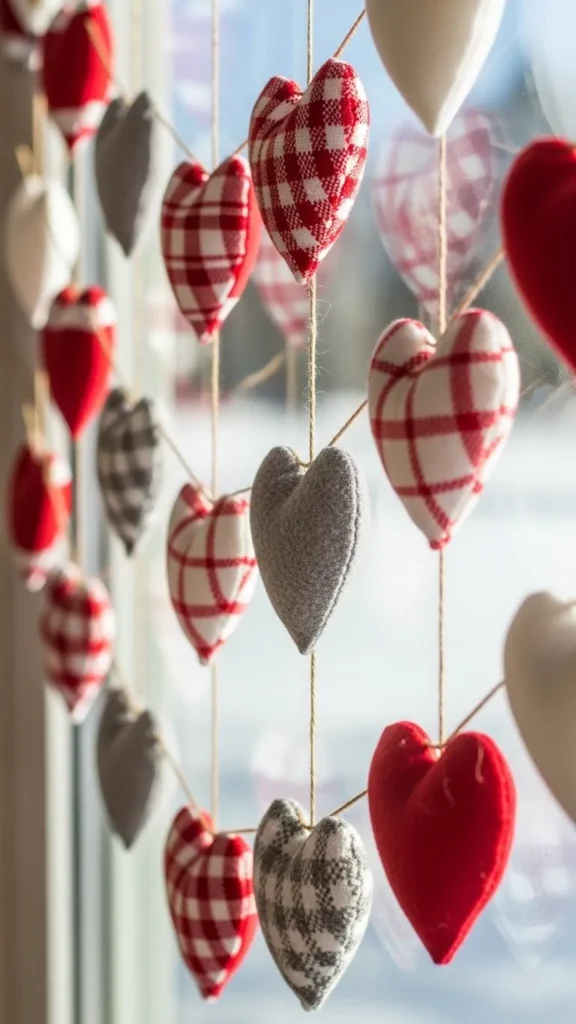
Flannel feels soft and warm. Use light stuffing for comfort.
Great for cooler seasons. Budget tip: old flannel shirts work well.
21. Ruffled Fabric Heart Garland
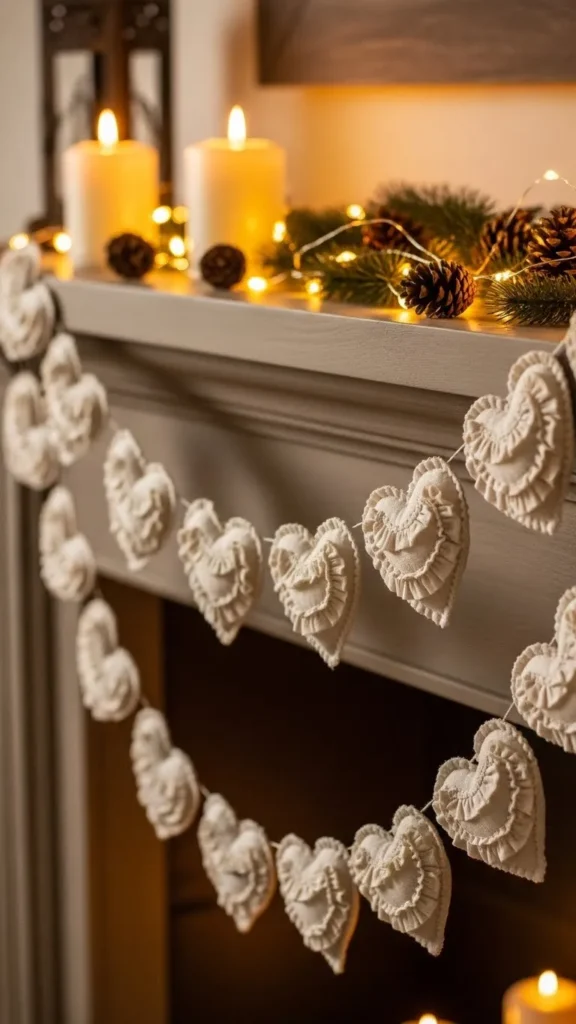
Ruffles add texture without heaviness. Keep ruffles small and soft.
This style suits gentle décor themes. Budget tip: ruffles come from narrow fabric strips.
22. Stuffed Felt Mini Heart Garland
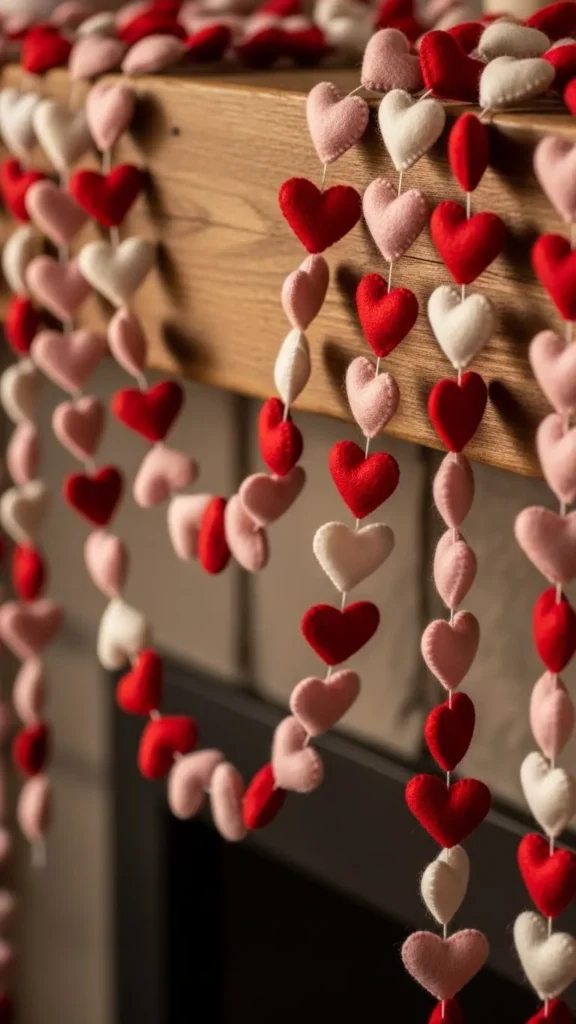
Mini hearts feel playful and soft. Keep spacing tight.
Perfect for shelves or desks. Budget tip: small size means less material.
23. Soft Paper Pulp Heart Garland
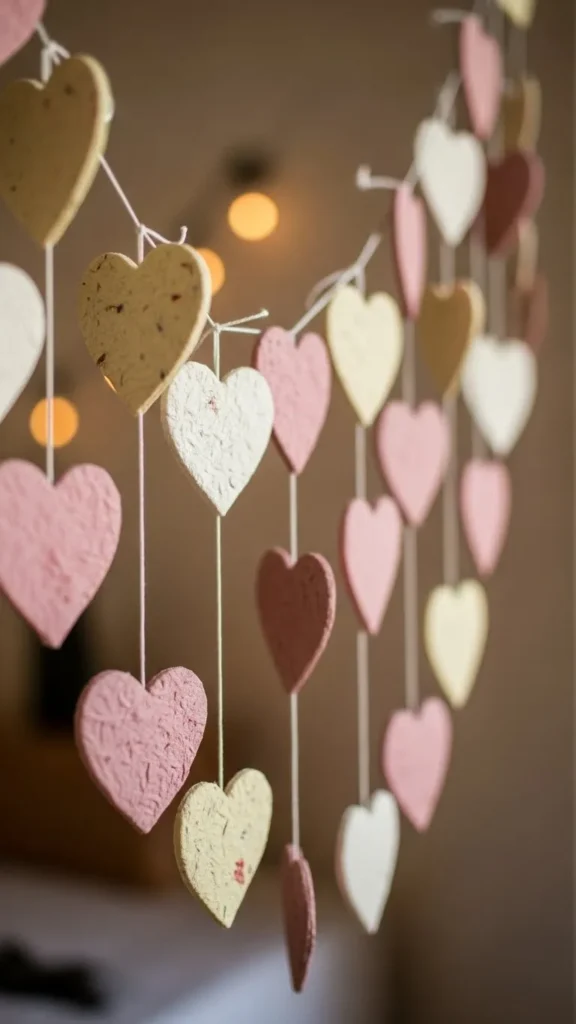
Paper pulp hearts have gentle texture. Mold by hand and dry naturally.
Lightweight and budget-friendly. Budget tip: recycle paper scraps.
24. Tassel-Accent Heart Garland
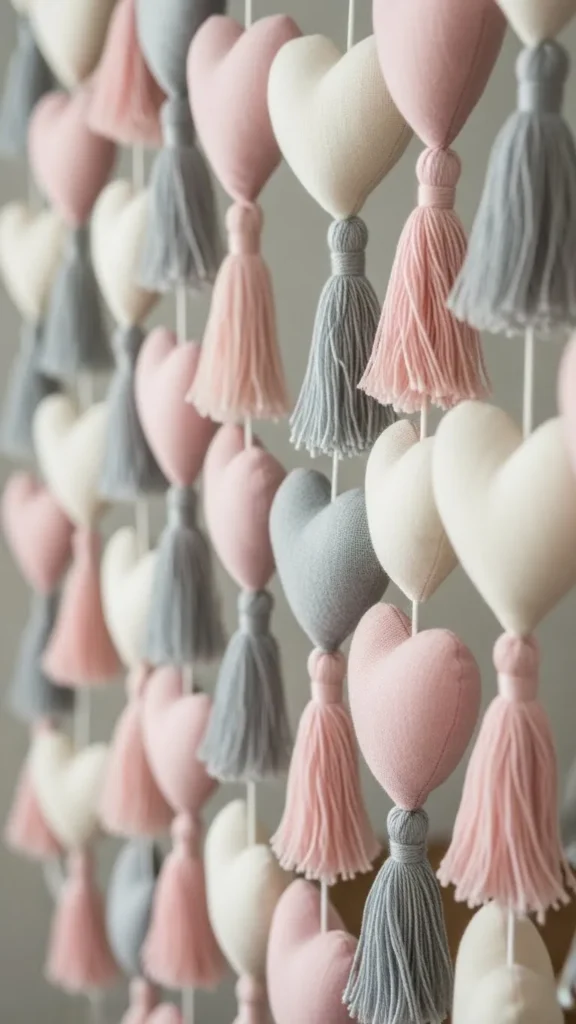
Add tassels between hearts for movement. Keep colors calm.
Works well over doorways. Budget tip: tassels use minimal yarn.
25. Natural Cotton Batting Hearts
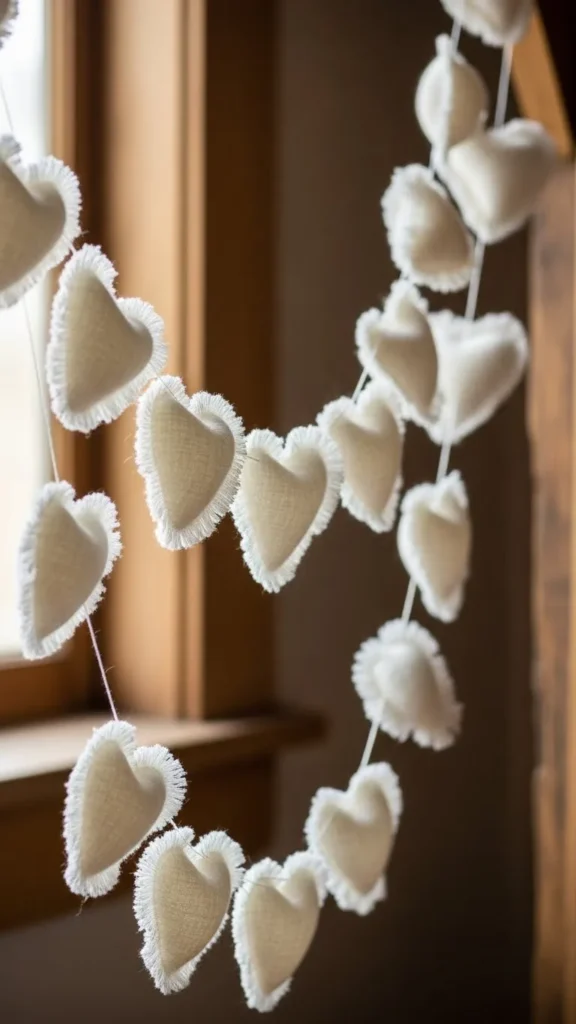
Cotton batting creates softness with minimal sewing. Leave edges raw for texture.
This looks relaxed and inviting. Budget tip: batting scraps are often inexpensive.
26. Hand-Tied Fabric Strip Heart Garland
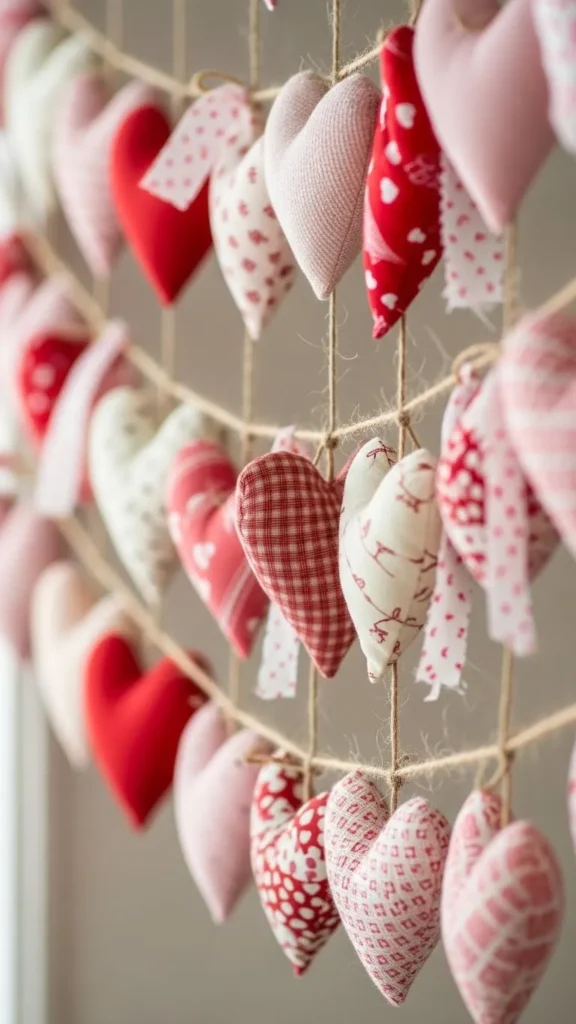
Tie fabric strips into heart shapes for a no-sew option. Keep knots loose.
Great for quick projects. Budget tip: use worn fabric pieces.
Conclusion
Soft heart garlands offer an easy way to bring warmth and comfort into everyday spaces. With simple materials and approachable steps, these ideas fit many styles and budgets. Choose one that matches your space, gather what you already have, and enjoy creating something gentle and welcoming for your home.