Floating shelves are one of those design features that look effortless in photos—but can quickly turn messy in real life. The good news? Styling them without clutter isn’t about owning fewer things. It’s about placing things with intention.
When done right, floating shelves can make a space feel lighter, calmer, and more put-together without looking sparse or boring.
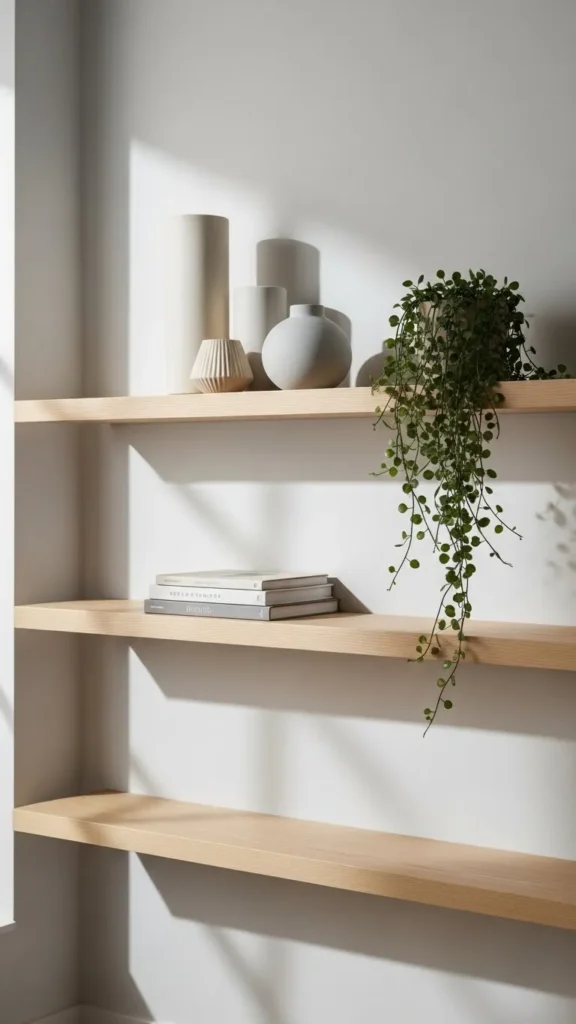
Below is a step-by-step guide to styling floating shelves so they feel balanced, stylish, and easy to live with.
Start With a Clean Slate
Before styling anything, take everything off the shelves. This reset is key.
Seeing the shelves empty helps you:
- Understand how much space you’re really working with
- Avoid forcing too many items back on
- Make intentional choices instead of default placements
Give the shelves a quick wipe, then step back and look at the wall as a whole.
Ask yourself:
- Is this area meant to feel calm or bold?
- Decorative or functional?
- Symmetrical or relaxed?
This mental reset sets the tone for clutter-free styling.
Follow the “Less but Better” Rule
Floating shelves look best when each item has room to breathe. Instead of filling every inch, aim for negative space.
A simple guideline:
- 2–4 items per shelf is usually enough
- Leave at least one open gap on each shelf
Choose pieces that feel intentional:
- A ceramic vase instead of multiple small trinkets
- One framed photo instead of a collage
- A single sculptural object with visual weight
If something doesn’t add beauty or function, it doesn’t earn a spot.
Mix Heights, Not Clutter
One common mistake is lining items up at the same height. This creates a stiff, crowded look.
Instead, vary the height of objects to create flow.
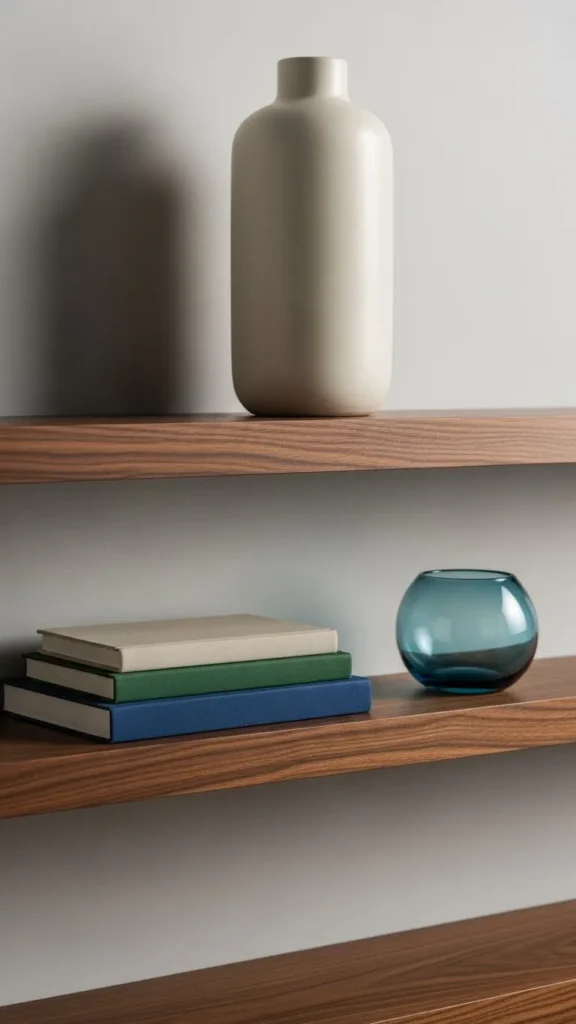
Try this mix:
- One tall item (vase, plant, candle holder)
- One medium item (frame, bowl, basket)
- One low item (book stack, small object)
This keeps the shelf visually interesting without adding more stuff.
Use Books as Styling Tools
Books aren’t just for reading—they’re great design anchors.
Ways to use them without clutter:
- Stack 2–3 books horizontally to create a base
- Place a small object on top of a book stack
- Mix vertical and horizontal arrangements
Stick to a cohesive color palette:
- Neutrals for a calm look
- Soft pastels for warmth
- Dark spines for contrast
Avoid overcrowding. A few well-chosen books look far better than a packed row.
Add Natural Elements for Softness
Natural elements keep shelves from feeling stiff or overly styled.
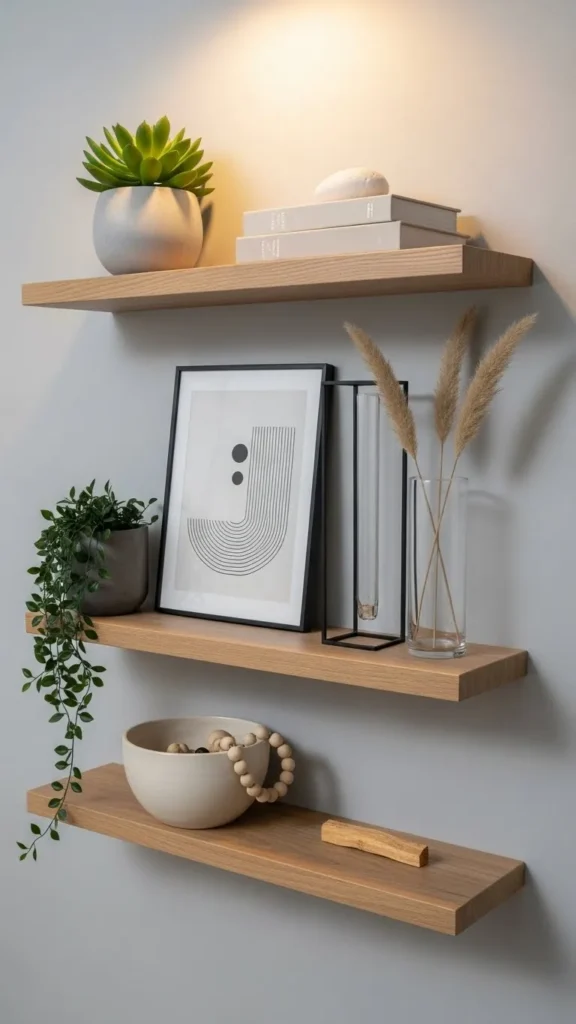
Easy options:
- Small potted plants
- Trailing greenery that gently drapes
- Wooden bowls or stone objects
Greenery adds life, while natural textures balance out clean lines. If using faux plants, choose realistic shapes and muted tones.
Stick to a Consistent Color Story
Clutter often comes from visual chaos, not quantity.
Pick 2–3 main colors and repeat them throughout the shelves.
For example:
- White, wood, and soft gray
- Black, beige, and greenery
- Warm neutrals with one accent color
This repetition creates harmony, even if the objects are different shapes.
If something stands out too much, it may be breaking the color story—not necessarily the rules.
Group Items in Odd Numbers
Designers love odd numbers because they feel more natural and relaxed.
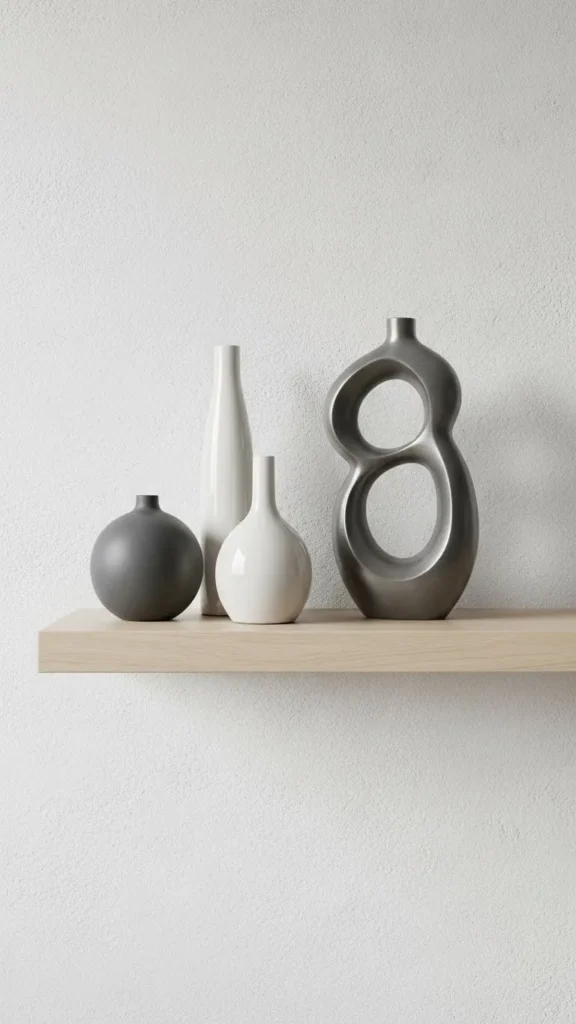
Try:
- Groups of three related items
- Slight overlap instead of rigid spacing
- Similar tones, different shapes
This creates a styled look without the shelf feeling busy.
Balance Decor With Empty Space
Empty space is not wasted space—it’s what makes the styling work.
When stepping back:
- Each shelf should have at least 30–40% open space
- Not every shelf needs the same number of items
- Some shelves can be intentionally minimal
Let the wall show through. That’s what keeps floating shelves feeling light and modern.
Edit Regularly (Without Redecorating Everything)
Clutter creeps in slowly. A quick reset every few months helps.
Simple maintenance:
- Remove one item if you add a new one
- Swap pieces seasonally instead of adding more
- Clear off anything that starts feeling “invisible”
Styling isn’t permanent—it’s flexible.
Final Takeaway
Styling floating shelves without clutter isn’t about perfection. It’s about intention, balance, and space to breathe. Choose fewer items, vary heights, repeat colors, and let empty space do some of the work.
Once you get the hang of it, styling shelves becomes easy—and even fun.
Save this guide for later and revisit it whenever your shelves start to feel crowded.