

Decorating the space above your bed can completely change how your bedroom feels—but it’s also one of the easiest places to overspend if you’re not careful. The good news? You don’t need custom art or pricey wall installations to make this area look intentional and stylish. With a few smart choices, you can create a cozy focal point that looks high-end without the high cost.
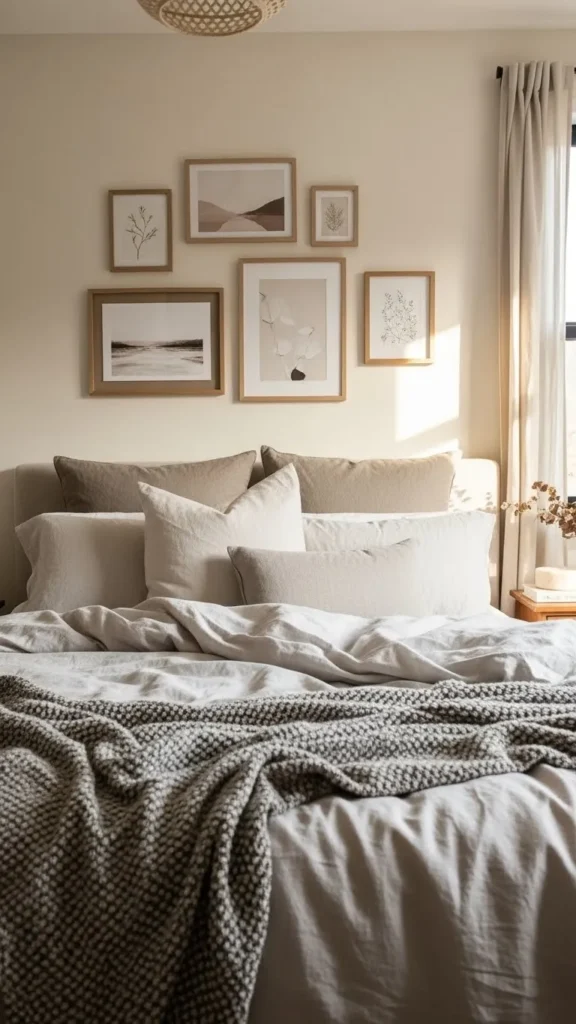
Below are practical, budget-friendly ideas that actually work in real homes.
Start With the Right Scale (Before Buying Anything)
One of the most common mistakes is choosing décor that’s too small. Tiny art floating above a bed can make the whole room feel off.
Before shopping, grab painter’s tape and map out the size you want on the wall. This helps you visualize the final look and prevents impulse buys.
Quick sizing tips:
- Aim for décor that’s about two-thirds the width of your bed
- Leave 6–10 inches of space between the headboard and wall décor
- Go horizontal for calm, balanced bedrooms
This step alone can save you from wasting money on pieces that won’t work.
Use a Gallery Wall (Without Paying Gallery Prices)
A gallery wall is one of the most flexible and affordable ways to decorate above the bed. You don’t need expensive artwork—just consistency.
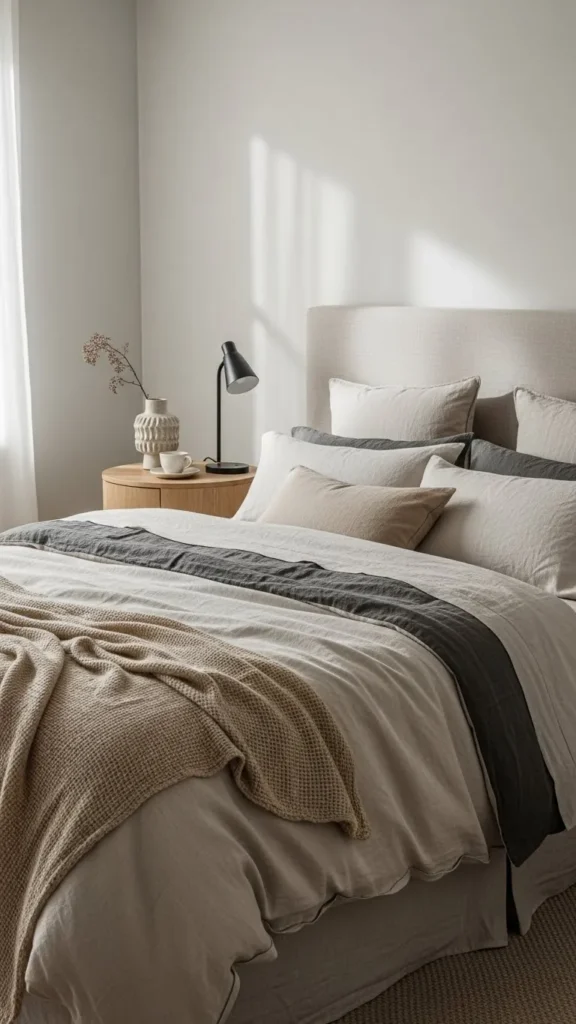
Budget-friendly gallery ideas:
- Download free or low-cost printable art online
- Use personal photos edited with the same filter
- Mix frames from thrift stores and discount shops
- Stick to one color palette to keep it cohesive
Lay everything out on the floor first. Once you like the arrangement, transfer it to the wall.
Try a Statement Piece That Looks Custom
If a gallery wall feels like too much work, one large statement piece can look just as polished.
This doesn’t mean buying original art.
Look for:
- Oversized fabric wall hangings
- Canvas prints on sale
- DIY abstract art using leftover paint
- Vintage-inspired prints enlarged and framed
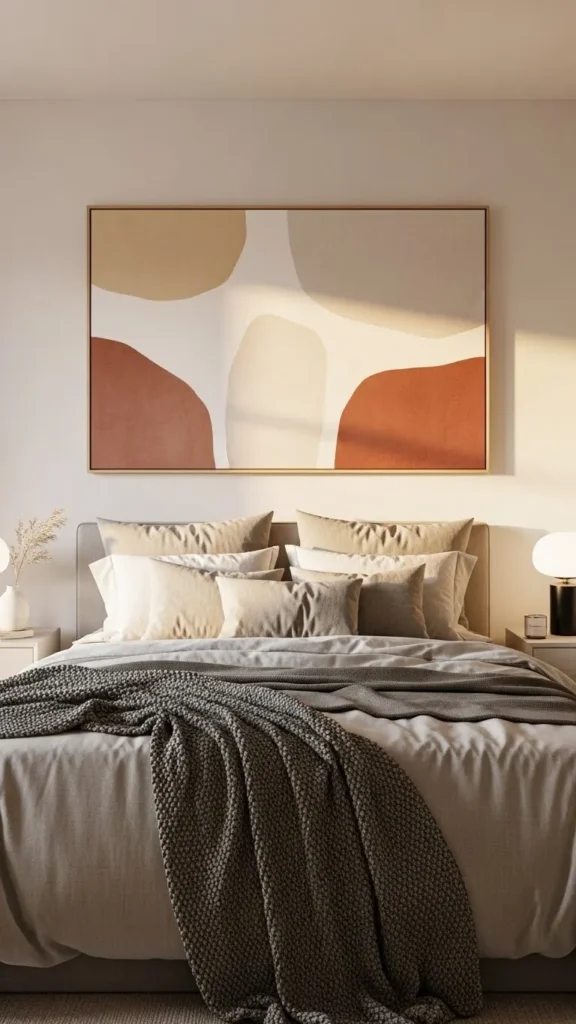
A single bold piece instantly anchors the bed and reduces the need for extra décor.
Use Shelves for Flexible Styling
Floating shelves above the bed are perfect if you like switching things up without spending more money.
They let you:
- Rotate décor seasonally
- Use items you already own
- Adjust the look without new wall holes
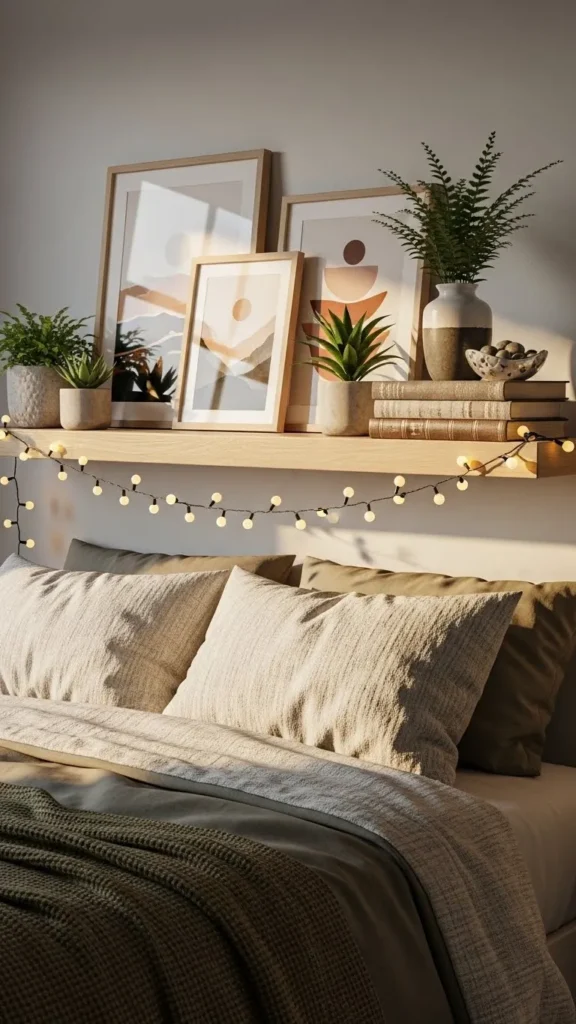
What to style on shelves:
- Framed prints layered front to back
- Small plants or dried stems
- Stacked books with neutral covers
- Minimal objects like vases or sculptural pieces
Just avoid overcrowding. Less really does look better here.
Rethink What “Art” Can Be
Art doesn’t have to come from an art store. Some of the best above-the-bed ideas use unexpected items.
Consider:
- Woven baskets arranged in a pattern
- Decorative trays mounted as wall art
- Fabric panels or scarves stretched over frames
- Architectural salvage like shutters or panels
These options often cost less and add texture that flat prints can’t.
Lean Into Texture Instead of Color
If you’re decorating on a tight budget, texture is your secret weapon. Neutral, textured pieces tend to look more expensive and timeless.
Think:
- Woven wall hangings
- Light wood elements
- Linen or cotton fabrics
- Subtle layered materials
Texture adds depth without needing bold colors or pricey materials.
Keep the Headboard in Mind
Your headboard and wall décor should work together, not compete.
Easy pairing ideas:
- Upholstered headboard + simple art
- Wooden headboard + soft textiles above
- Minimal headboard + more visual interest on the wall
If your headboard already makes a statement, the wall décor can be quieter—and cheaper.
Avoid These Common Budget Mistakes
Saving money isn’t just about what you buy—it’s also about what you skip.
Avoid:
- Hanging décor too high
- Buying multiple small pieces that don’t relate
- Overcrowding the wall
- Chasing trends that won’t last
A calm, intentional setup almost always looks more polished.
Final Thoughts
Decorating above the bed doesn’t need to be expensive or complicated. With thoughtful sizing, smart reuse, and a focus on texture and balance, you can create a beautiful focal point that feels custom—without overspending.
Save this idea for later, and start with what you already have before buying anything new.

Leave a Reply