

Hallways are often overlooked, treated as nothing more than a path from one room to another. But with a little intention, they can become some of the most stylish and functional areas in your home. Whether your hallway is long, narrow, dark, or oddly shaped, the right design choices can turn “dead space” into something that feels welcoming and purposeful.
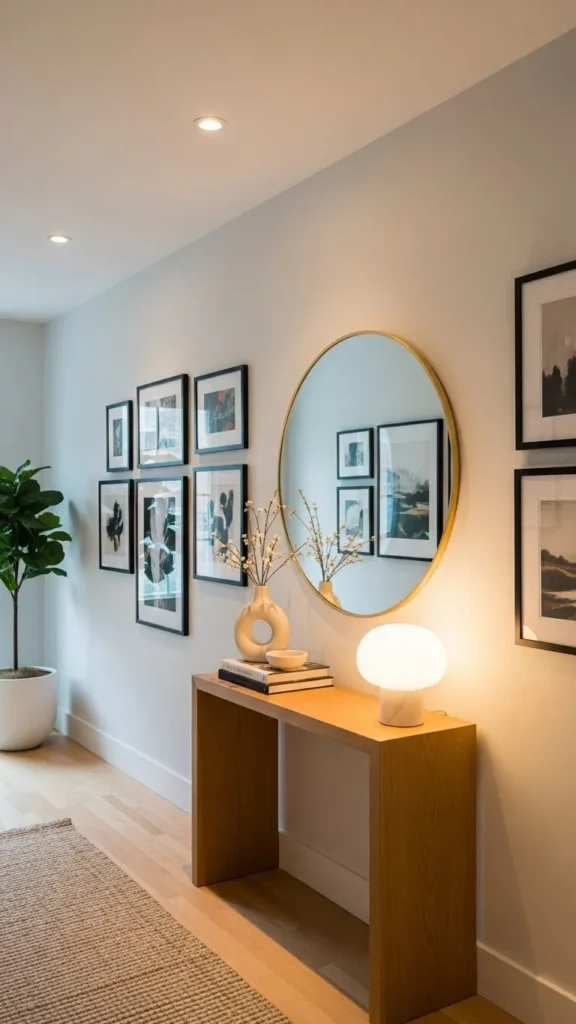
Below are practical, easy-to-follow ideas to help you decorate hallways so they feel alive, balanced, and beautifully connected to the rest of your home.
Start With a Clear Purpose
Before adding décor, decide what you want your hallway to do. Is it purely visual, or does it need to be functional too?
Ask yourself:
- Is this a main entry path guests see first?
- Does it connect bedrooms or living spaces?
- Could it use storage or seating?
Once the purpose is clear, decorating becomes much easier. A front hallway might focus on style and first impressions, while a back hallway might lean into organization and everyday use.
Use Wall Décor to Add Interest Without Clutter
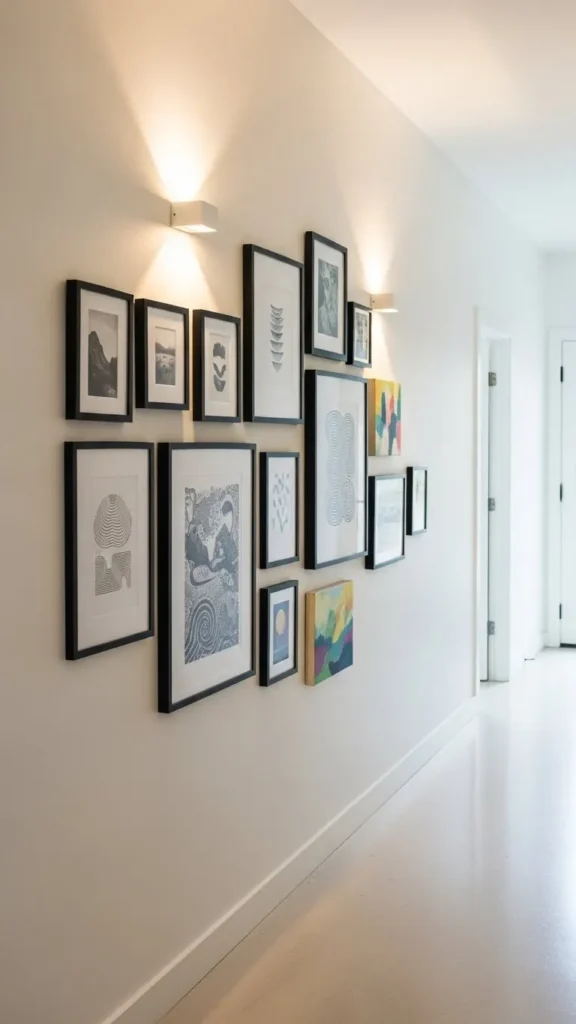
Bare hallway walls are the most common cause of dead space. Wall décor adds personality without taking up valuable floor area.
Popular wall ideas include:
- Gallery walls with family photos or art prints
- Oversized statement art for long, blank stretches
- Wall sconces for both style and lighting
- Floating shelves styled with simple accents
Keep spacing consistent and avoid overcrowding. Hallways look best when wall décor feels intentional and balanced.
Add Slim Furniture That Fits the Space
The key to hallway furniture is choosing pieces that are narrow and well-proportioned. Bulky furniture can make the space feel tight, but slim pieces add function without blocking flow.
Great options include:
- Console tables with shallow depth
- Wall-mounted shelves or cabinets
- Narrow benches with hidden storage
- Small stools tucked under tables
If your hallway is very narrow, wall-mounted furniture is your best friend. It keeps walkways clear while still adding style.
Make Lighting a Design Feature
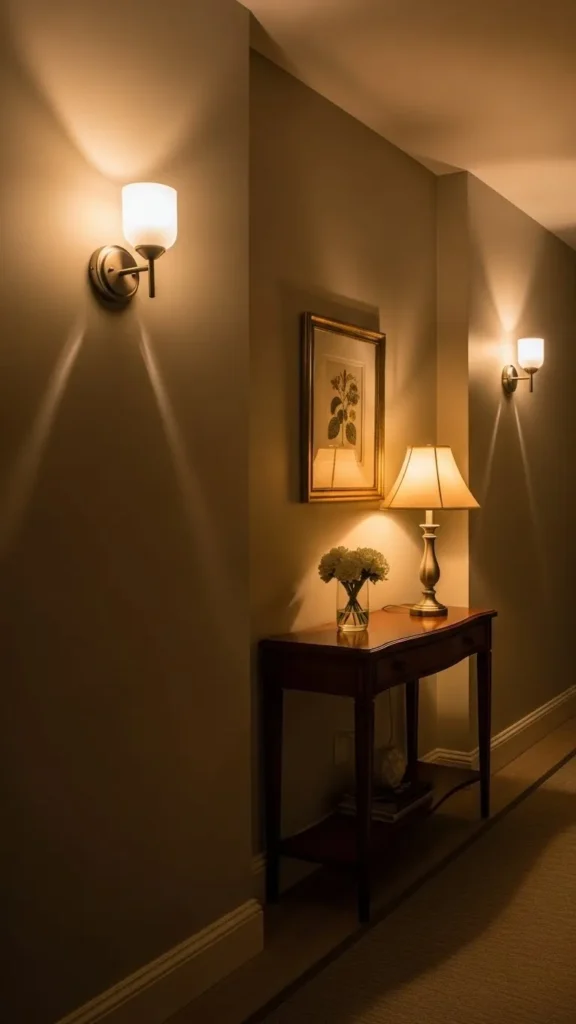
Lighting is one of the fastest ways to eliminate dead space. Dark hallways instantly feel unfinished, even if the décor is beautiful.
Layer lighting for best results:
- Overhead fixtures for general light
- Wall sconces for warmth and style
- Table lamps on consoles for a cozy glow
Warm light bulbs work especially well in hallways, helping the space feel inviting instead of harsh.
Use Rugs and Runners to Anchor the Space
A hallway runner adds color, texture, and direction. It visually connects the space while making it feel intentional rather than forgotten.
When choosing a runner:
- Pick durable materials for high-traffic areas
- Use patterns to hide wear
- Keep colors connected to nearby rooms
Make sure the runner leaves visible flooring on both sides. This keeps the hallway from feeling cramped.
Bring Life With Mirrors and Greenery
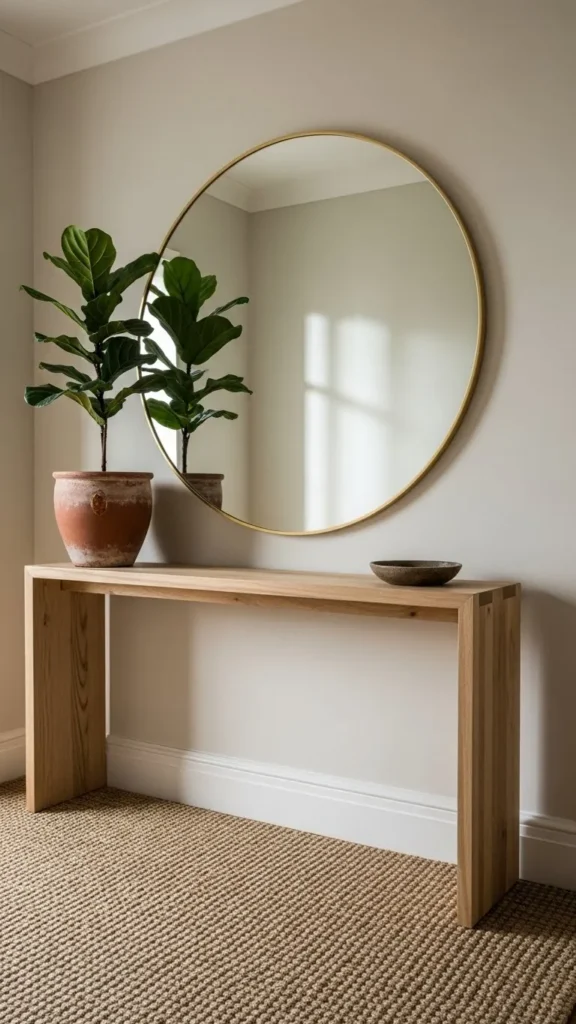
Mirrors are especially powerful in hallways. They reflect light, make narrow spaces feel wider, and add visual interest without bulk.
Try:
- A large mirror at the end of a hallway
- A row of smaller mirrors for rhythm
- A mirror above a console table
Add greenery to soften the look. Faux plants work perfectly in low-light hallways, while real plants thrive in brighter ones.
Style With Purposeful Accessories
Accessories are what turn a decorated hallway into a styled one. Keep them simple and meaningful.
Good hallway accessories include:
- Stacked books
- Decorative bowls or trays
- Framed quotes or illustrations
- Baskets for small items
Stick to a limited color palette so the space feels calm and cohesive instead of busy.
Tie the Hallway to the Rest of Your Home
A hallway should feel connected, not isolated. Pull colors, textures, or materials from nearby rooms to create flow.
Easy ways to connect spaces:
- Repeat wall colors or trim finishes
- Use similar frame styles or metals
- Carry flooring or rug tones through
This makes the hallway feel like a natural extension of your home rather than an afterthought.
Final Thoughts: Turn Every Step Into Style
Decorating hallways doesn’t require a full renovation. With thoughtful lighting, well-scaled furniture, and intentional décor, you can transform unused space into something that feels welcoming and complete.
Start small, focus on balance, and let each piece serve a purpose. Your hallways deserve just as much attention as the rooms they connect.
Save this guide for later and start turning those forgotten spaces into design moments you love.
Leave a Reply