

Open shelves can make a room feel light, modern, and lived-in—but only when they’re styled with intention. Too many items, and the space starts to feel busy. Too few, and it looks unfinished. The secret is finding that sweet spot where shelves feel curated, calm, and practical.
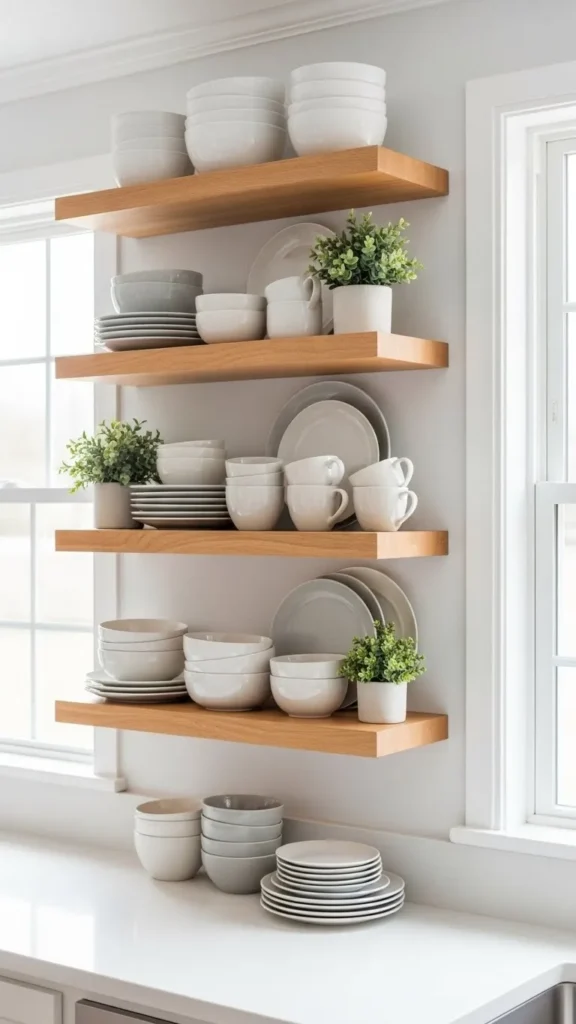
This guide walks you through simple, realistic ways to decorate open shelves without overcrowding—no design degree required.
Start With a Clean Slate
Before styling anything, clear your shelves completely. This step feels obvious, but it’s essential.
An empty shelf helps you:
- See how much space you’re really working with
- Notice shelf height and depth
- Reset visual clutter habits
Wipe shelves down and step back. Look at them like a blank canvas, not storage space. This mindset shift alone makes a big difference.
Choose a Limited Color Palette
One of the fastest ways shelves become overwhelming is too many colors competing for attention.
Pick 2–3 main colors and stick with them.
Neutrals work beautifully:
- Soft white
- Warm beige
- Light gray
- Natural wood tones
Then add one subtle accent color if needed, like muted green or soft blue.
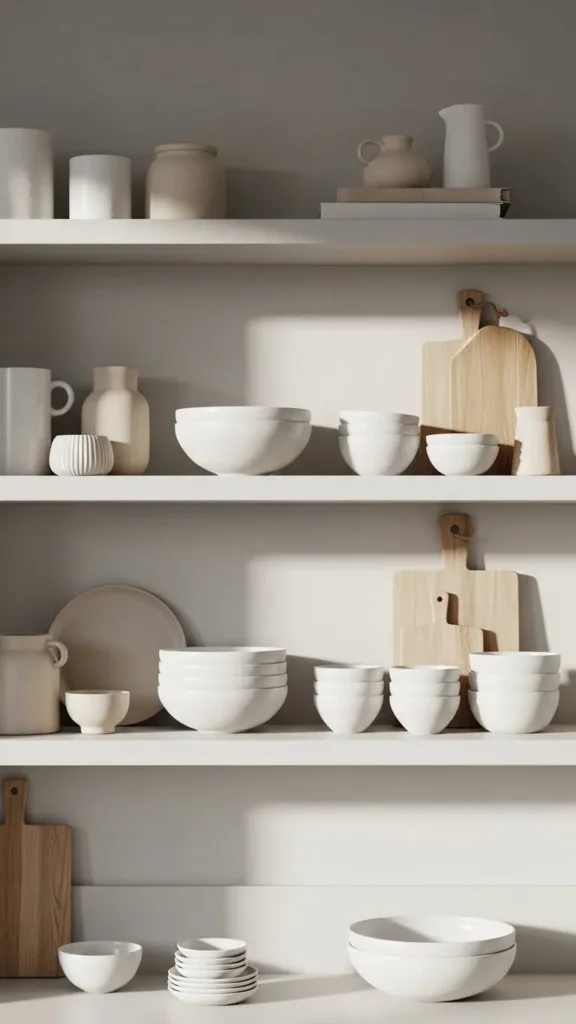
A limited palette instantly creates calm and makes shelves look styled—even when they’re functional.
Use the Rule of Odd Numbers
Designers swear by this trick because it works.
Group items in threes or fives, not pairs. Odd numbers feel more natural and less rigid to the eye.
Try combinations like:
- One tall item + two smaller pieces
- Three similar objects with slight height differences
- One focal item flanked by negative space
Avoid lining everything up evenly. A little asymmetry keeps shelves relaxed and inviting.
Mix Heights and Shapes Thoughtfully
Uniform items can look flat. Too much variation can look chaotic. The goal is balanced contrast.
Combine:
- Tall items (vases, pitchers, framed art)
- Medium items (bowls, stacked plates, baskets)
- Small accents (candles, small planters, decorative objects)
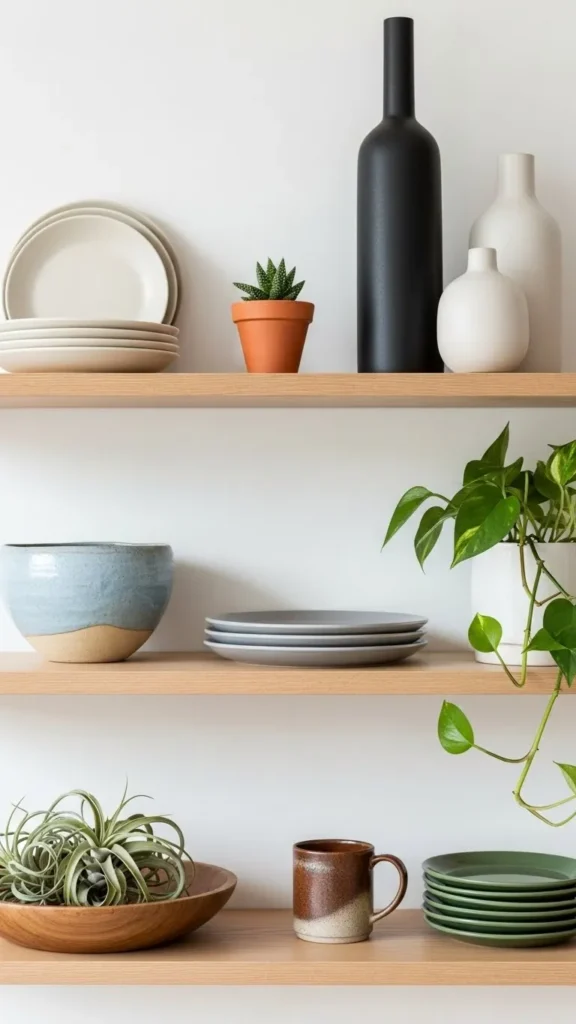
Keep similar shapes from clustering together. Spread them out so each item has room to breathe.
Leave Empty Space on Purpose
Empty space isn’t wasted—it’s powerful.
Resist the urge to fill every inch. Aim to leave 30–40% of the shelf empty.
This negative space:
- Highlights your favorite items
- Prevents visual overload
- Makes shelves easier to update seasonally
If a shelf feels crowded, remove one item before adding another. Editing is more important than decorating.
Stack and Layer for Function
Open shelves often need to work hard, especially in kitchens or living spaces. The trick is styling functional items beautifully.
Smart stacking ideas:
- Stack plates or bowls instead of spreading them out
- Layer a small framed photo in front of a taller object
- Place everyday items on trays to visually group them
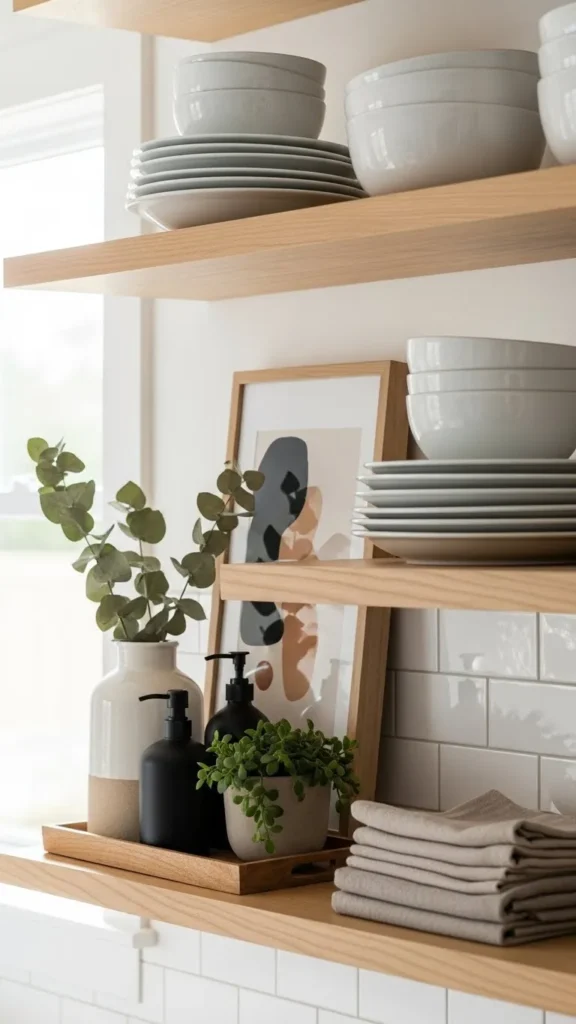
Layering keeps shelves practical without looking cluttered.
Add Natural Elements Sparingly
Natural textures soften shelves and make them feel lived-in—but too many can overwhelm.
Choose one or two natural elements per shelf:
- A small plant
- A woven basket
- A wooden cutting board
- A stone or ceramic accent
Keep plants simple and contained. One healthy plant looks intentional; five look like maintenance.
Edit Regularly, Not Constantly
Open shelves aren’t set-and-forget decor. They benefit from occasional editing.
Every few months:
- Remove items you no longer use or love
- Swap one accent instead of restyling everything
- Adjust spacing as your needs change
Think of shelves as a rotating display, not permanent storage.
Final Takeaway
Decorating open shelves without overcrowding is all about restraint, balance, and intention. Fewer items. More space. Thoughtful groupings. When each piece earns its place, shelves feel calm, stylish, and functional all at once.
Save this guide for your next shelf refresh—and remember, when in doubt, take one thing off.
Leave a Reply