

A well-styled bookcase can make a room feel finished, thoughtful, and lived-in. But once shelves start overflowing with books, decor, and keepsakes, they can quickly feel heavy and chaotic. The good news? Styling bookcases without overcrowding isn’t about owning less—it’s about arranging smarter.
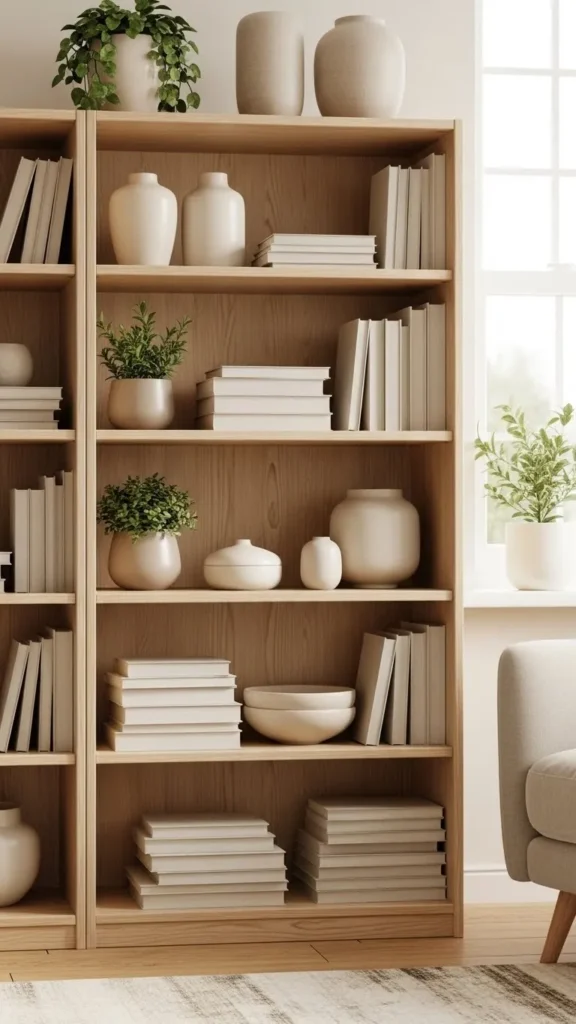
Below is a simple, step-by-step approach to creating bookcases that feel balanced, airy, and visually calm—without losing personality.
Start With a Clean Slate
Before styling, remove everything from your shelves. Yes, everything.
This reset helps you:
- See how much space you’re really working with
- Break old habits (like filling every inch)
- Be more intentional with what goes back
Once the shelves are empty, give them a quick wipe. Clean shelves instantly feel lighter and more inviting.
Pro tip: Sort your items into quick piles—books, decor, plants, and personal items—so you can build with purpose.
Use Fewer Books, Styled Better
Books are the backbone of most bookcases, but they don’t need to dominate every shelf.
Instead of lining them all up vertically:
- Mix vertical rows with horizontal stacks
- Leave small gaps between book groupings
- Use horizontal stacks as platforms for decor
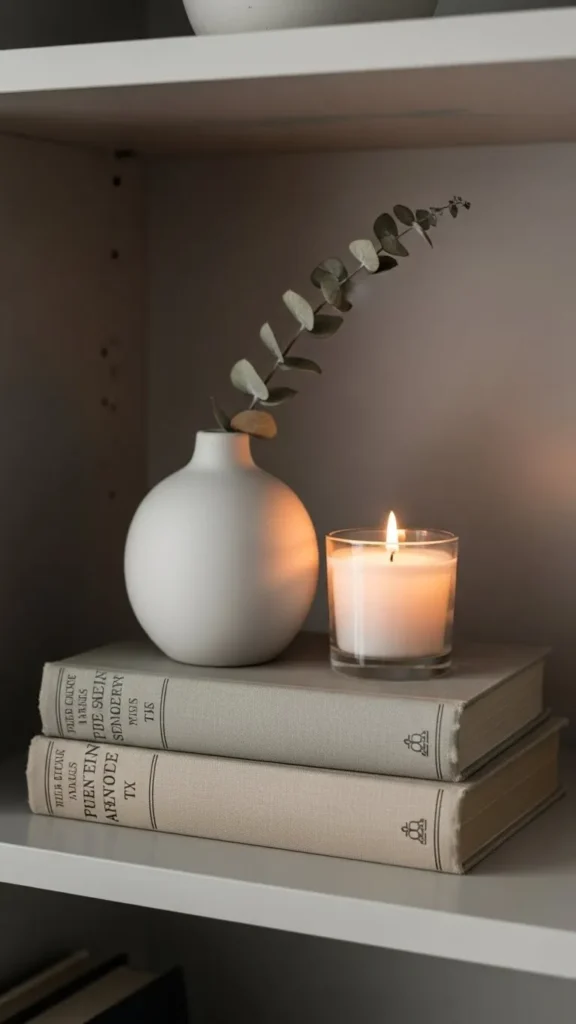
Aim for balance, not symmetry. A few well-spaced books often look more intentional than shelves packed edge to edge.
Helpful rule: If a shelf looks “solid” with no breathing room, remove 20–30% of the books and restyle.
Embrace Negative Space (It’s Not Empty—It’s Intentional)
One of the biggest mistakes in bookcase styling is feeling like every shelf must be full. Open space is what keeps shelves from feeling cluttered.
Ways to use negative space:
- Leave part of a shelf completely open
- Limit decor to one or two pieces per shelf section
- Let taller items stand alone instead of crowding them
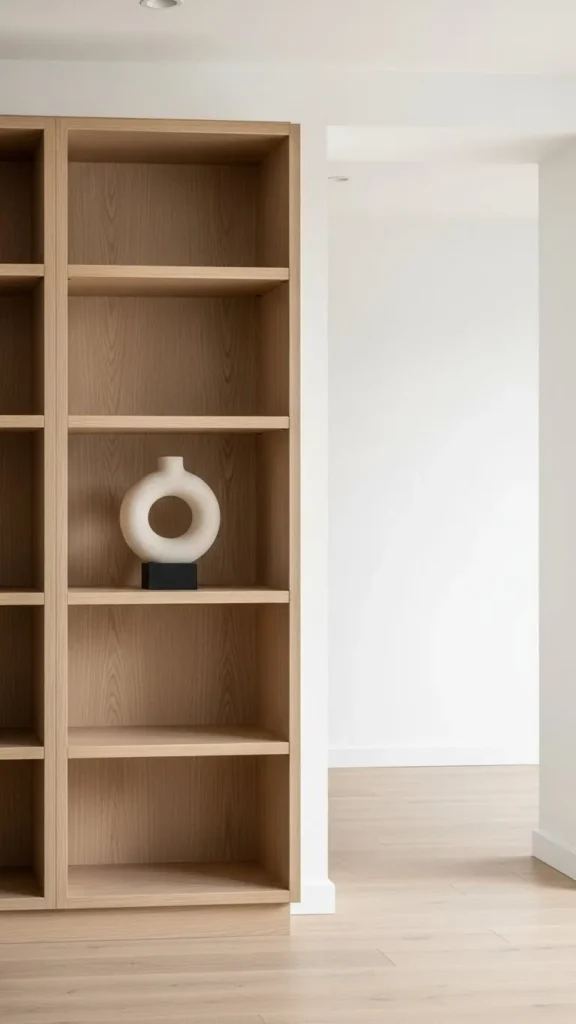
Think of empty space as a design element—it gives the eye a place to rest and makes everything else feel more elevated.
Group Decor in Small, Simple Clusters
Decor looks calmer when it’s grouped thoughtfully instead of scattered.
Stick to:
- Groups of 2–3 items max
- Varying heights (tall + medium + low)
- Similar tones or materials
For example:
- A small vase + framed photo + low bowl
- A sculptural object + stacked books
- A plant paired with one accent piece
If a cluster starts to feel busy, remove one item. Less almost always looks better.
Add Plants Sparingly for Softness
Plants bring life to bookcases, but too many can feel messy fast.
Use plants strategically:
- One trailing plant for softness
- One upright plant for structure
- Skip placing plants on every shelf
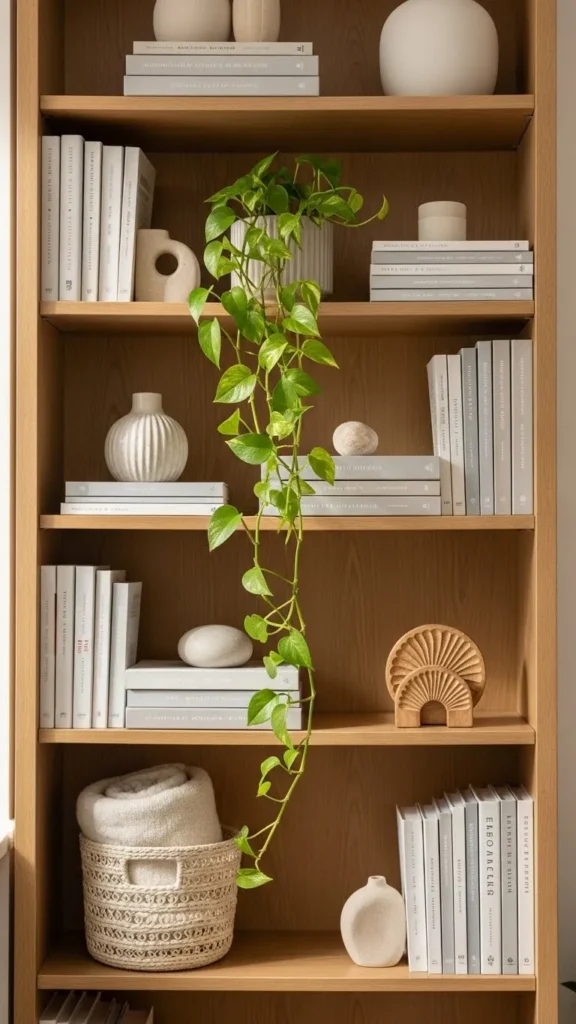
If real plants feel like too much upkeep, high-quality faux greenery works just as well for visual balance.
Vary Height and Scale to Avoid Visual Noise
When everything on a shelf is the same size, the eye gets overwhelmed.
Create contrast by mixing:
- Tall objects (vases, framed art)
- Medium pieces (plants, baskets)
- Small accents (bowls, sculptural items)
Avoid lining up objects at the same height across multiple shelves. Slight variation keeps the look relaxed and curated.
Step Back and Edit Like a Stylist
Once everything is placed, step back—literally.
Ask yourself:
- Does any shelf feel heavy or crowded?
- Are there too many colors competing?
- Is there enough open space overall?
Remove one item from each shelf and reassess. Often, that final edit is what transforms a “nice” bookcase into a polished one.
Keep It Flexible Over Time
Bookcases don’t have to be styled once and forgotten. As seasons change or new items come in, rotate pieces instead of adding more.
Store extras in a box nearby so you can refresh without cluttering. This keeps your shelves feeling intentional and never overwhelming.
Final Takeaway
Styling bookcases without overcrowding is all about restraint, balance, and breathing room. You don’t need more shelves or more decor—you just need smarter placement and the confidence to leave space empty.
Save this guide for your next home refresh, and give your bookcases the calm, curated look they deserve.

Leave a Reply