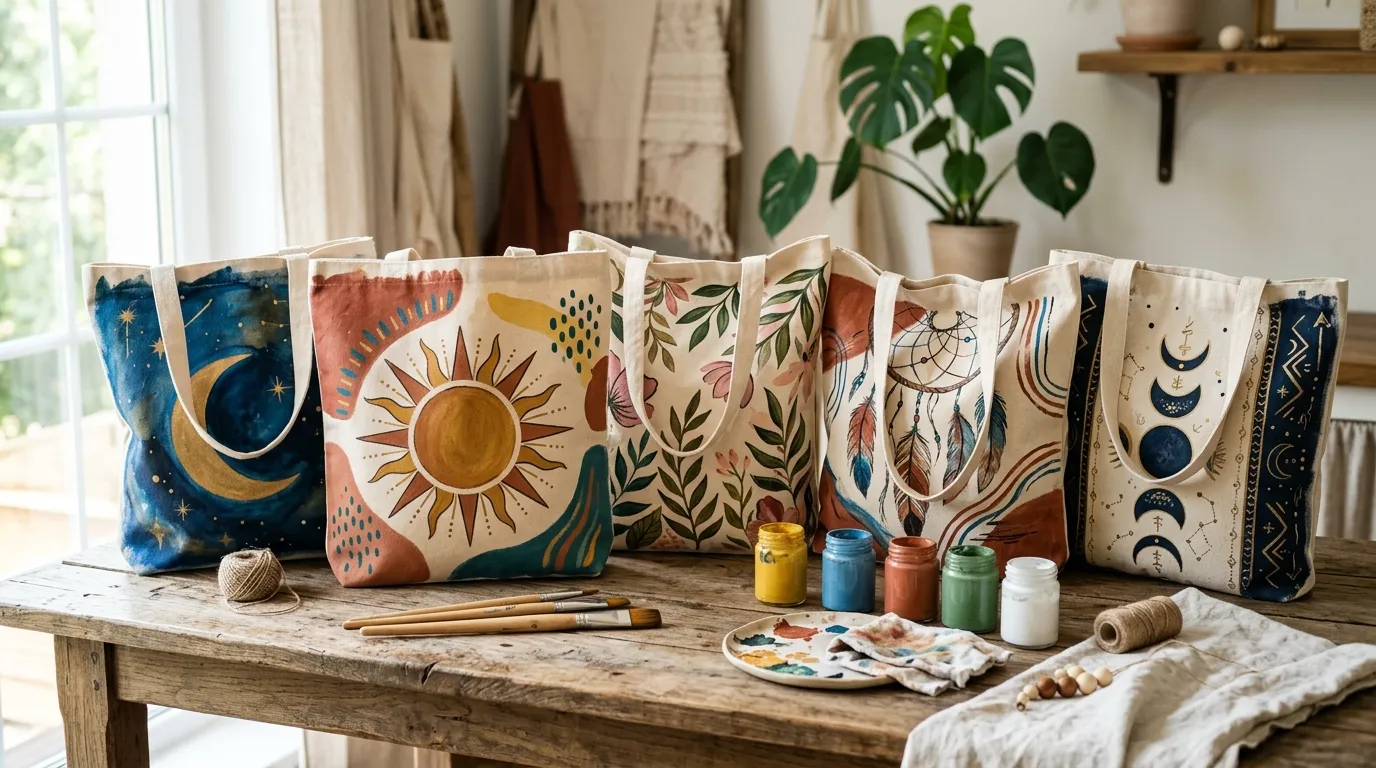

Embroidery is a calm and creative handcraft that helps beginners build skill step by step. Simple stitches can turn plain fabric into beautiful handmade pieces. This list shares beginner-friendly embroidery designs that are easy to practice at home using low-cost materials like cotton fabric, basic thread sets, and a simple hoop. Each idea is practical, clear, and suitable for daily practice.
1. Running Stitch Line Pattern

Running stitch is one of the first steps in embroidery practice. It forms small, even dashes across fabric. Beginners can use leftover cotton cloth and basic thread colors. Try stitching straight lines first, then move into curves. This design works well for decorating napkins or small fabric patches. It takes very little time and helps build hand control. Keep stitches equal in spacing for a clean look. You can also mix two thread colors for a soft striped effect. Practice daily for short sessions to gain steady hand movement. This design costs almost nothing and gives quick visible progress, making it a strong starting point for new learners.
2. Back Stitch Outline Shapes
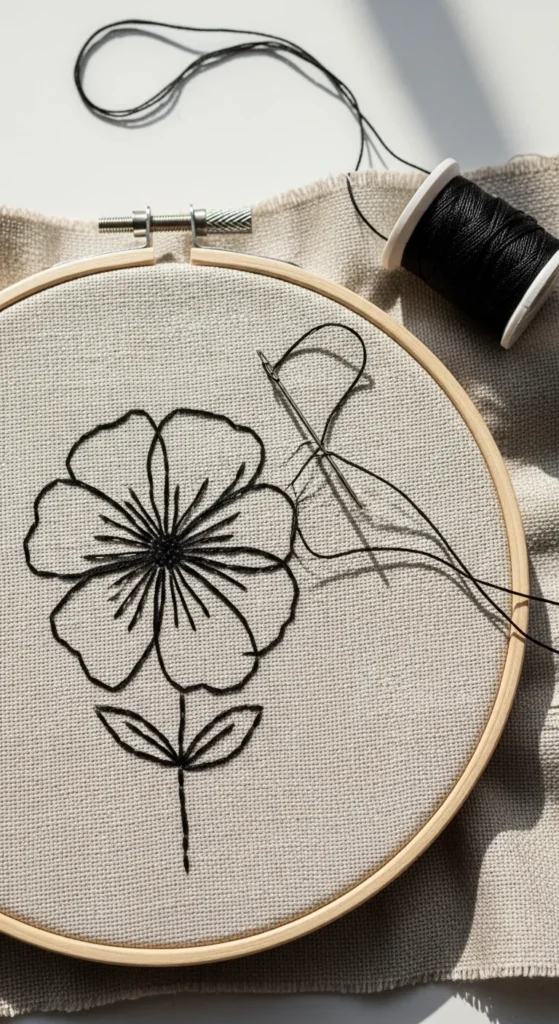
Back stitch creates a solid line that is good for outlines. Beginners can trace simple shapes like hearts, stars, or leaves. Use a pencil to mark the design lightly on fabric before stitching. Each stitch goes backward into the end of the previous one, forming a smooth line. It is useful for lettering practice too. Start with short outlines before trying longer curves. This method uses minimal thread and gives clear results. It works well on small gifts like handkerchiefs or cloth tags. Practice helps build control and steady stitching rhythm.
3. Simple Daisy Flower Stitch
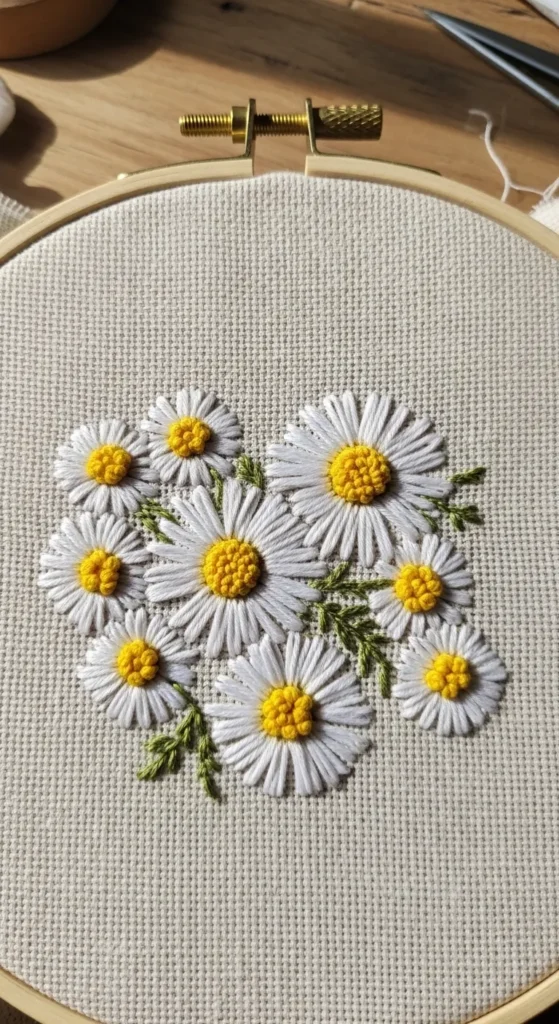
Daisy flower stitch is simple and cheerful. Each flower is made using looped stitches for petals and a small center knot. Beginners can place flowers randomly or in small clusters. Use light colors like white, pink, or soft yellow. This design works well on tote bags or pillow covers. Start with one flower before adding more. Keep petals even in size for a neat look. This pattern helps build coordination between needle movement and thread tension. It is low cost and uses only a few thread colors.
4. Straight Stitch Leaf Pattern
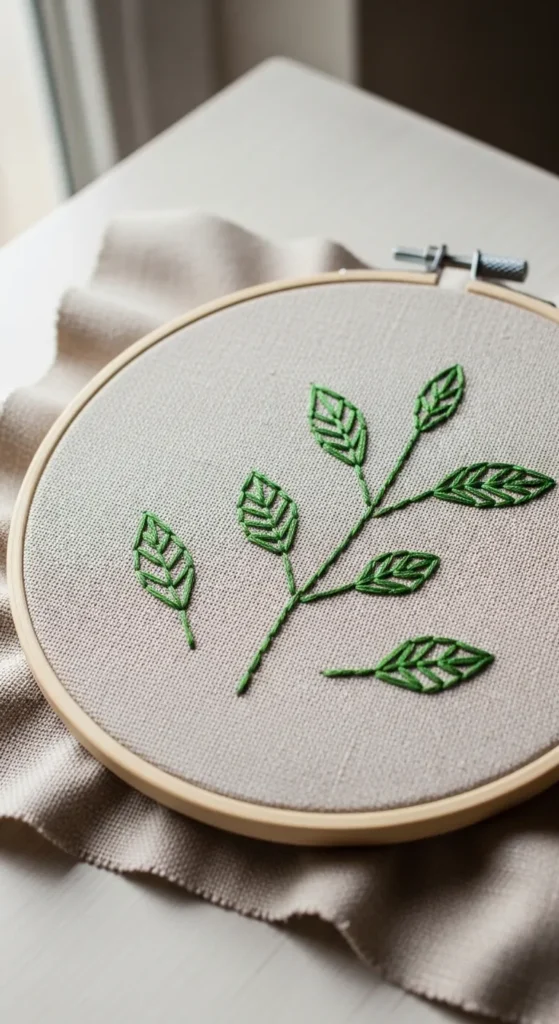
Straight stitch leaf patterns are very beginner friendly. Each leaf is formed by a few simple straight lines placed together. Try different leaf sizes for variety. Green thread shades can make the design look natural. This pattern works well on table cloth edges or small fabric corners. Mark leaf shapes lightly before stitching. Keep spacing balanced for a clean layout. It is a relaxing design that helps improve control of direction and spacing.
5. French Knot Dot Texture
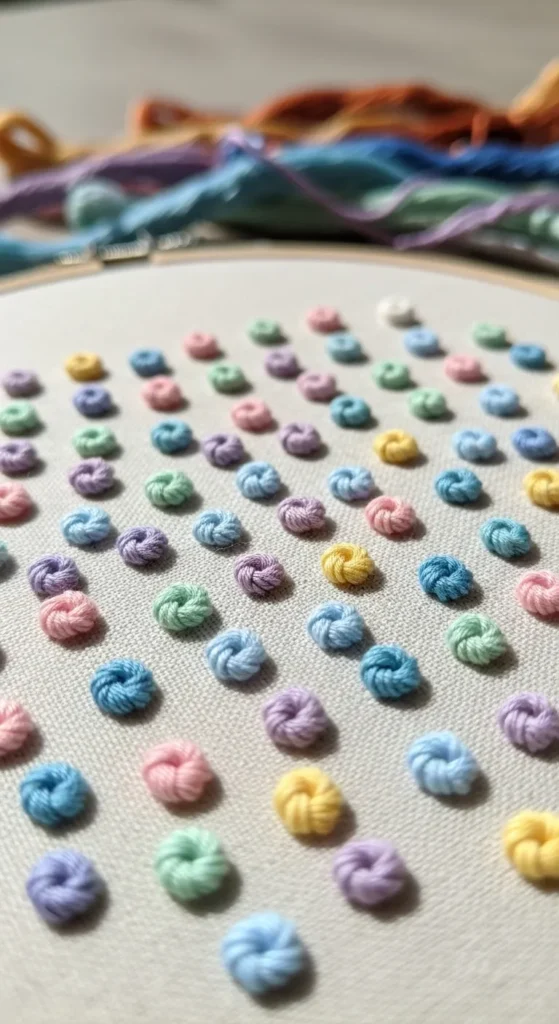
French knots create small raised dots on fabric. They are made by wrapping thread around the needle before pulling through the fabric. Beginners may take time to get even knots, but short practice helps. Use them to form simple patterns like clusters or scattered dots. This design works well for flower centers or decorative accents. Try mixing two or three colors for a playful look. Keep thread tension steady to avoid loose knots.
6. Chain Stitch Curves
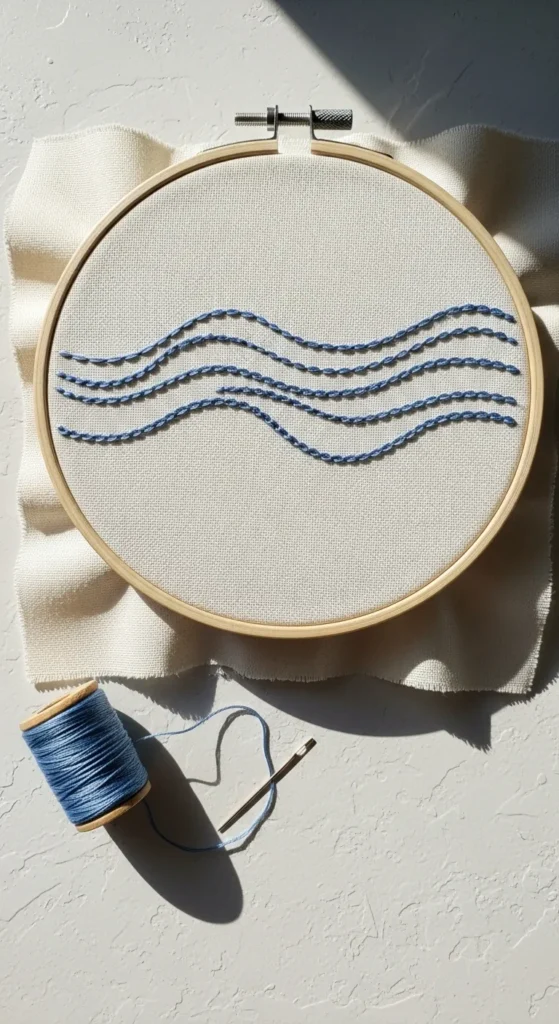
Chain stitch creates linked loops that form smooth curves. It is useful for borders and flowing shapes. Beginners can draw curved lines first, then follow them with stitches. This design works for decorating sleeves or fabric edges. Use bright thread colors for visible contrast. Keep loop size equal for neat results. It helps build hand rhythm and steady movement across fabric.
7. Simple Heart Outline Stitch
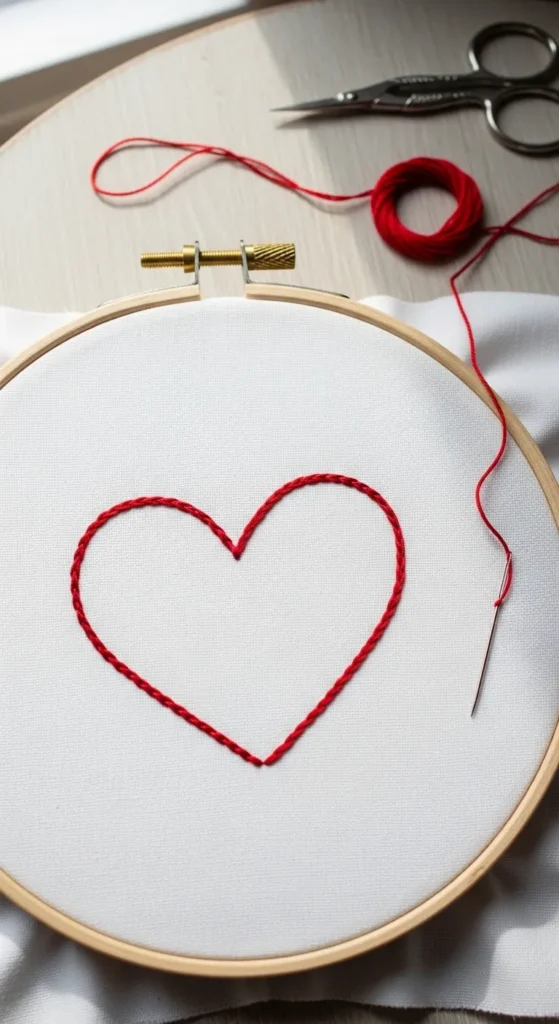
Heart outlines are easy and meaningful. Use back stitch or running stitch to form the shape. Start from the top center and follow the pencil outline. Fill color is optional, but outline only also looks clean. This design works well for small gifts or fabric patches. Beginners can practice symmetry by keeping both sides equal. Use soft red or pink thread for a warm look.
8. Zigzag Border Stitch
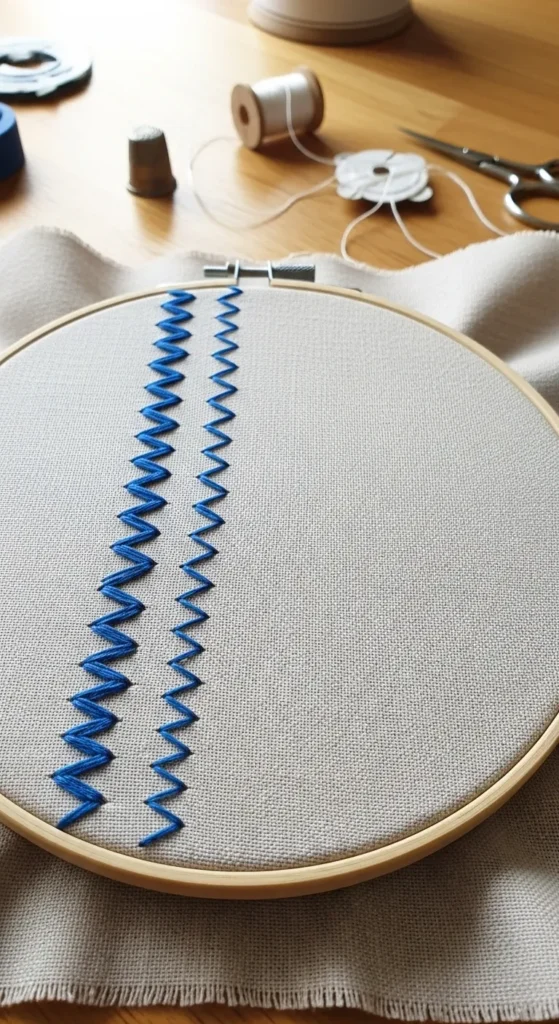
Zigzag stitches are useful for borders. They create a repeated angled line pattern. Beginners can stitch along fabric edges or drawn lines. This design helps improve spacing control. It works well on scarves, napkins, or fabric trims. Use contrasting thread colors for visible patterns. Keep angle spacing consistent for a clean border look.
9. Sunburst Stitch Design
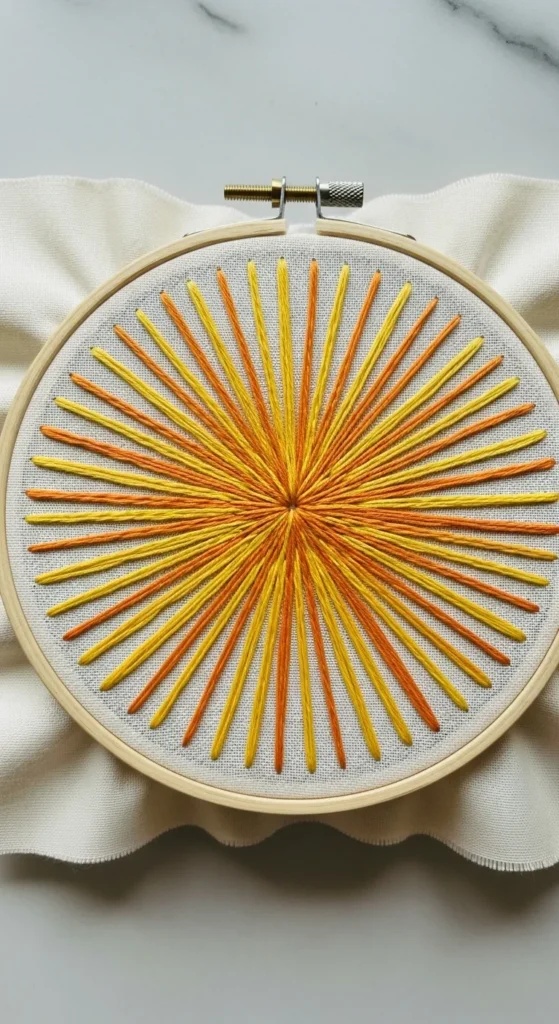
Sunburst stitch uses straight lines radiating from a center point. It forms a simple sun-like design. Beginners can mark a center dot and stitch outward lines evenly. This pattern works well on tote bags or cushion covers. Use warm colors like yellow and orange. Keep spacing equal for a balanced look. It builds direction control and stitch placement skill.
10. Simple Vine Pattern
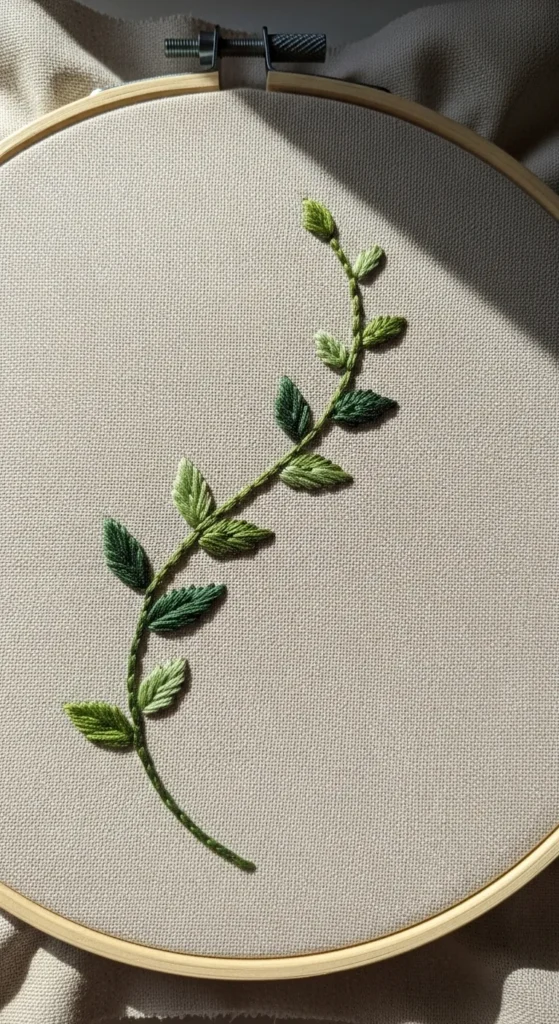
Vine patterns use curved lines with small leaf additions. Start with a long curved stem using back stitch. Add leaves using straight stitches. This design works well for fabric borders. Beginners can keep spacing loose for a natural feel. Use green tones for a plant-like appearance. It is easy to scale for small or large fabric pieces.
11. Cross Stitch Grid Pattern
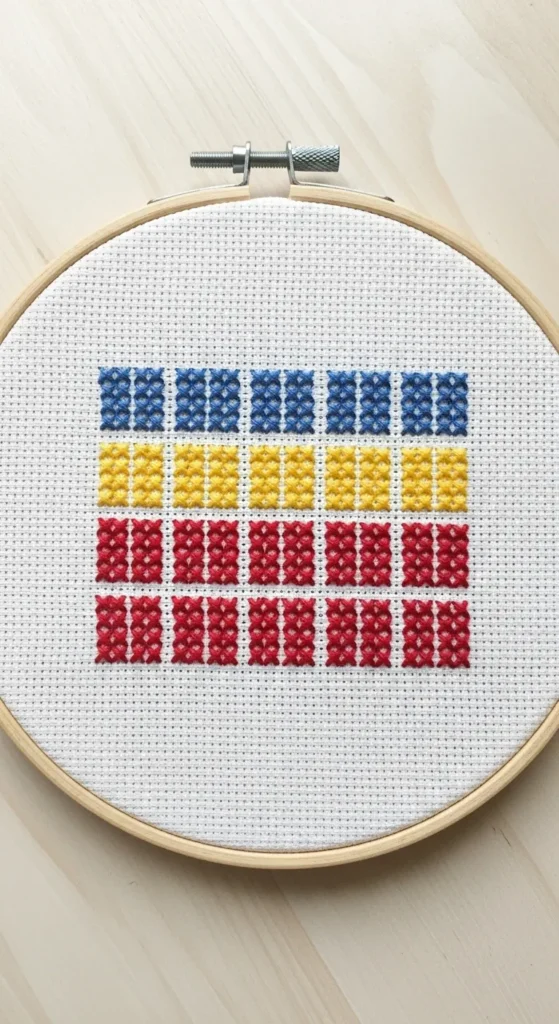
Cross stitch forms X-shaped patterns on a grid. Beginners can start with simple rows. This design works well for small motifs like flowers or shapes. Use even fabric weave for better alignment. Try two or three colors for variation. It helps develop patience and consistency in stitching.
12. Lazy Daisy Cluster
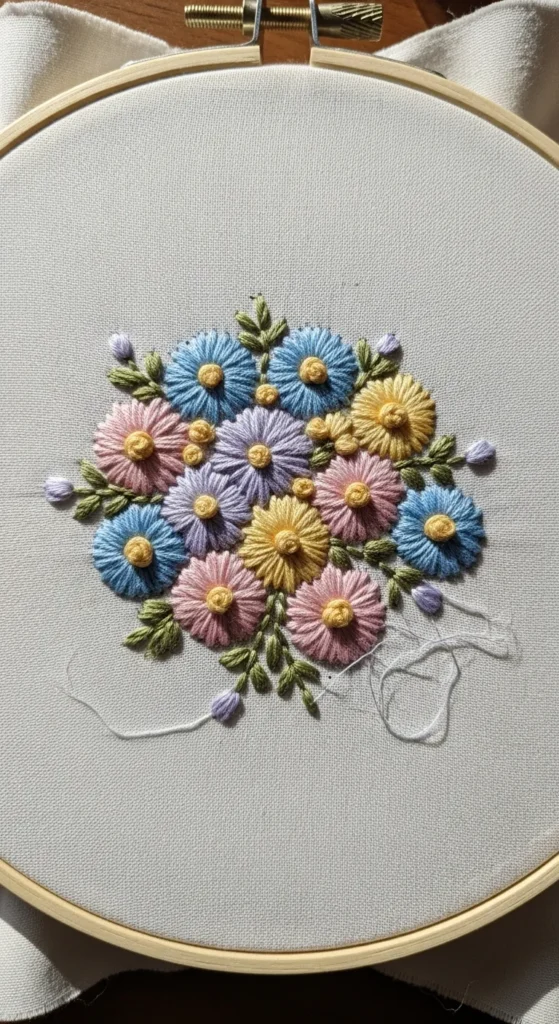
Lazy daisy cluster is a group of looped flower stitches. Beginners can place flowers close together or spaced apart. Use soft colors like lavender, pink, and white. This design works for decorating corners of fabric items. Keep petal loops even in size. It is simple and visually soft.
13. Simple Wave Lines
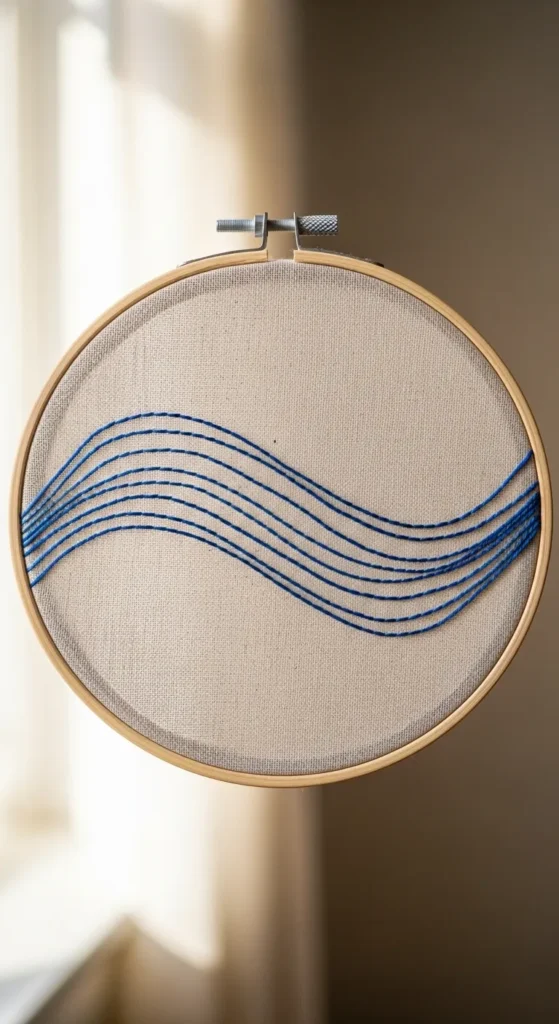
Wave lines are formed using curved running stitch patterns. Beginners can draw wave shapes first. Stitch slowly along curves. This design works well for borders or background texture. Use one or two thread colors. It helps improve smooth hand movement.
14. Buttonhole Edge Stitch
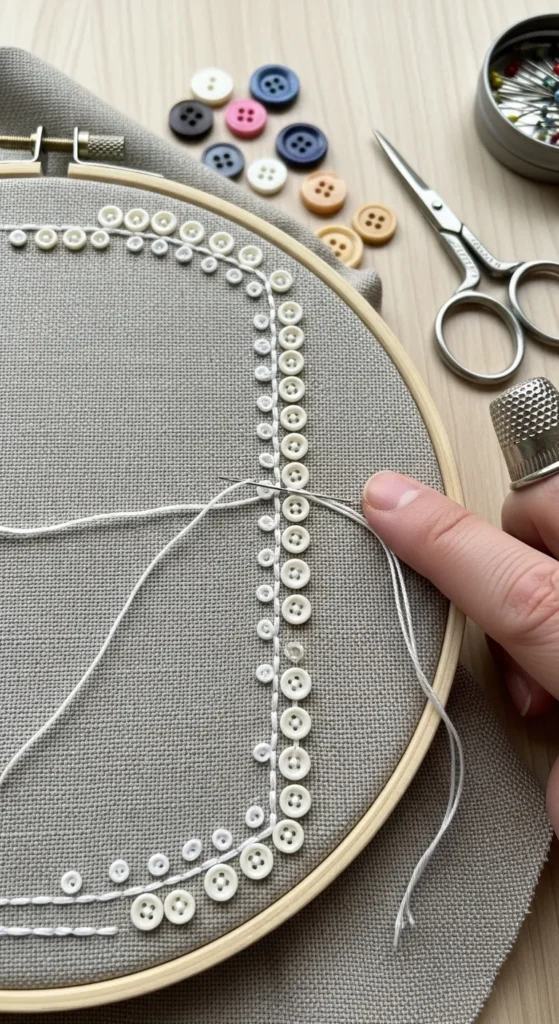
Buttonhole stitch is used for strong fabric edges. Beginners can practice along straight lines first. It forms small looped edges that hold fabric neatly. This design is useful for patches and felt crafts. Keep loop spacing even for a tidy finish.
15. Spiral Stitch Design
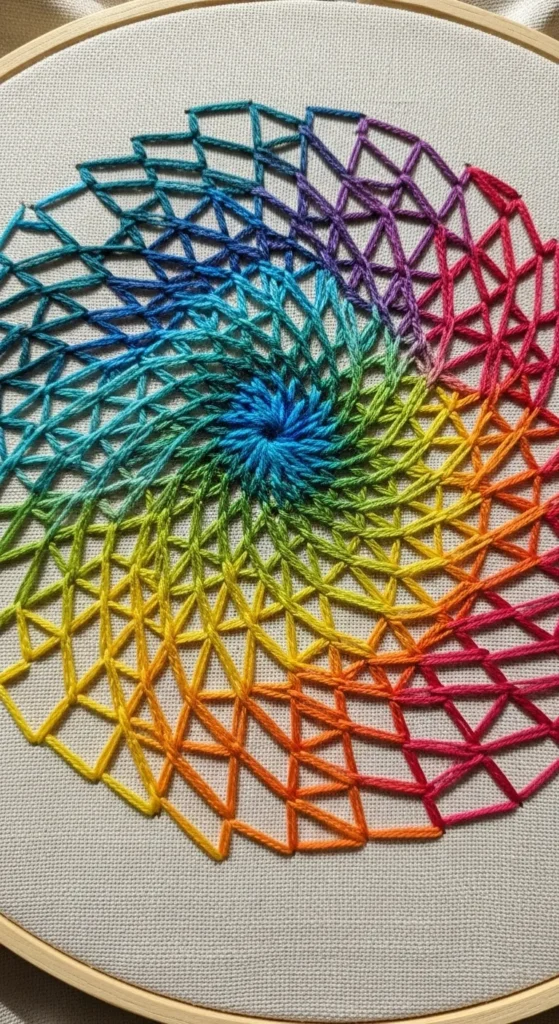
Spiral stitch starts from a center point and moves outward. Beginners can slowly expand circles using running or back stitch. This design works well for decorative patches. Use gradual color changes for visual interest. Keep spacing consistent while moving outward.
16. Simple Star Pattern
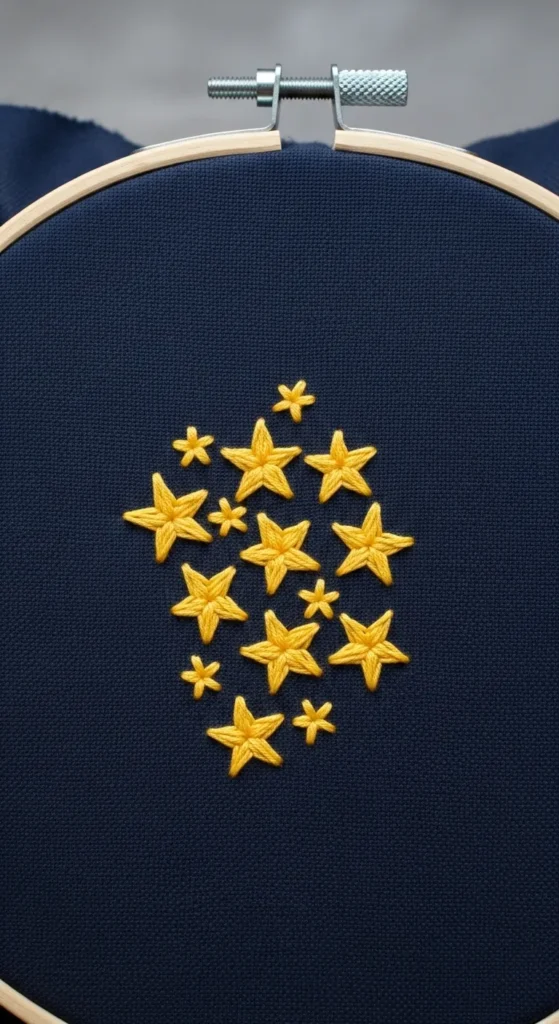
Star patterns use straight stitches crossing at a center point. Beginners can start with five-point stars. This design works well on small fabric pieces. Use bright thread for contrast. Keep points even for balanced shapes.
17. Scallop Border Stitch
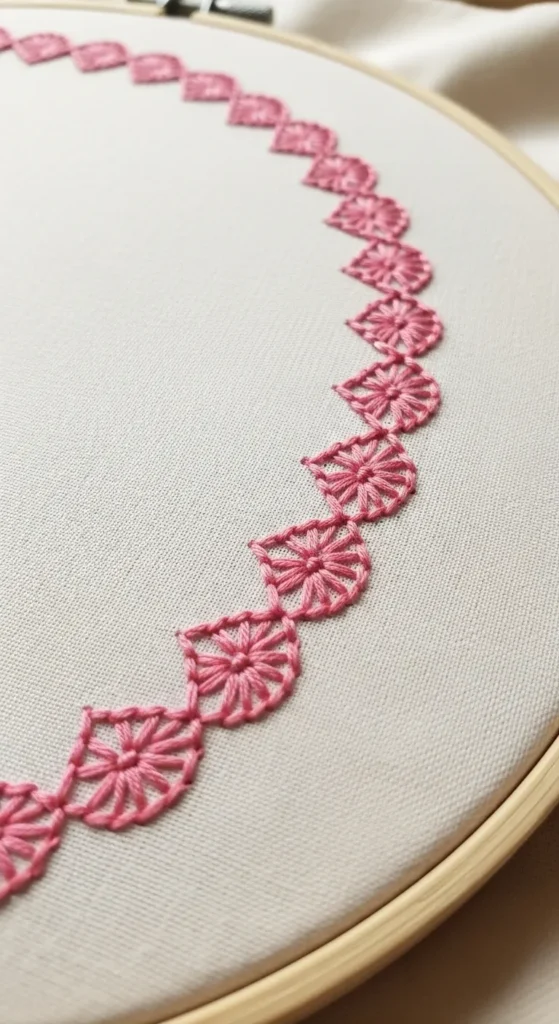
Scallop borders form rounded repeated shapes. Beginners can draw half-circle guides first. Stitch along the curves carefully. This design works for hems and edges. Use soft thread colors for a gentle look.
18. Simple Flower Stem Stitch
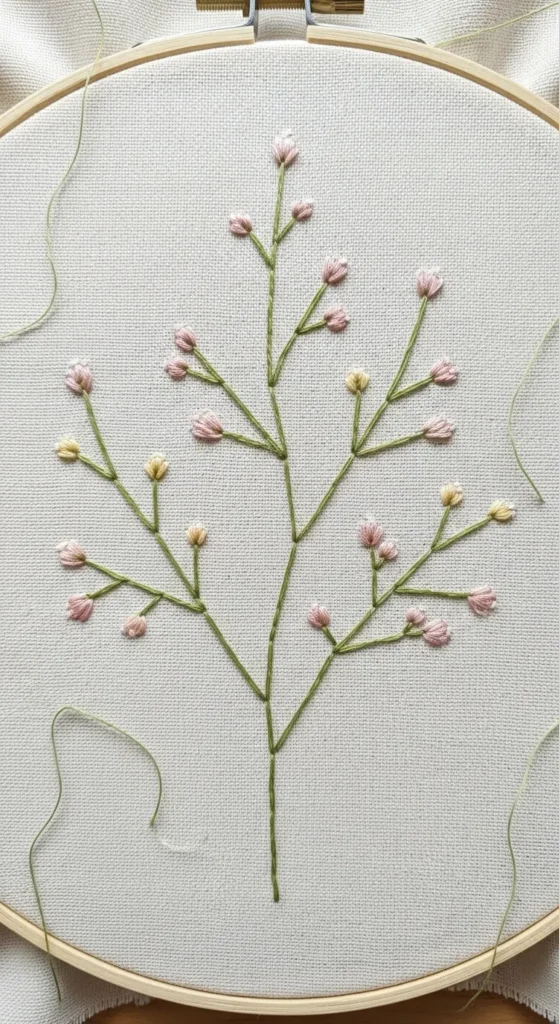
Stem stitch creates smooth curved lines like plant stems. Beginners can follow pencil-drawn stems. This design pairs well with small flowers. Keep stitch direction consistent for smooth curves.
19. Dot Cluster Pattern
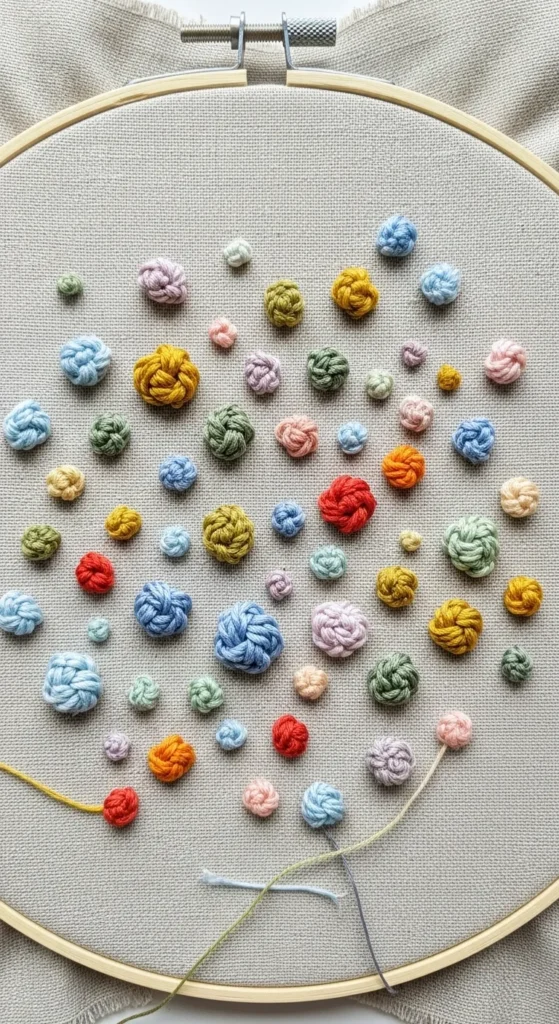
Dot clusters use small knots placed in groups. Beginners can space them randomly or in shapes. This design works well for background texture. Use multiple colors for variation.
20. Chevron Line Stitch
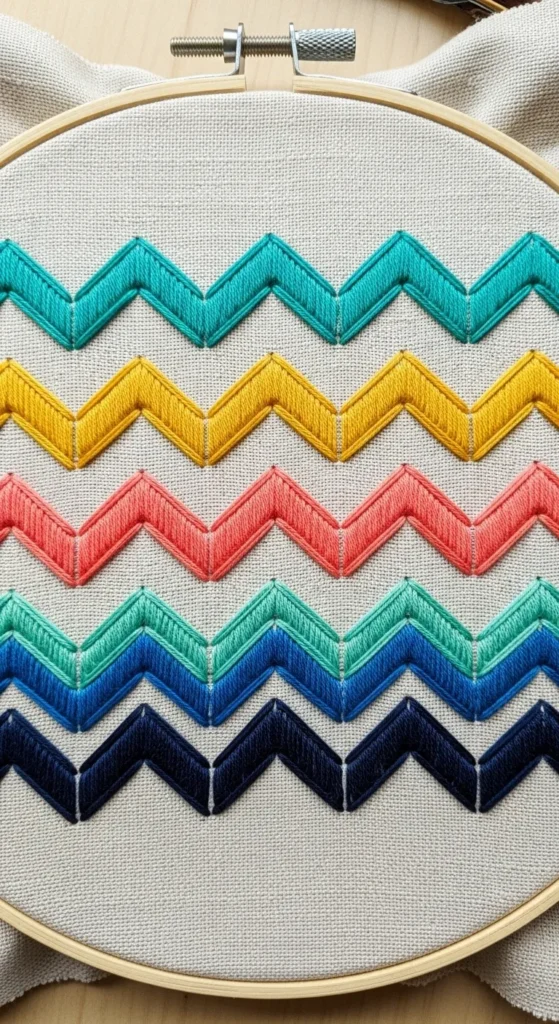
Chevron pattern uses angled lines forming a repeating V-shape. Beginners can draw guide lines first. Stitch slowly for even angles. This design works well for borders.
21. Mini Fruit Outline Designs
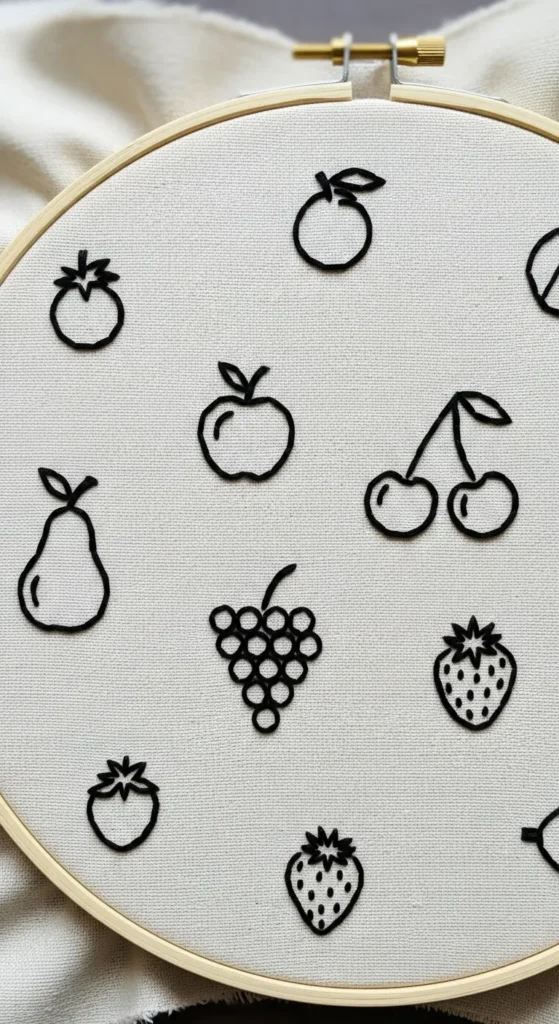
Fruit outlines use basic shapes like circles and curves. Beginners can try apples, cherries, or lemons. Use bright thread colors. Keep outlines simple and clean.
22. Simple Cloud Shapes
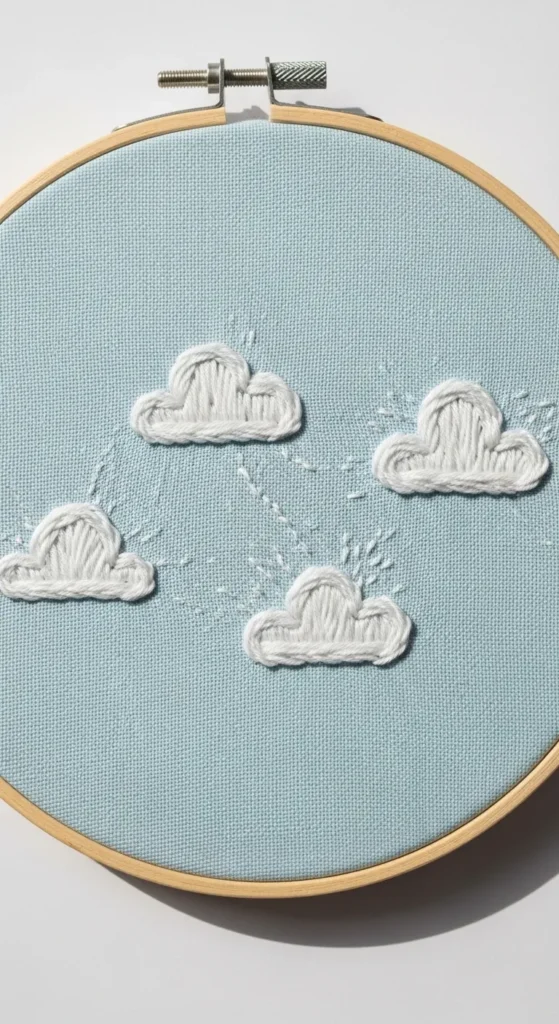
Cloud shapes are formed using curved stitches. Beginners can draw soft outlines first. This design works well for soft themed crafts. Keep edges rounded.
23. Geometric Square Pattern
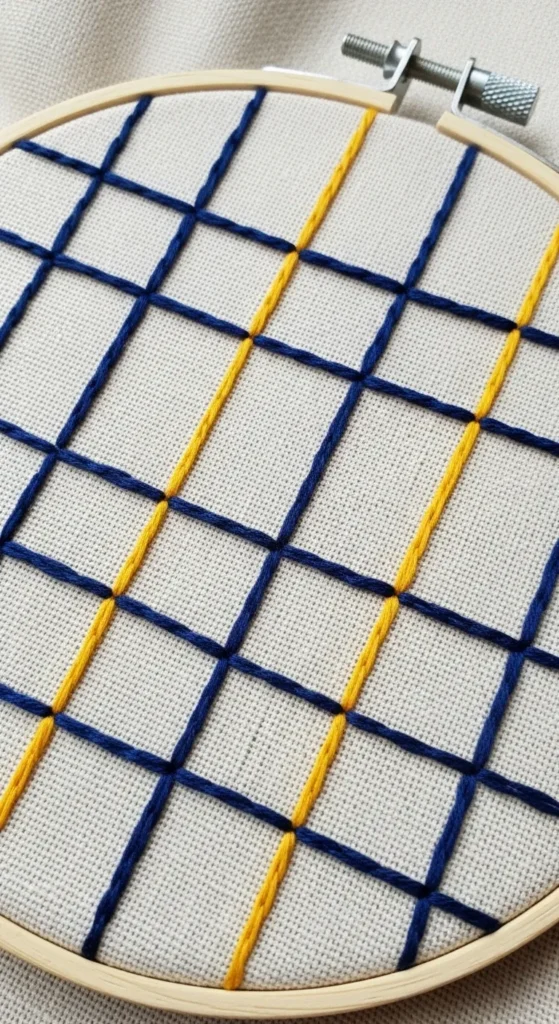
Square patterns use straight lines forming boxes. Beginners can follow grid marks. This design helps improve straight stitch control. Use two colors for contrast.
24. Simple Butterfly Outline
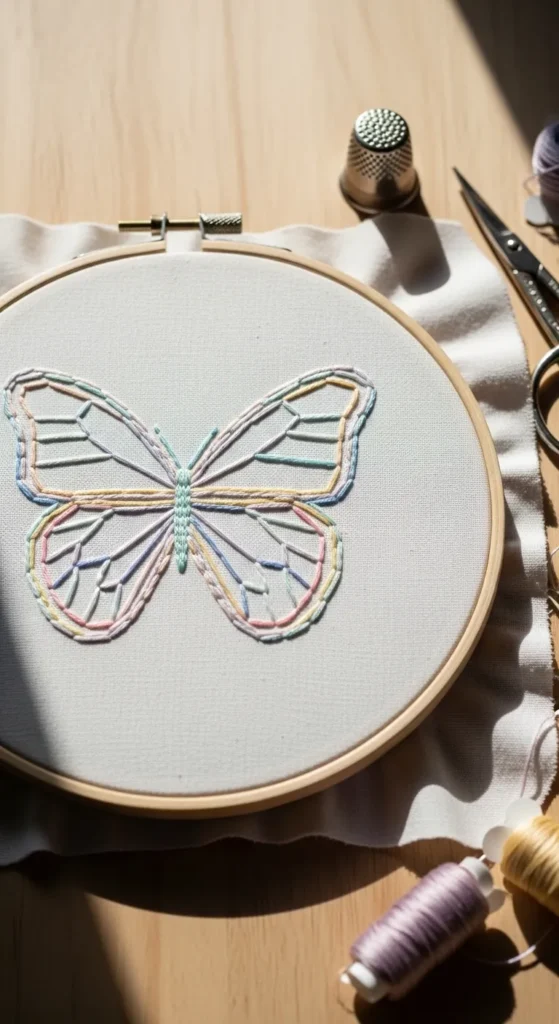
Butterfly outlines use curved and straight stitches. Beginners can split wings evenly. This design works well for small fabric art pieces.
25. Mixed Stitch Sampler
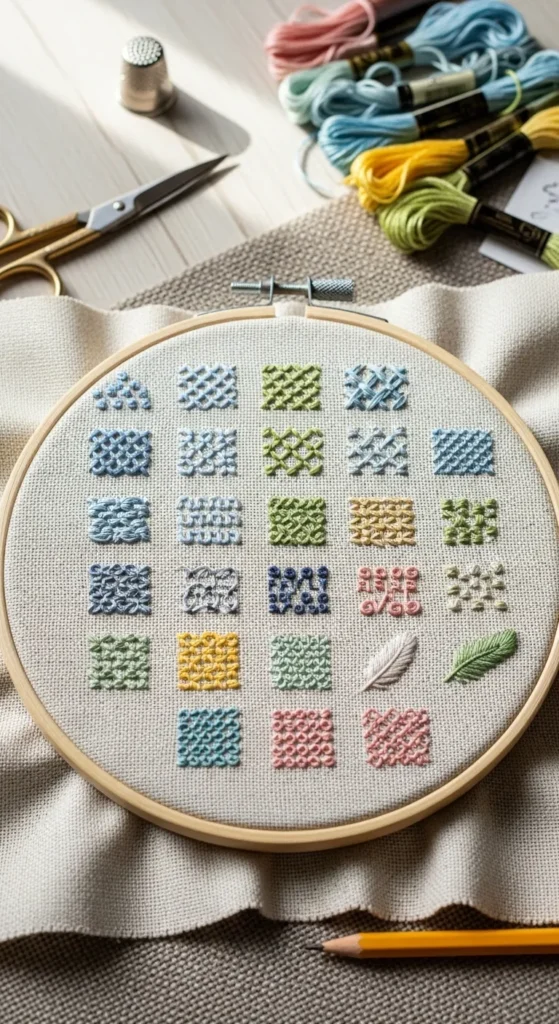
A sampler combines different stitches in one piece. Beginners can divide fabric into small sections. Try running stitch, back stitch, and French knots. This helps practice all basic skills in one place.
Conclusion
These beginner embroidery designs give steady practice through simple shapes, lines, and patterns. Each idea uses low-cost materials and short practice time. Regular work with these stitches builds control and comfort with needle and thread, while opening space for personal fabric projects and creative handmade items.