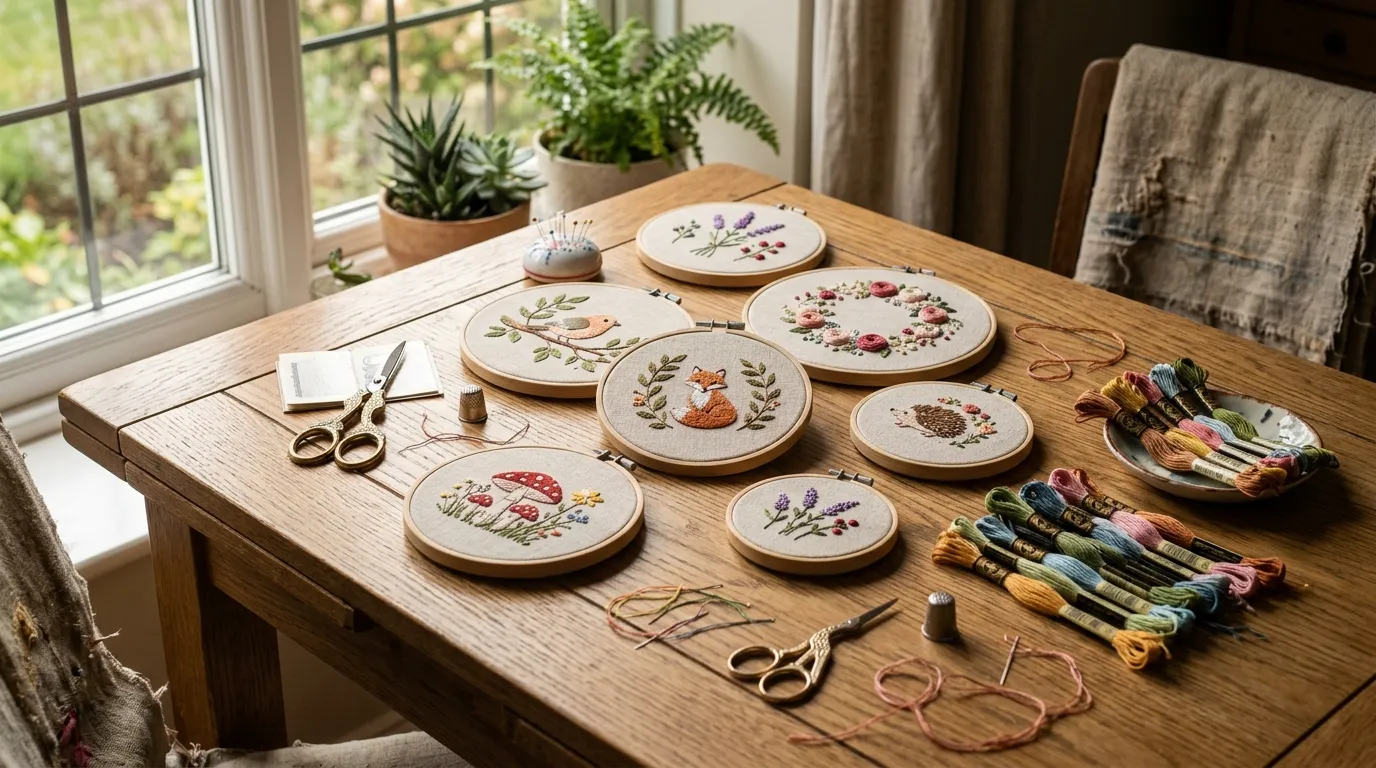

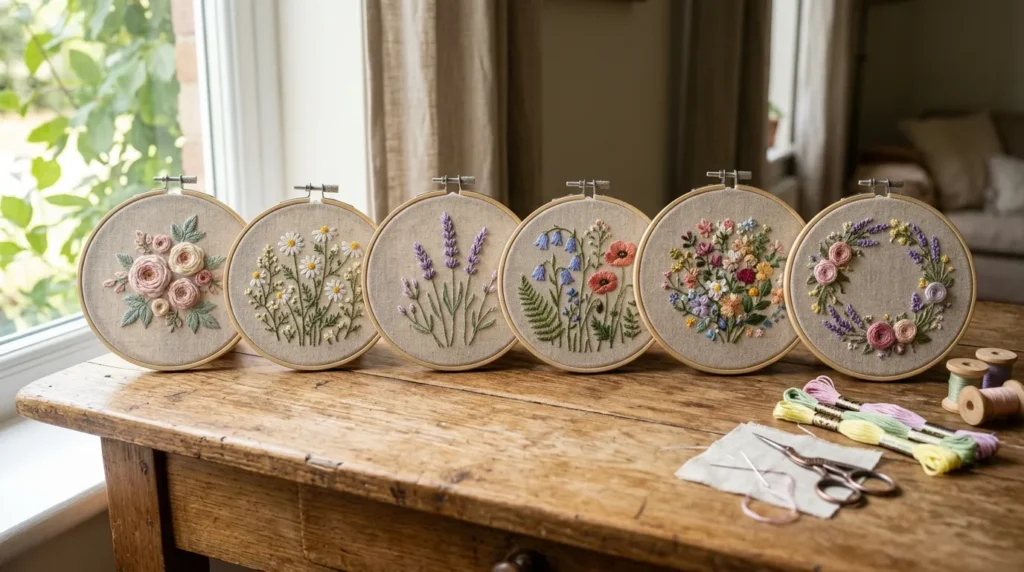
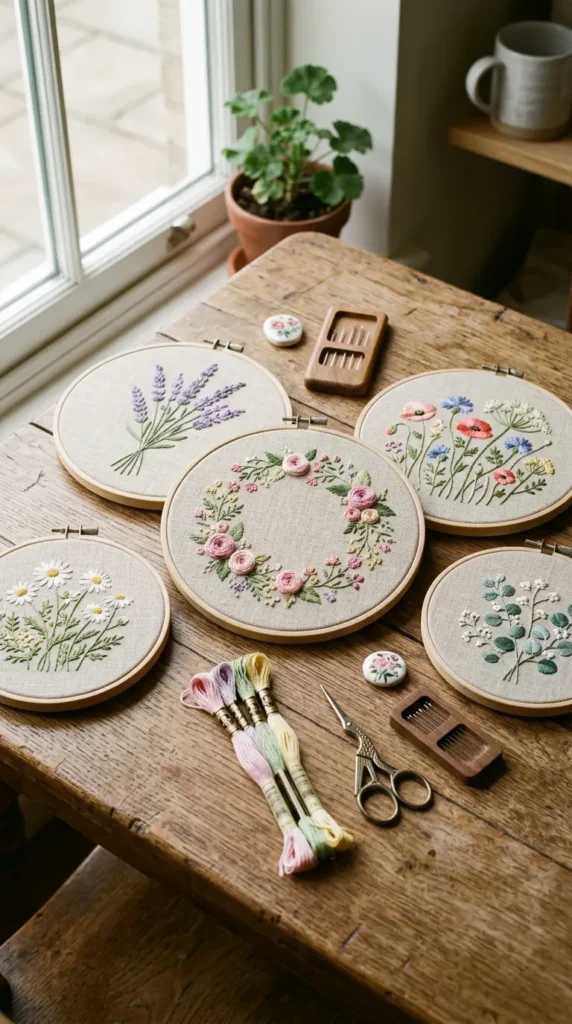
Hand embroidery flower designs bring a calm, creative way to decorate fabric with personal expression. Small floral stitches can turn plain cloth into art pieces for clothing, home decor, or gifts. These designs work well for beginners and also for those who enjoy slow, mindful crafting. With simple tools like cotton thread, hoops, and basic needles, anyone can start without spending much. This list shares 23 floral embroidery ideas that are easy to try, budget-friendly, and suitable for practice at home. Each idea focuses on simple steps, natural inspiration, and practical use so you can create charming handmade pieces at your own pace.
1. Simple Rose Outline Stitch
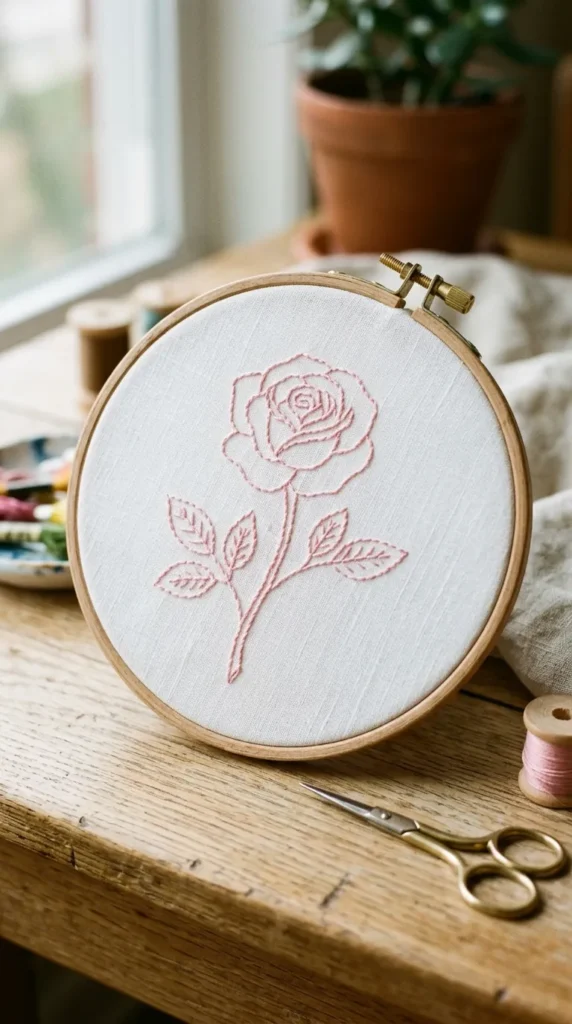
A simple rose outline is a great starting point for floral embroidery. It uses light, curved stitches that form the shape of a rose without heavy filling. This design works well on handkerchiefs, tote bags, and pillow covers. You only need a small hoop, pink or red thread, and a basic backstitch technique.
Beginners can sketch a small spiral first, then follow the line with thread. Keep stitches even and spaced gently. The design stays light and does not require many colors. This makes it low-cost and easy to practice.
Try using leftover thread from other projects. Even thin strands work fine. A soft cotton fabric gives the best result. This rose outline can also be repeated in small clusters for a delicate pattern effect on clothing edges or sleeves.
2. Daisy Chain Pattern
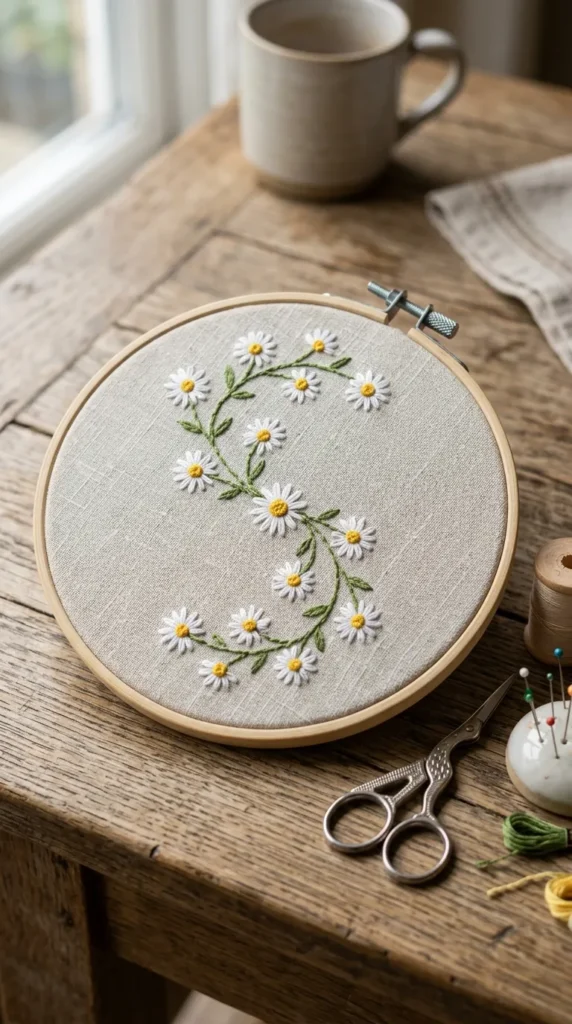
A daisy chain pattern feels light and cheerful. It uses small white petals and a yellow center, repeated in a flowing line. This design is perfect for borders on scarves, dresses, or table napkins.
Start with small circular outlines for each flower. Add simple straight stitches for petals and a tiny knot for the center. The pattern does not take much thread, so it is budget-friendly.
You can space the daisies closely for a dense look or spread them apart for a soft effect. Beginners can trace a light pencil line to guide placement. Cotton thread works well, and leftover yellow thread can be reused for centers.
This pattern is also good for practice because it builds control over spacing and symmetry. It can be stitched in rows or curved lines for decorative edging.
3. Lavender Sprigs
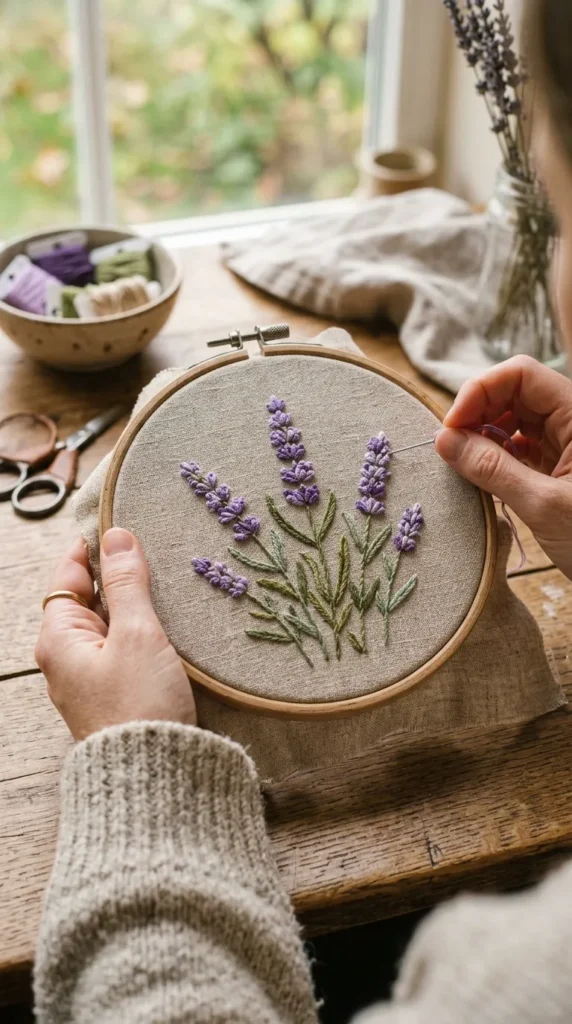
Lavender sprigs bring a calm garden feel to embroidery work. The design uses thin green stems with small purple stitches arranged like tiny buds. It is simple and works well for beginners who want light floral detail.
Start with a straight stem using a backstitch. Then add short purple stitches on both sides to form flower clusters. The shape does not need perfect symmetry, which makes it easy to stitch.
This design works nicely on small fabric pieces like bookmarks, pouches, or shirt pockets. It uses very little thread, so it stays cost-friendly.
You can vary the shade of purple for a more natural look. Even leftover thread from other projects can be used. Lavender sprigs also pair well with other small flowers for mixed floral designs.
4. Sunflower Bold Stitch
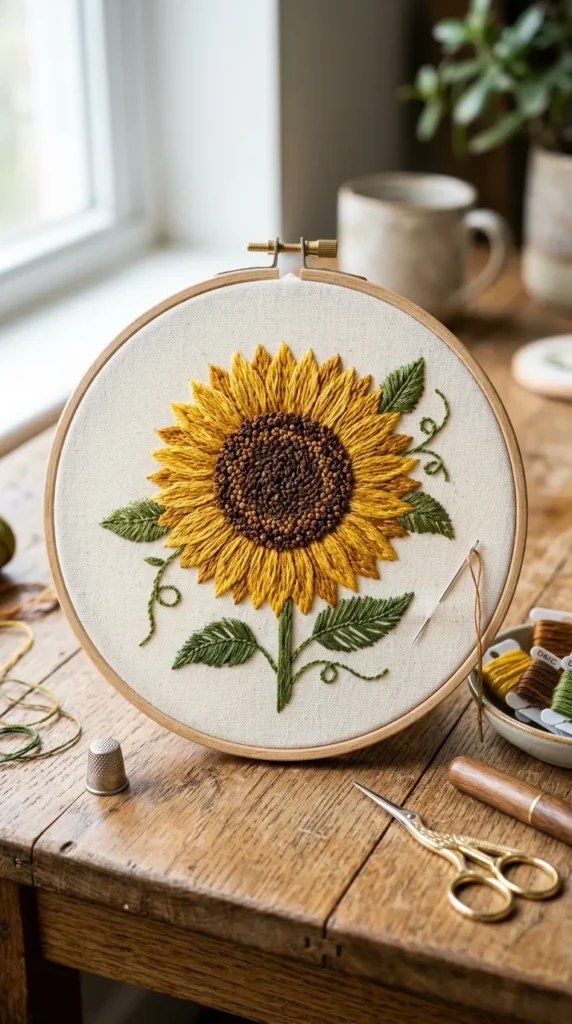
A sunflower design brings a strong and warm look to embroidery work. It uses wide yellow petals and a textured center. This design works well for tote bags, cushion covers, and wall hoops.
Begin with a round base for the center. Fill it using tight knots or short stitches in brown thread. Add long yellow petals using straight stitches around the circle.
Keep spacing even, but small variations give a more natural feel. This design may take more thread than simpler flowers, but it remains affordable using basic cotton materials.
You can stitch one large sunflower or a group of smaller ones. It also pairs well with green leaves for balance. Beginners can practice petal direction to improve control over stitch placement.
5. Cherry Blossom Branch
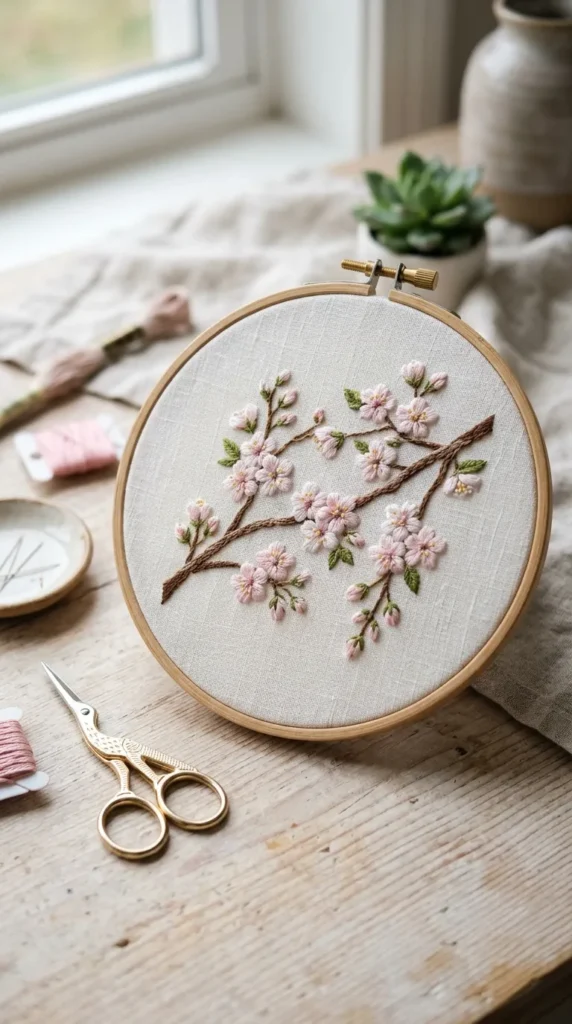
Cherry blossom embroidery uses soft pink flowers on thin branches. It gives a light and peaceful appearance. This design is good for scarves, dresses, or framed hoop art.
Start with a thin brown branch using a stem stitch. Add small five-petal flowers using simple straight stitches or French knots for the center.
Keep spacing loose to maintain a natural branch flow. The design does not need perfect structure, which makes it easy for beginners.
Use soft pink thread for petals and light brown for branches. It works well with leftover threads, making it budget-friendly.
This design also allows small creative changes, like adding a few falling petals or extra buds for variation.
6. Minimal Tulip Design
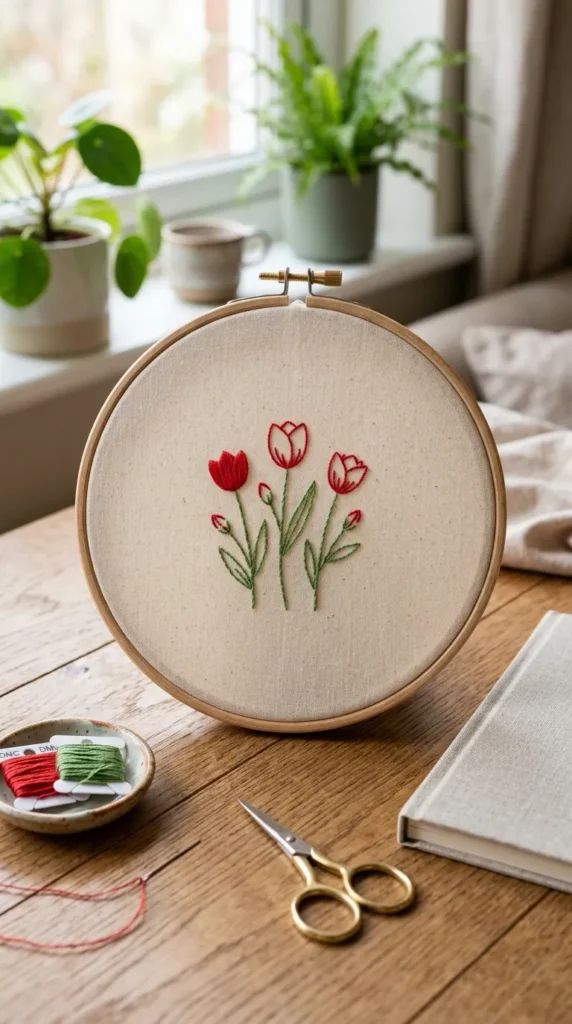
Minimal tulip embroidery focuses on simple shapes and clean lines. It uses a closed petal shape with a straight green stem. This design works well for modern clothing and simple home decor.
Start with a teardrop shape for the flower using red thread. Fill it lightly or leave it outlined. Add a straight green stem and two small leaves.
This design uses very few stitches, making it quick and low-cost. It is perfect for beginners who want fast results without complex steps.
Tulips can be placed in rows or single stems. You can also mix colors like yellow or pink for variety. The simplicity of this design makes it useful for practice and everyday items.
7. Wildflower Cluster
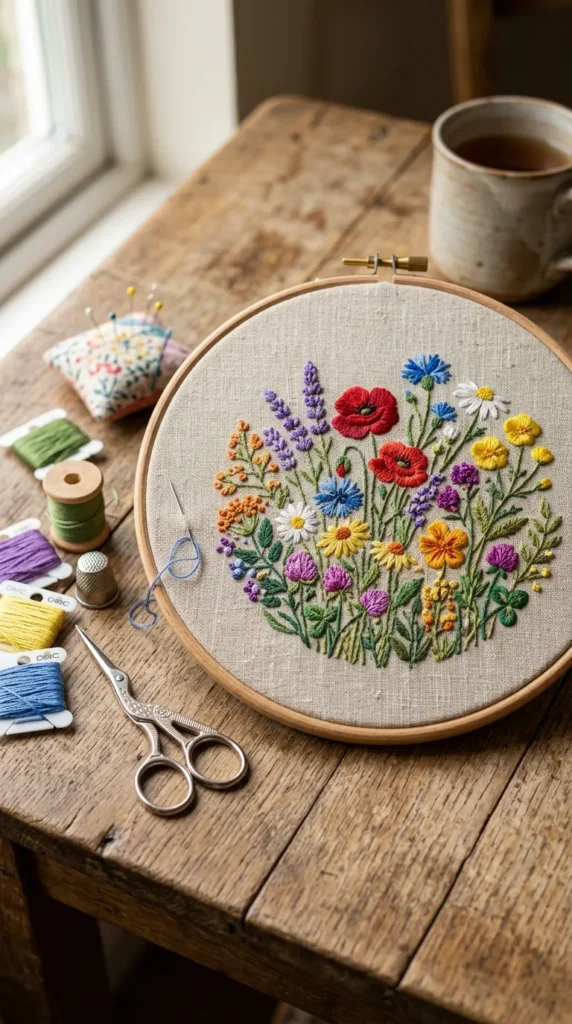
Wildflower clusters bring a natural garden look to fabric. This design mixes small flowers in different colors and shapes. It feels free and easy rather than structured.
Start with small scattered flowers using basic stitches like straight stitch, lazy daisy, and French knots. Add thin green stems connecting some flowers.
There is no strict pattern, which makes it beginner-friendly. You can use leftover thread in different colors, making it very budget-friendly.
This design works well on larger fabric areas like tote bags or table runners. The random placement gives a soft meadow look without needing advanced skills.
8. Floral Vine Border
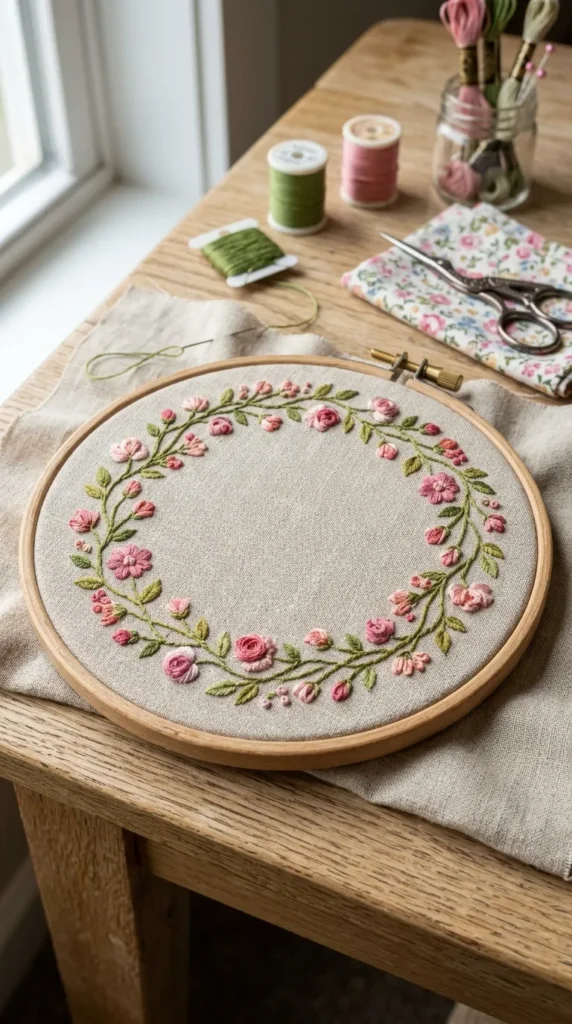
A floral vine border is used to decorate edges of fabric. It features curling stems with small flowers and leaves. This design works well for sleeves, hems, and pillow edges.
Begin with a curved green stem stitched in a flowing line. Add small flowers at intervals using pink or white thread. Include small leaves for balance.
Keep the vine light and not too dense. This helps maintain a soft decorative edge. It is cost-friendly because it uses thin lines and minimal thread.
You can repeat the same pattern along long fabric pieces. Beginners can draw a light pencil guide before stitching.
9. Peony Layered Flower
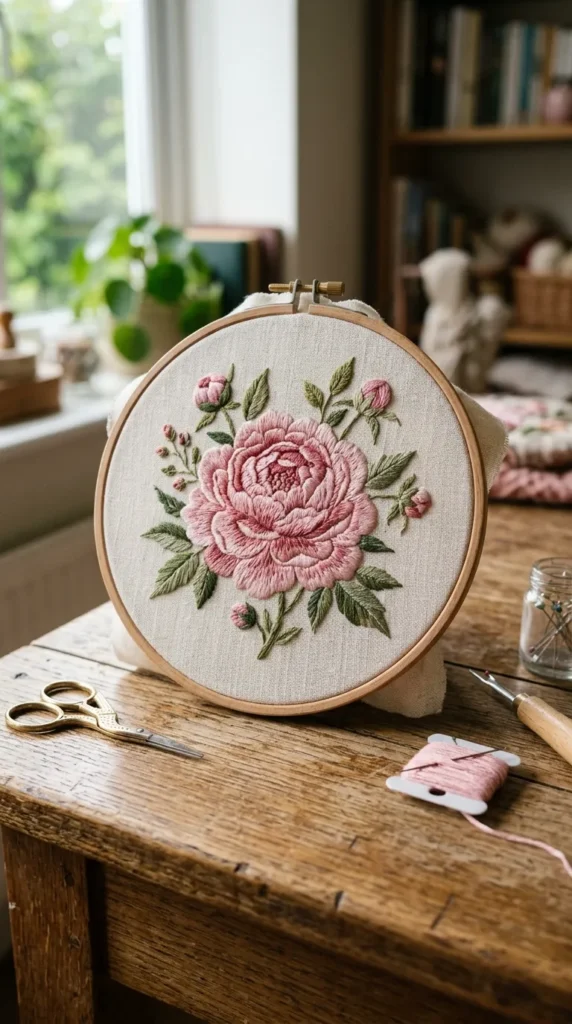
Peony embroidery focuses on layered petals that create a full flower shape. It uses soft curves and overlapping stitches.
Start with a small center using tight stitches. Add outer petals in larger curved shapes using satin or long short stitches.
This design uses more thread but still remains affordable with basic cotton floss. Soft pink tones work best for a natural look.
Peonies are good for hoop art or cushion covers. Beginners can practice layering slowly to build shape control.
10. Forget-Me-Not Tiny Flowers
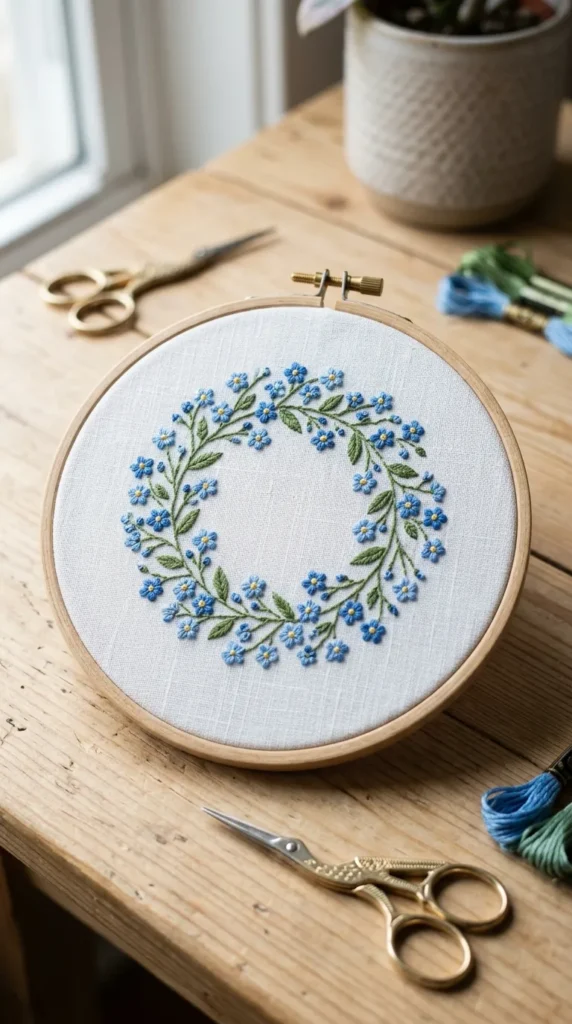
Forget-me-not flowers are small and simple. They use tiny blue petals with a yellow center. This design is easy and quick to stitch.
Each flower can be made using five small straight stitches. Add a tiny knot in the middle.
The pattern works well as scattered decoration on collars, sleeves, or small fabric items. It uses very little thread, making it budget-friendly.
You can space flowers evenly or cluster them for a soft effect.
11. Marigold Bright Bloom
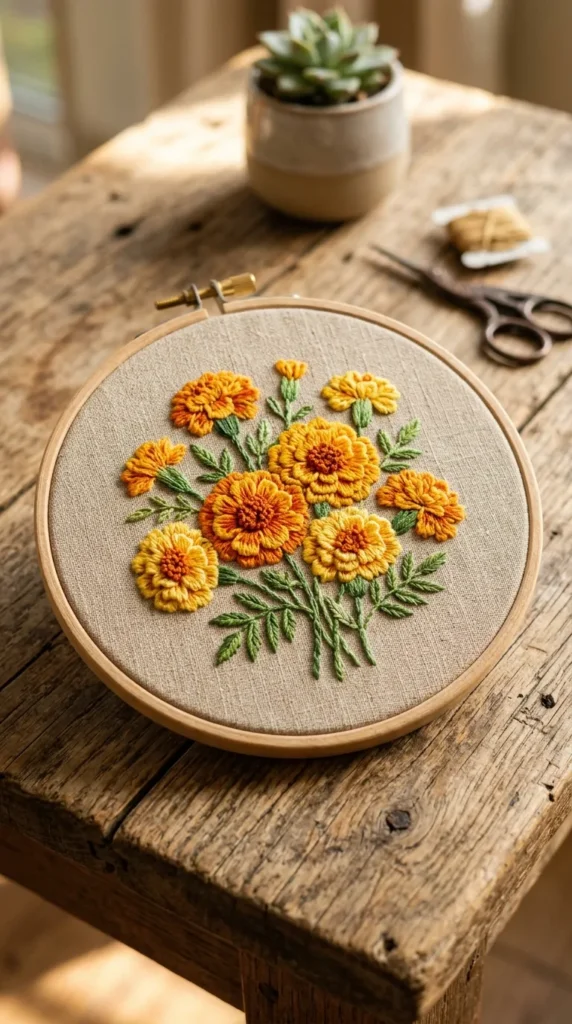
Marigold embroidery uses bright orange and yellow tones. The flower has layered petals in circular form.
Start with a round center and add small curved stitches around it. Build layers outward for fullness.
This design adds warmth to fabric items like festive clothing or decor pieces. It uses moderate thread but stays simple in structure.
Beginners can practice circular stitching to improve control.
12. Lotus Calm Design
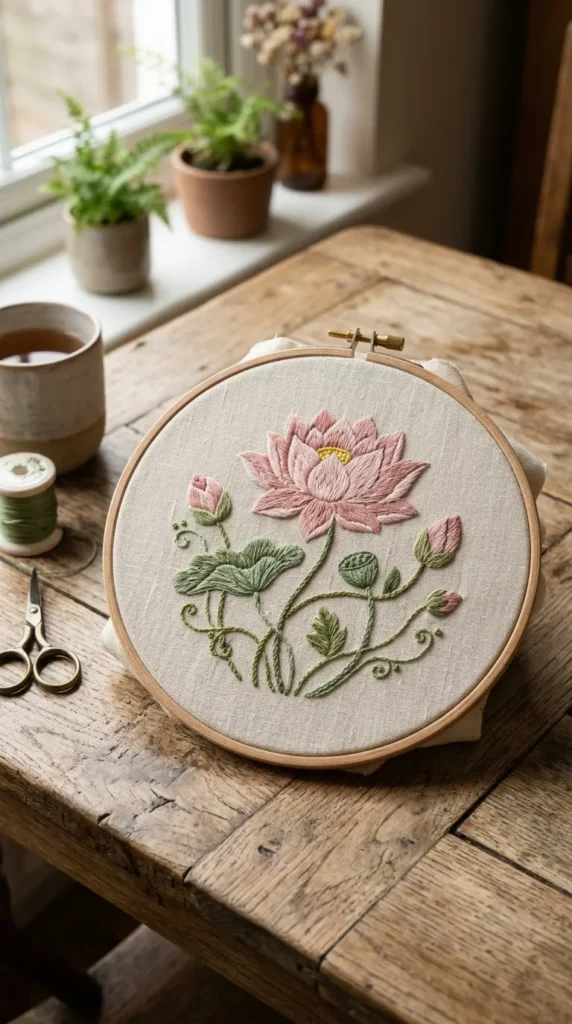
Lotus embroidery shows a balanced flower with layered petals. It uses soft pink tones and a centered shape.
Begin with inner petals and move outward in larger shapes. Keep stitches smooth and even.
This design works well for framed hoop art or cushion designs. It uses moderate thread and simple stitch types.
13. Hibiscus Tropical Flower
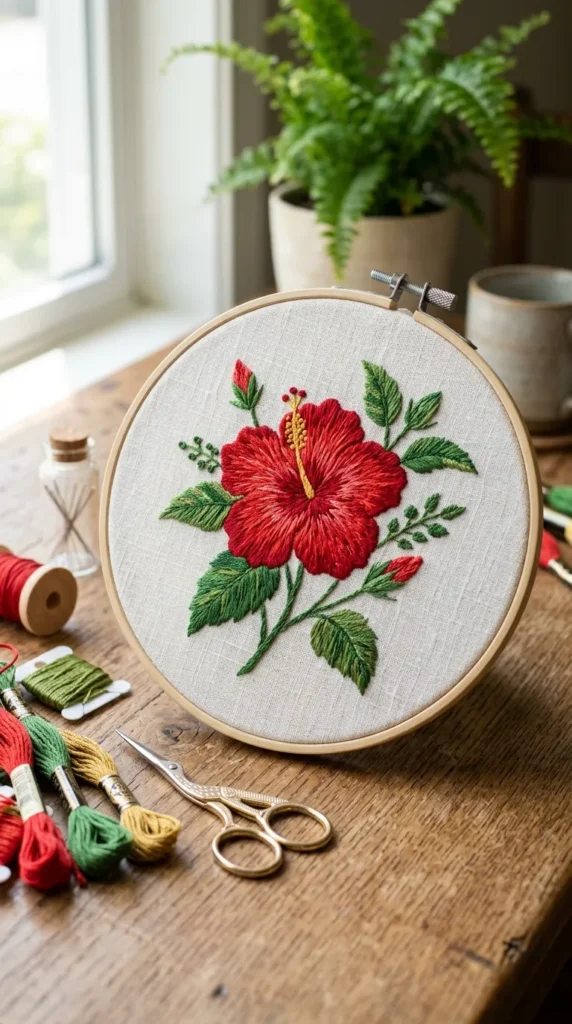
Hibiscus embroidery features large petals and a bold shape. It uses red or pink thread with a long central stamen.
Start with five wide petals using satin stitches. Add thin lines for details.
This design works well for summer clothing and tote bags. It uses more thread but stays simple in structure.
14. Bluebell Hanging Design
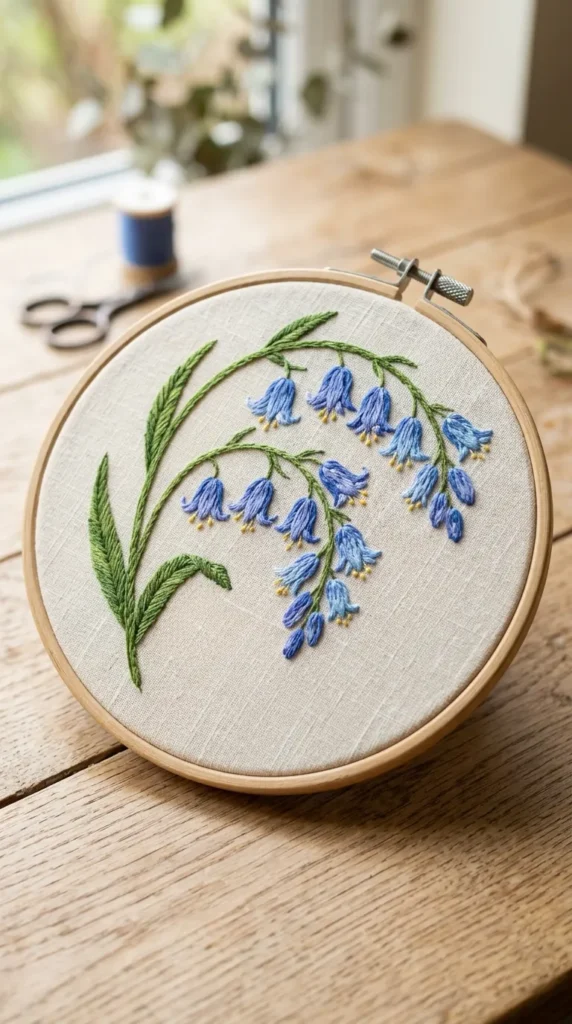
Bluebell embroidery shows small bell-shaped flowers hanging from a curved stem. It uses blue thread with green stems.
Start with a curved line, then add small bell shapes using short stitches.
This design works well for borders and small fabric areas. It uses little thread and is beginner-friendly.
15. Rosebud Small Detail
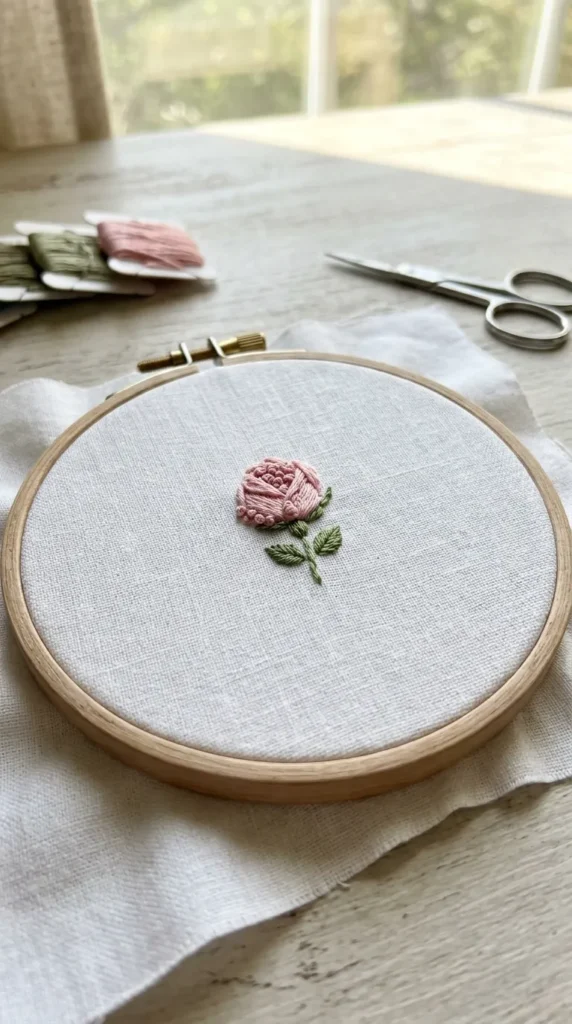
Rosebuds are small closed flowers made with tight curved stitches. They are simple and quick to make.
Start with a small oval shape and wrap thread lightly around it.
This design is perfect for scattered decoration. It uses very little thread.
16. Floral Wreath Hoop
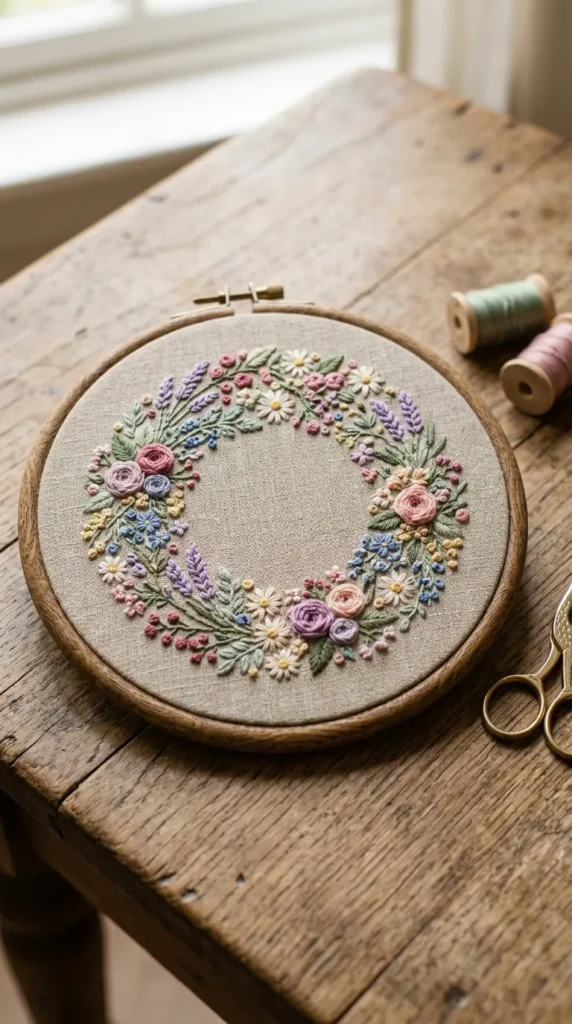
A floral wreath is a circular arrangement of small flowers and leaves. It works well for wall decor.
Start with a light circle guide. Add flowers evenly around the ring.
This design uses mixed stitches and colors. It is slightly longer but still beginner-friendly.
17. Meadow Flower Mix
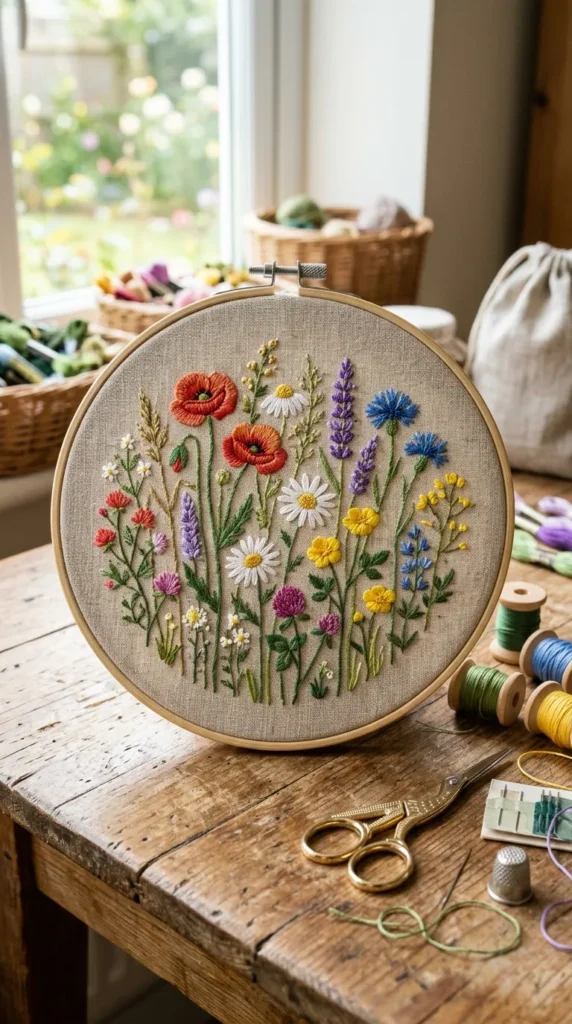
Meadow mix embroidery uses scattered flowers in different sizes. It feels natural and free.
Use small stitches in different colors and place them randomly.
This design is low-cost and uses leftover threads well.
18. Leaf and Flower Combo
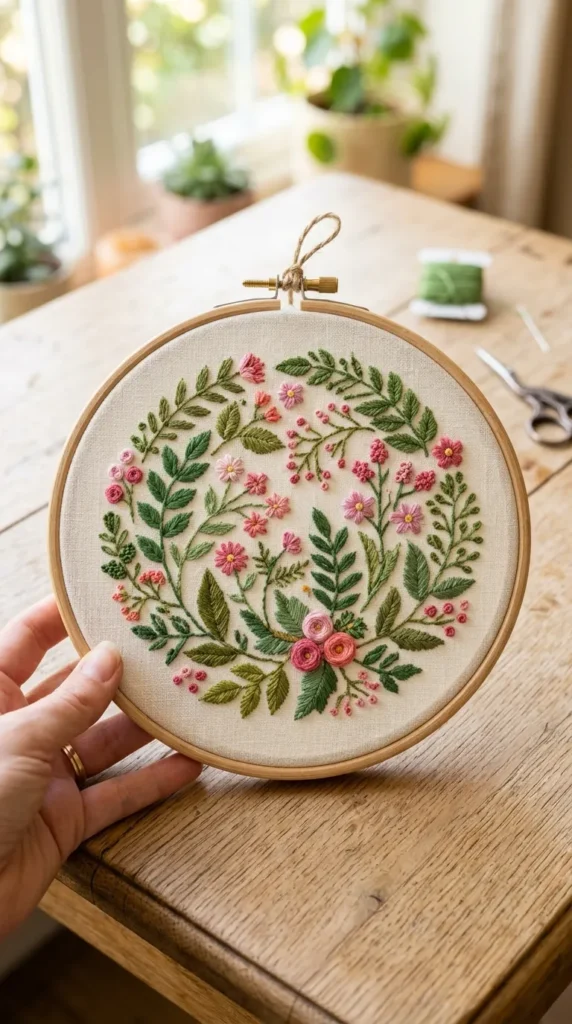
This design mixes leaves with small flowers. It adds balance and fills fabric space.
Start with green stems and add flowers at intervals.
It is simple and uses basic stitches.
19. Floral Line Art Style
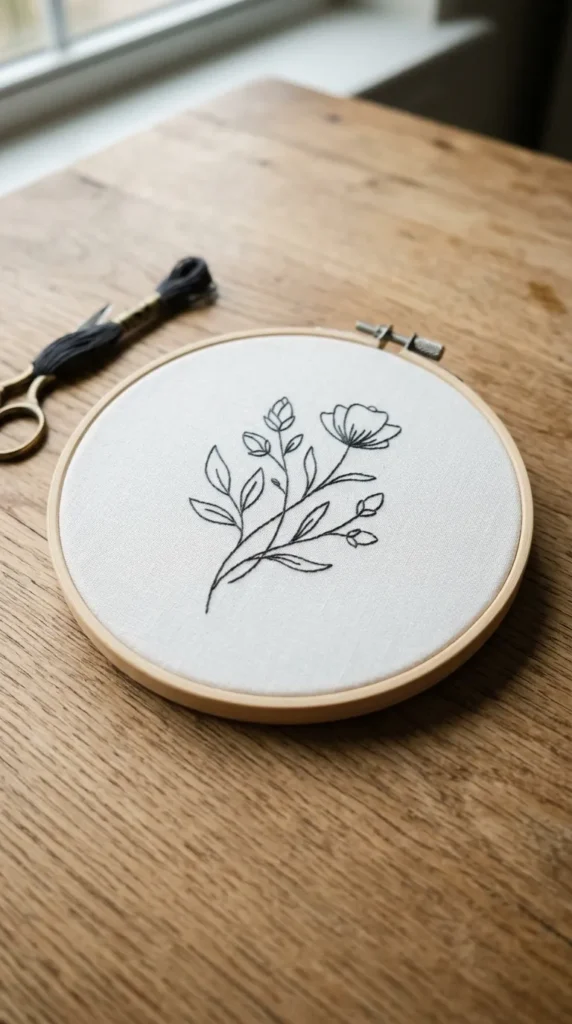
Line art embroidery uses single thread outlines of flowers. It is clean and modern.
Follow simple outlines without filling. This saves thread and time.
20. Vintage Floral Pattern
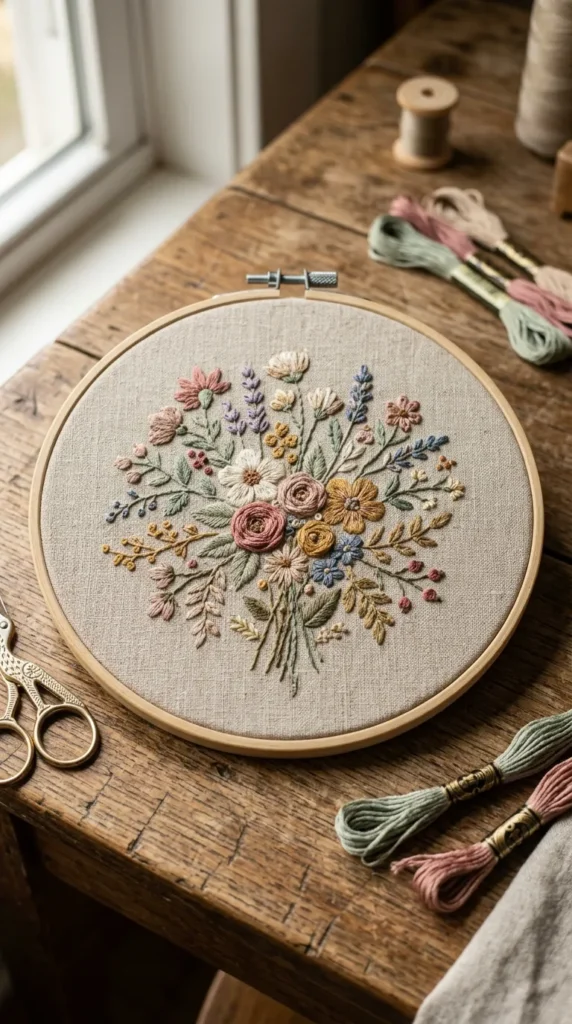
Vintage floral design uses soft colors like faded pink and green. It feels classic and calm.
Use small repeating flower shapes for pattern work.
This design works well for home decor items.
21. Pastel Bouquet Design
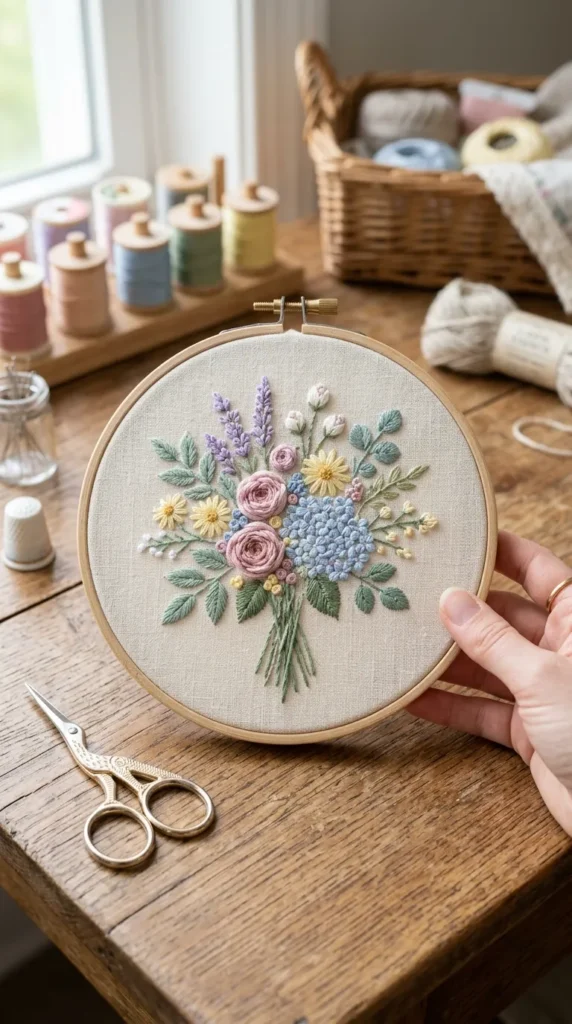
Pastel bouquet embroidery uses soft colors arranged like a small bunch of flowers.
Combine small roses, daisies, and leaves in one cluster.
It is easy to customize and beginner-friendly.
22. Single Stem Elegant Flower
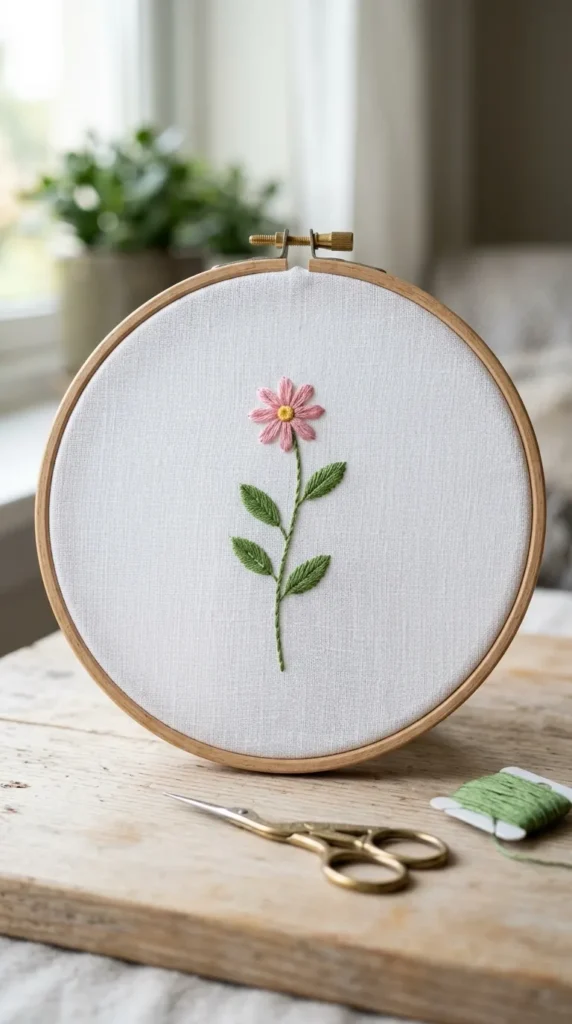
A single stem flower uses one flower on a long stem. It feels clean and simple.
Use straight stitches for stem and a small flower at the top.
This design is quick and uses very little thread.
23. Corner Floral Accent
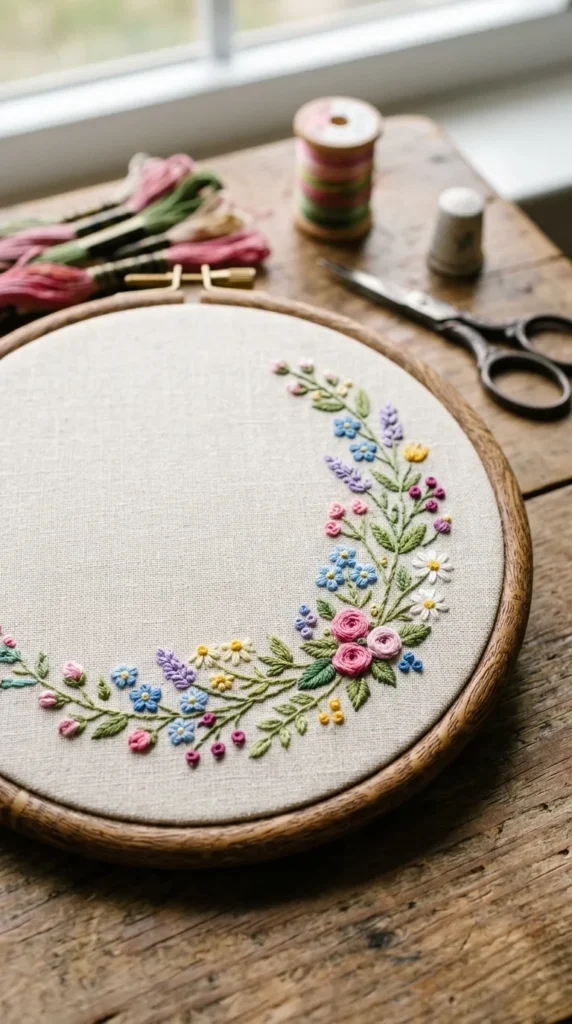
Corner floral accents decorate fabric edges. They use small clusters of flowers in one corner.
Start with leaves, then add flowers in layers.
This design works well for napkins and clothing corners.
Conclusion
Hand embroidery flower designs give a simple way to create handmade fabric art with small tools and low cost. Each pattern in this list offers a different style, from soft rose outlines to mixed meadow clusters. With basic stitches and a bit of practice, plain fabric turns into detailed floral work that feels personal and handmade. Try one design at a time and build comfort slowly.