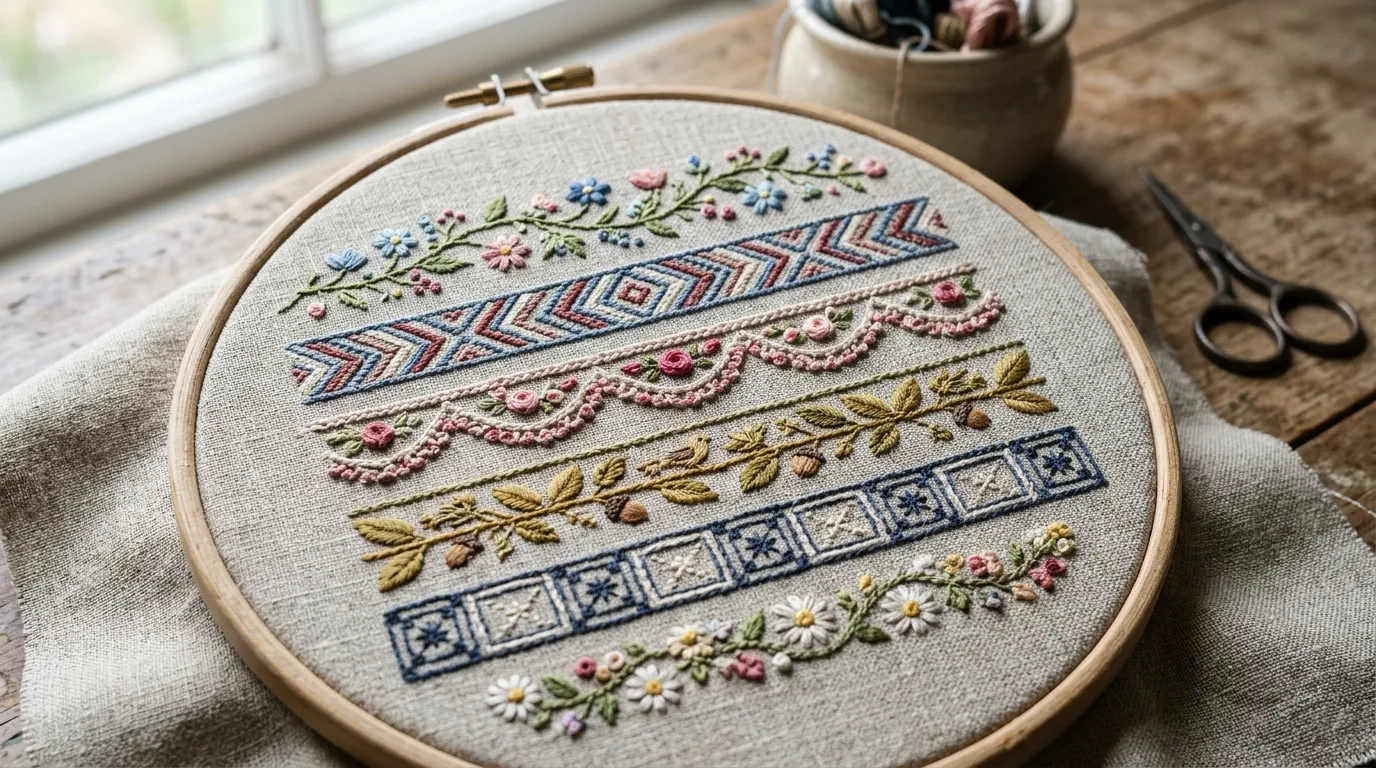
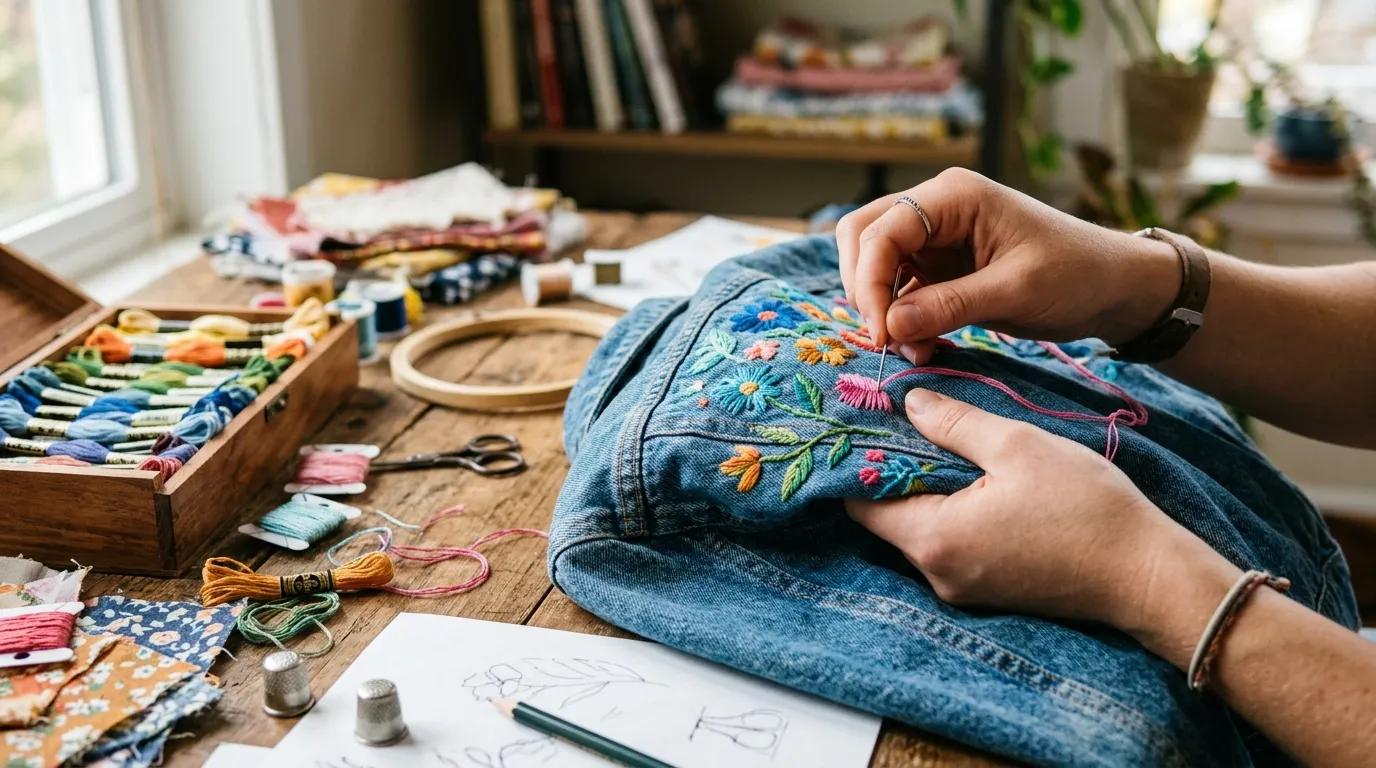
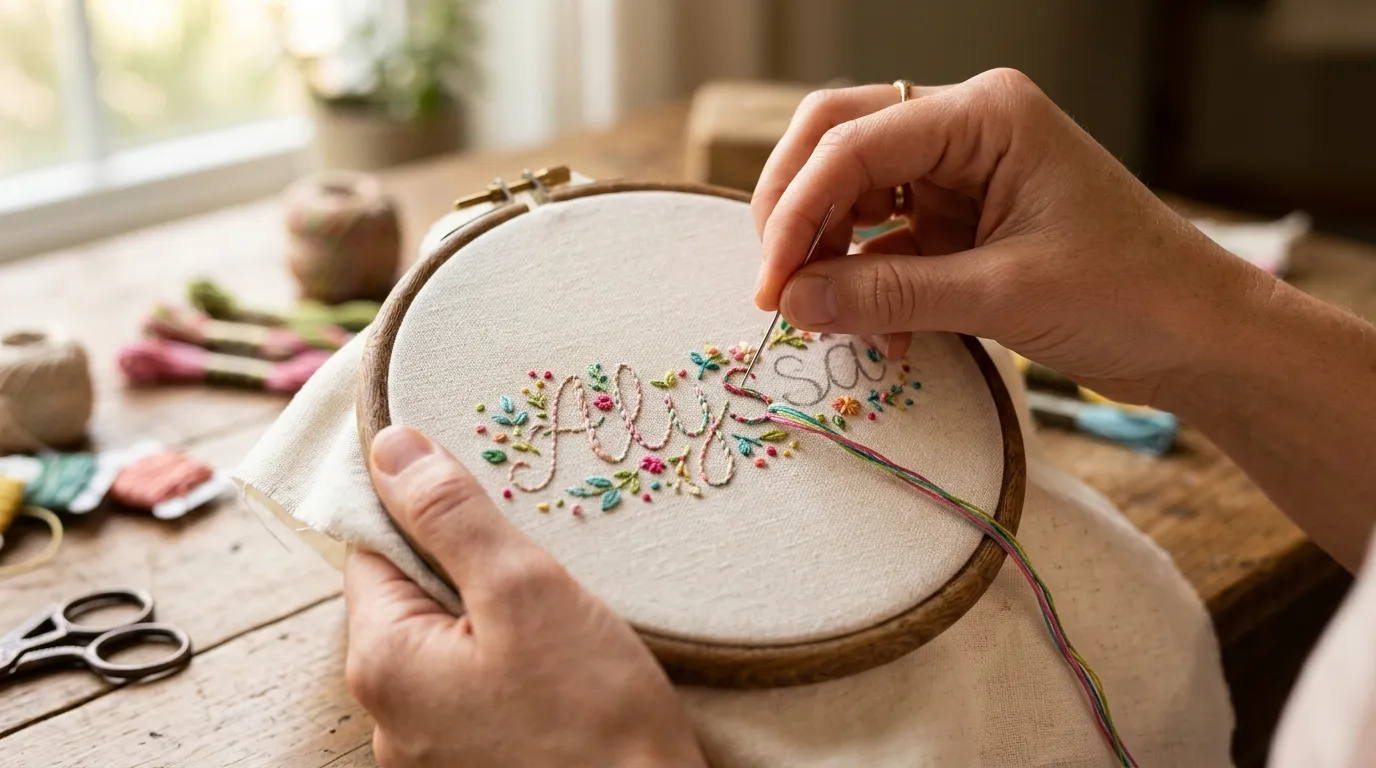
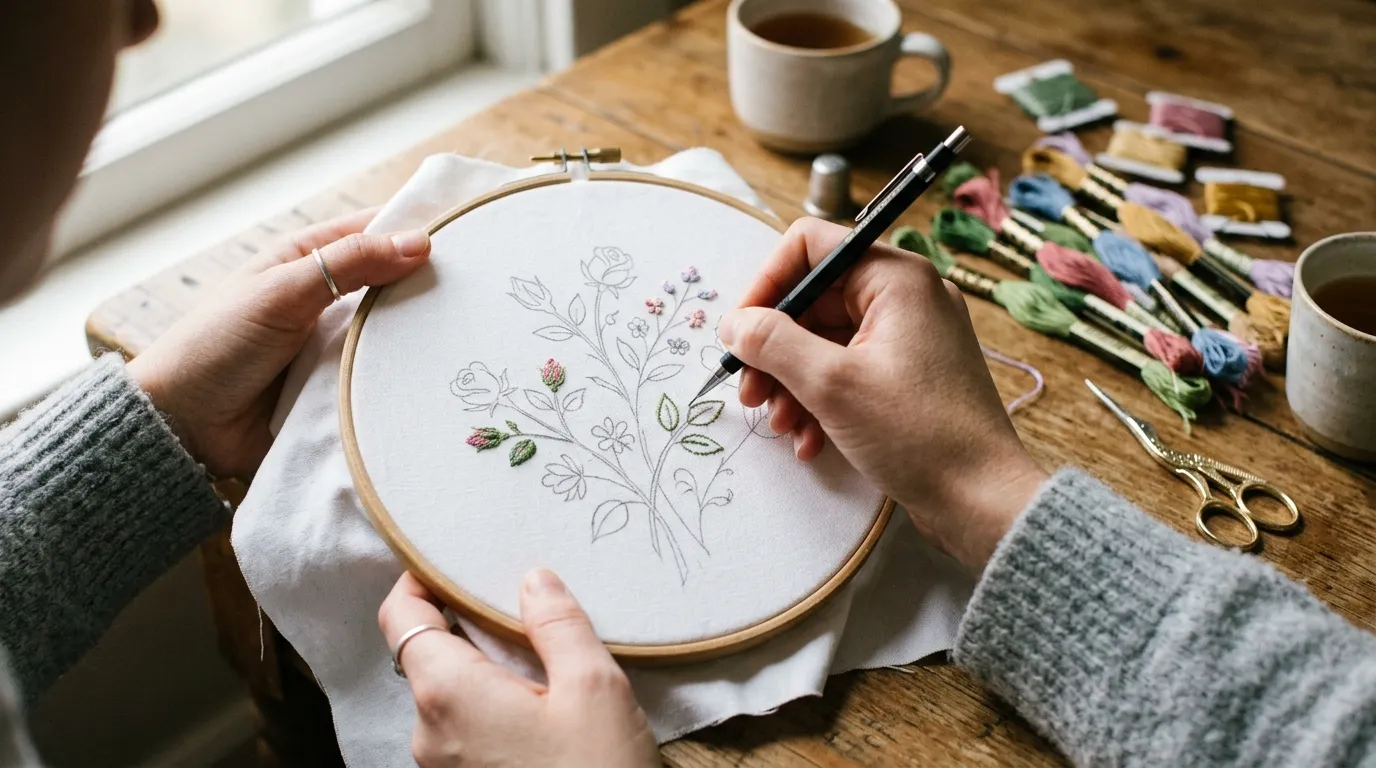

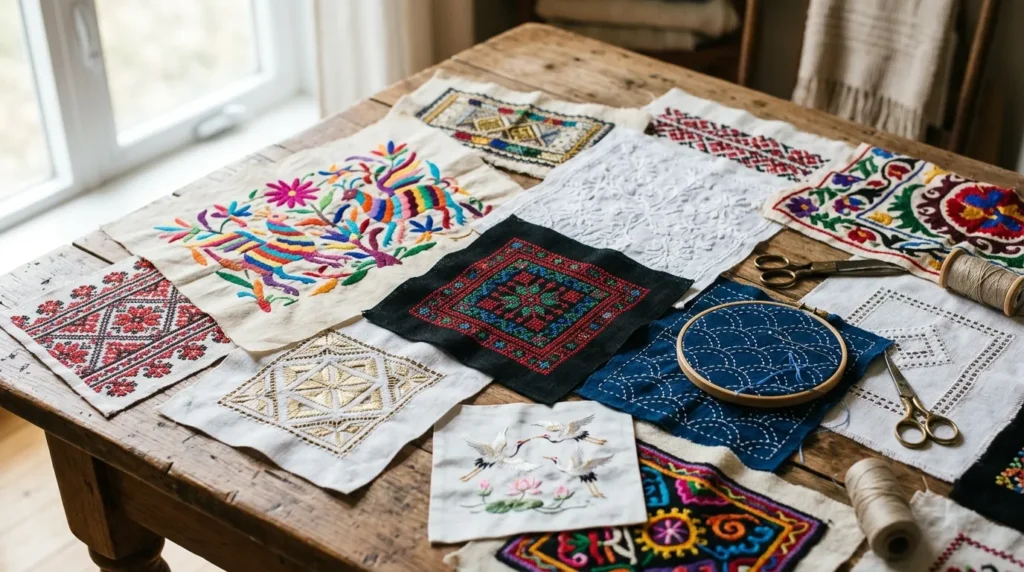
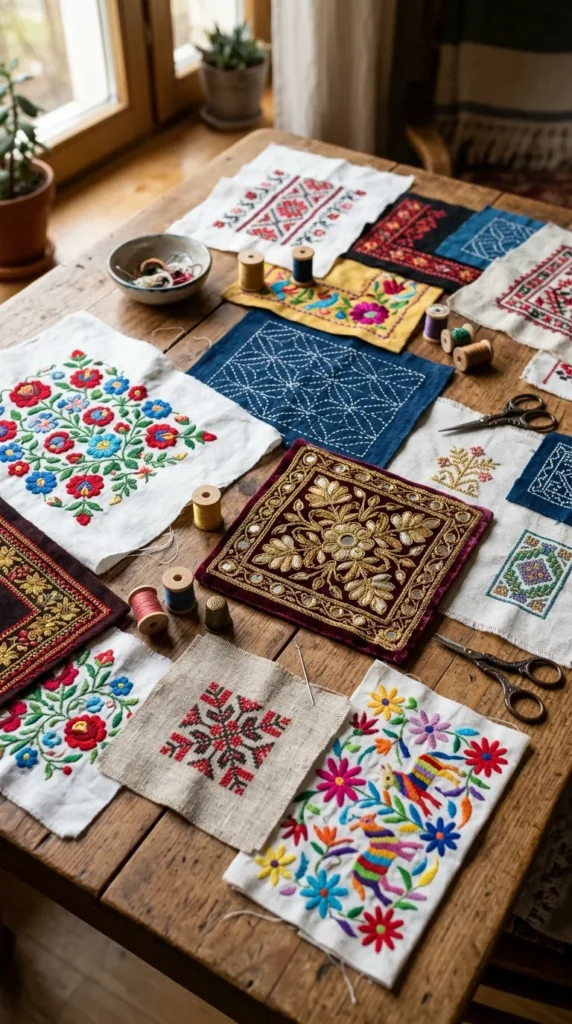
Hand embroidery carries stories from many cultures, passed through generations using simple tools like needle, thread, and cloth. Each region developed its own patterns, colors, and stitching styles shaped by daily life, festivals, and local materials. Today, these designs are widely used in clothing, home decor, and DIY crafts. This guide presents a wide range of traditional embroidery styles you can try at home. Each idea stays simple, affordable, and beginner-friendly, while still reflecting deep cultural roots and artistic expression.
1. Phulkari Floral Grid Embroidery
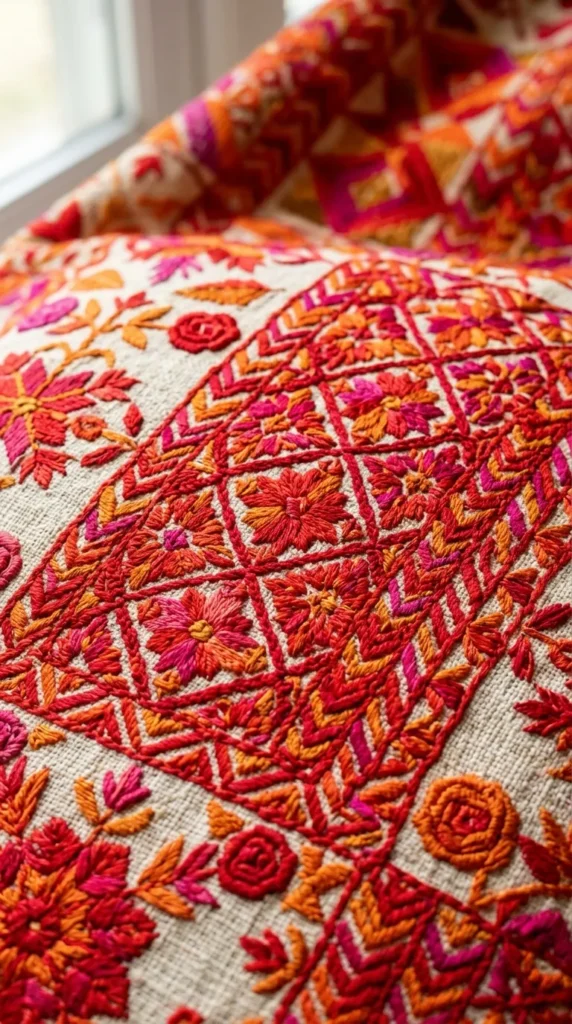
Phulkari comes from Punjab and is known for bold floral patterns stitched in colorful thread. The base cloth is usually simple cotton, often light or neutral in color. The design builds slowly with repeated geometric flower shapes. You can start with small handkerchief-sized fabric to practice.
Use basic embroidery floss in bright colors. Red, orange, and pink are common choices. A simple running stitch and darning stitch work well here. Keep patterns spaced evenly so the grid effect shows clearly.
For a budget setup, recycled cotton cloth works fine. Even old dupattas or shirts can be reused. Mark small grid dots with chalk before stitching. This helps keep symmetry without extra tools.
Phulkari looks rich but is very beginner-friendly. With patience and steady stitching, even simple grids turn into vibrant cultural art.
2. Kashmiri Sozni Needlework
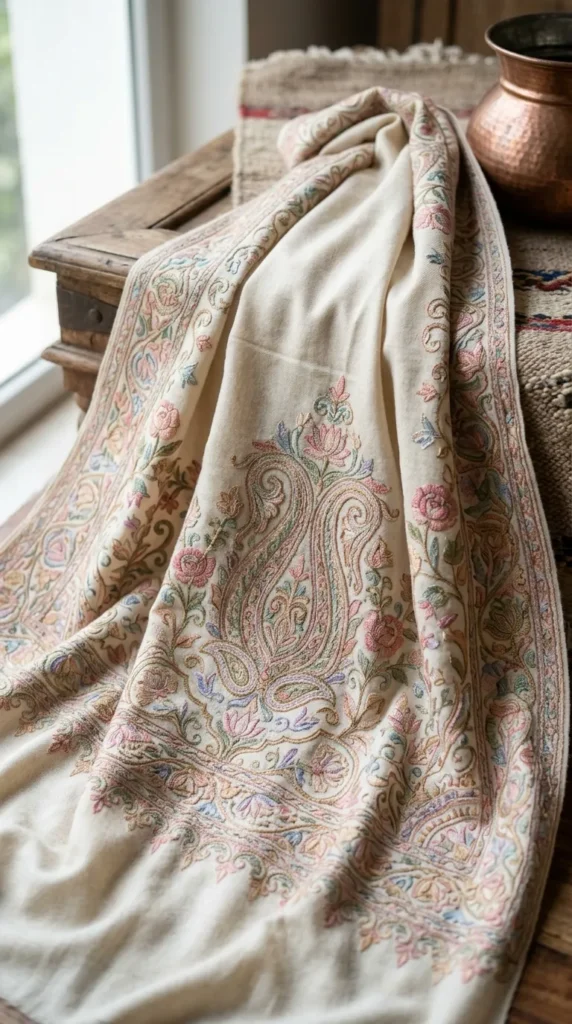
Sozni embroidery from Kashmir focuses on fine, delicate floral and paisley patterns. It is usually done on wool shawls or fine pashmina-style fabric. The stitches are very detailed and closely packed.
Start with soft wool or cotton cloth. Use thin embroidery thread in soft shades like cream, light green, and pale blue. Simple stem stitch and satin stitch are commonly used.
Begin with small motifs such as leaves or tiny flowers. Practice slow stitching because precision matters more than speed. Keep patterns light and flowing rather than heavy.
For a low-cost approach, use plain wool scarves from local markets. Practice designs on small fabric corners first. Transfer patterns using pencil outlines.
Sozni embroidery is calm and detailed, perfect for slow, relaxing craft sessions.
3. Chikankari White Thread Art
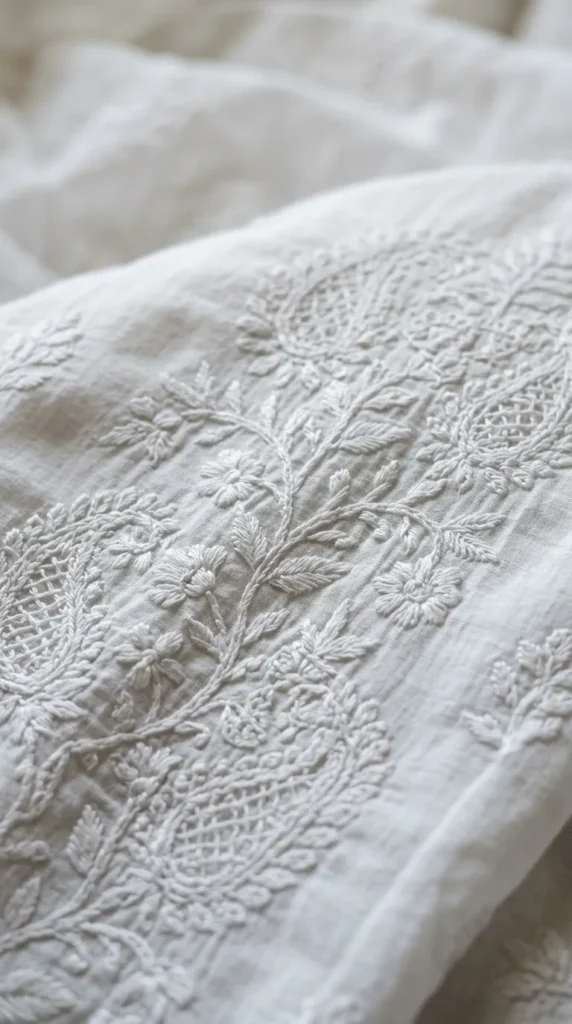
Chikankari from Lucknow uses white thread on light cotton fabric. The designs feel soft and airy, often floral or vine-based. It works best on breathable fabrics like muslin or cotton.
Start with simple outlines drawn lightly on fabric. Use white embroidery thread and a thin needle. Basic stitches like backstitch and chain stitch form the foundation.
Keep designs spaced so the fabric remains light. Small floral clusters are easier for beginners. Avoid heavy filling at first.
Budget-friendly option: plain cotton bedsheets or dupattas can be reused. Fabric markers or pencil can help with sketching patterns.
Chikankari suits summer clothing and home textiles. It creates a clean and calm visual style using simple materials.
4. Kantha Running Stitch Layers
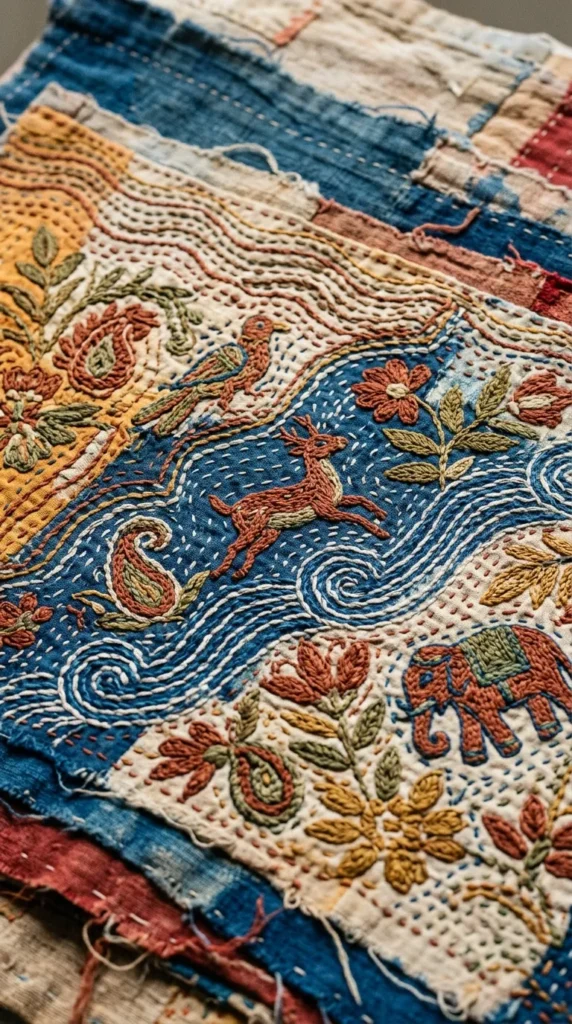
Kantha embroidery comes from Bengal and uses a simple running stitch repeated across fabric layers. It often tells stories through patterns like animals, flowers, and daily life scenes.
Start with old cotton saris or fabric scraps layered together. Use contrasting thread colors like red, black, or yellow.
Sketch simple outlines before stitching. Then fill shapes using continuous running stitches. Keep spacing even for a neat look.
This style is highly budget-friendly because it reuses old cloth. Even leftover thread pieces can be used creatively.
Kantha work feels relaxed and expressive. It allows freehand storytelling through stitching without strict rules.
5. Zardozi Metallic Thread Work
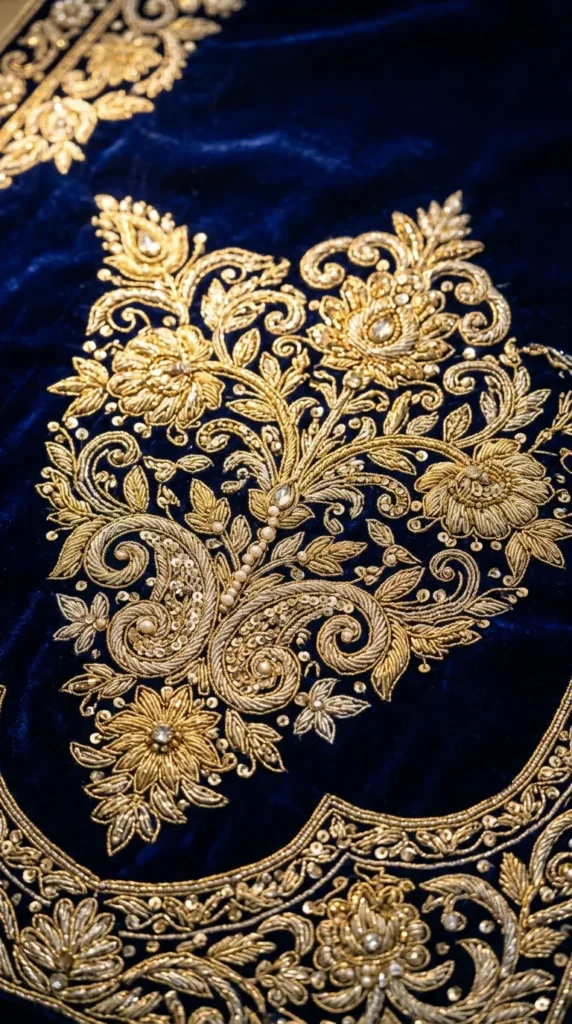
Zardozi embroidery is known for rich metallic thread work used on velvet or silk. It often appears on festive clothing and decorative textiles.
Begin with thick fabric like velvet or heavy cotton. Use gold or silver threads along with beads if available.
Basic outline stitching helps define shapes like flowers or leaves. Then fill patterns with dense metallic stitches.
For beginners, small patches are easier than full garments. Try decorating collars or fabric corners.
A budget version can use metallic embroidery floss instead of real zari threads.
Zardozi gives a rich surface texture even with simple patterns.
6. Rabari Mirror Stitch Art
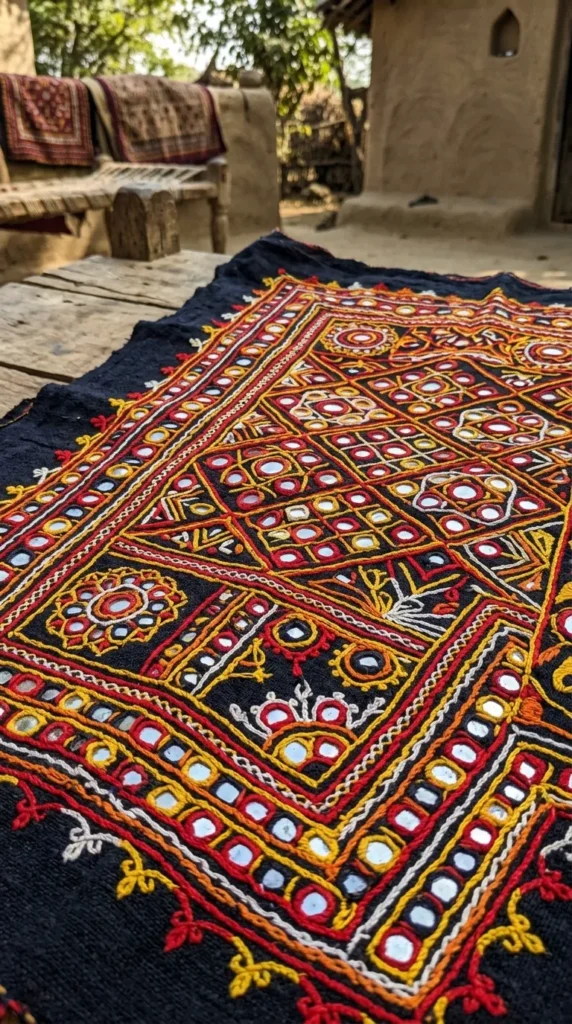
Rabari embroidery from Gujarat includes mirrors stitched into colorful geometric patterns. The mirrors reflect light and add visual sparkle.
Start with dark cotton fabric so colors stand out. Use bright threads like red, yellow, and white.
Small round mirrors can be stitched using tight thread loops. Simple geometric shapes like diamonds and triangles are common.
Budget tip: broken mirror craft pieces or small craft mirrors are enough. Old clothing can be reused as base fabric.
Rabari designs are bold and expressive, often arranged in repeating patterns across fabric.
7. Banjara Bead and Thread Work
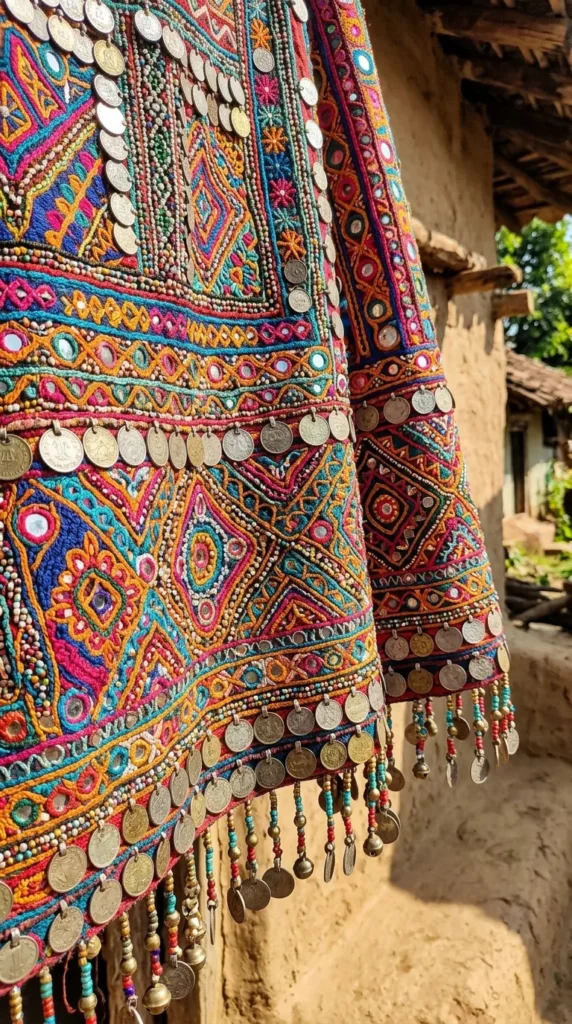
Banjara embroidery uses beads, coins, and thick thread patterns. It comes from nomadic communities with vibrant visual style.
Start with sturdy fabric like cotton canvas. Add beads slowly into stitched patterns.
Use bright colors and mix thread types for texture variation. Simple zigzag and diamond patterns work well.
Budget option: recycled beads from old jewelry can be reused.
This style feels lively and decorative, often used on bags and accessories.
8. Suzani Central Asian Floral Art
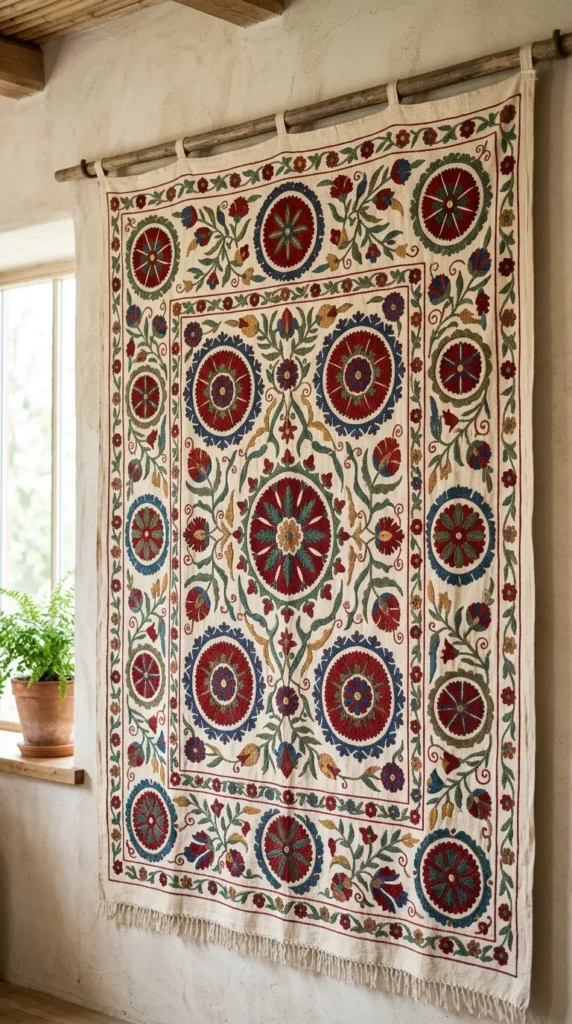
Suzani embroidery features large floral and sun-like motifs. It comes from Central Asian textile traditions.
Start with cotton or linen fabric. Draw large circular flower patterns.
Use satin stitch for filling petals. Keep color combinations bold and clear.
Affordable materials like cotton sheets work well.
Suzani designs are large and expressive, ideal for wall hangings.
9. Japanese Sashiko Stitching
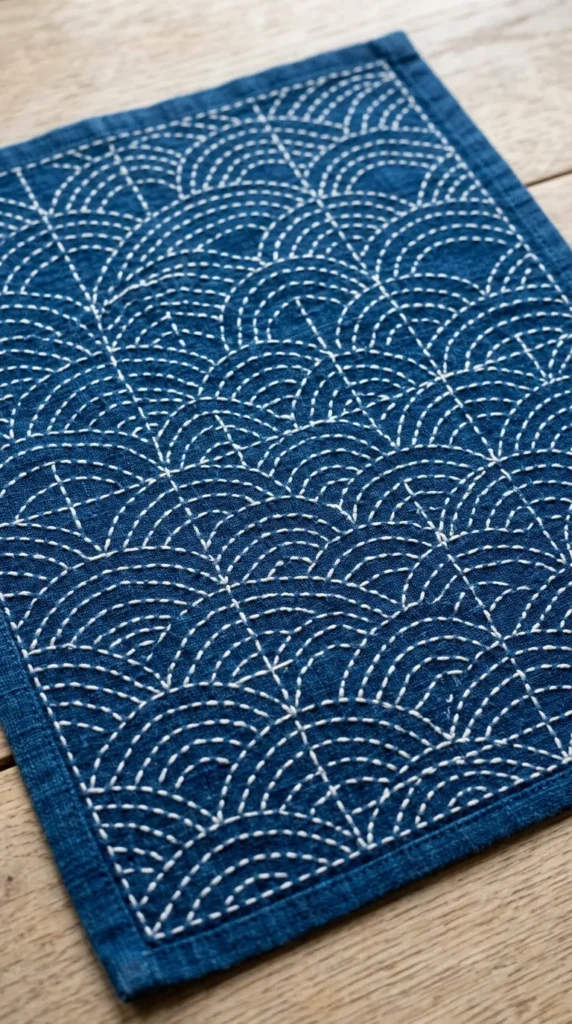
Sashiko uses simple running stitches on indigo fabric. It creates repeating geometric patterns like waves and grids.
Start with dark denim or indigo cotton. Use white thread for contrast.
Mark grid lines lightly before stitching. Keep stitch length even.
Budget-friendly: old jeans or fabric scraps are perfect.
Sashiko is practical and decorative at the same time.
10. Chinese Silk Embroidery Patterns
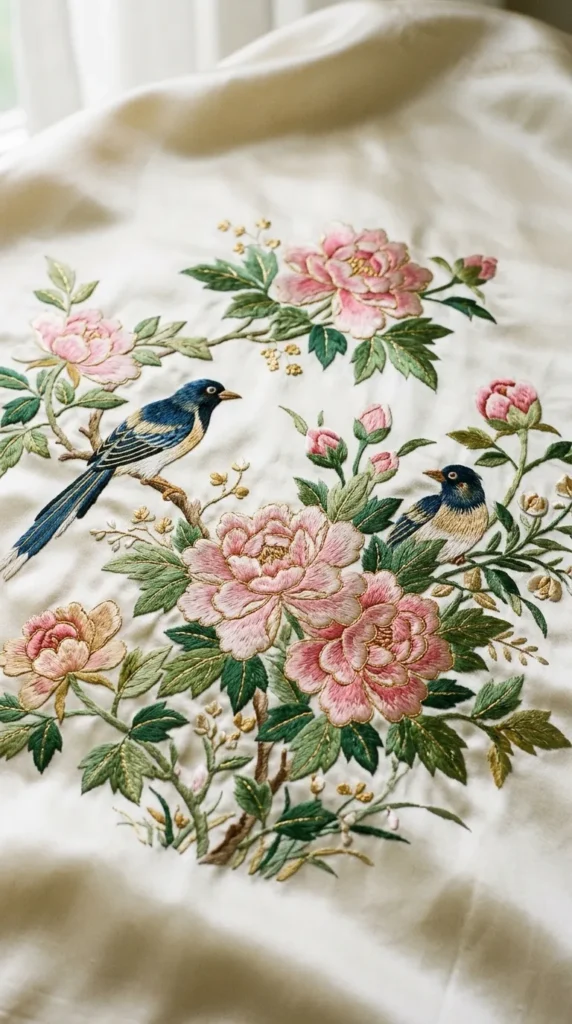
Chinese embroidery uses silk threads with detailed nature-inspired motifs like flowers and birds.
Start with silk or smooth cotton. Use thin needles for precision.
Practice small motifs first. Satin stitch helps create smooth fills.
Affordable silk-like fabric alternatives can be used.
This style focuses on fine detailing and smooth surfaces.
11. Mexican Otomi Embroidery
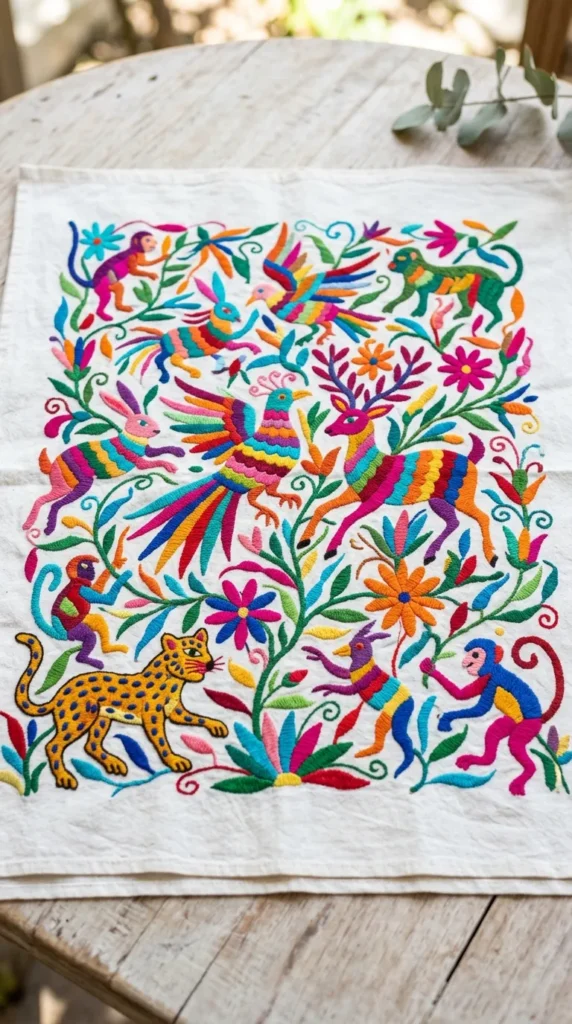
Otomi embroidery from Mexico shows animals and plants in bright colors. Designs are playful and symbolic.
Start with white cotton fabric. Sketch simple animal shapes.
Use bold thread colors like pink, blue, and orange.
Budget tip: simple cotton shirts or pillow covers can be used.
Otomi work feels expressive and lively.
12. Peruvian Andean Motifs
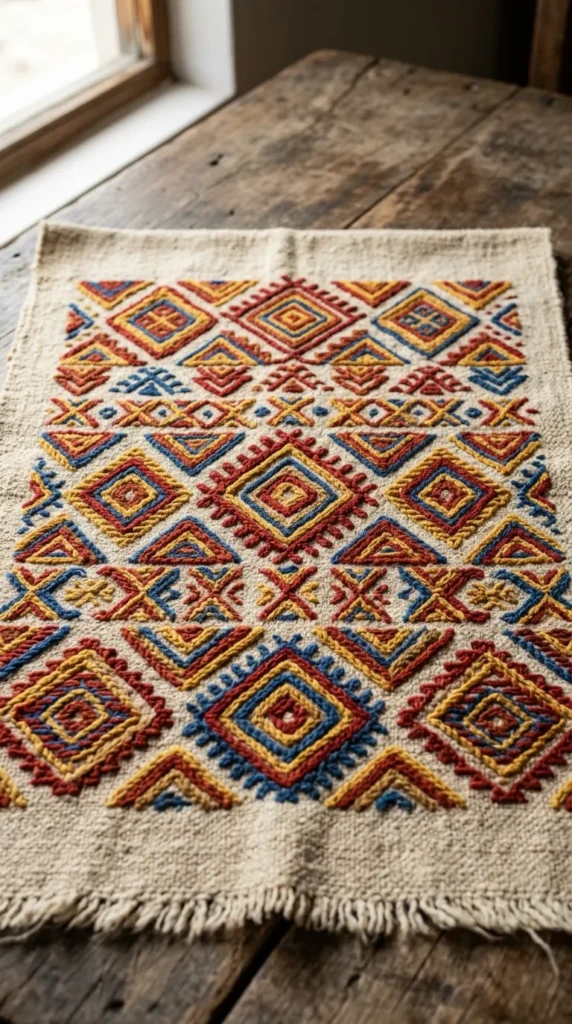
Andean embroidery uses strong geometric shapes inspired by mountains and nature.
Start with woven cotton or wool fabric. Use bold thread colors.
Keep patterns repetitive and structured.
Recycled wool garments work well for practice.
Designs feel structured and symbolic.
13. Hungarian Kalocsa Floral Work
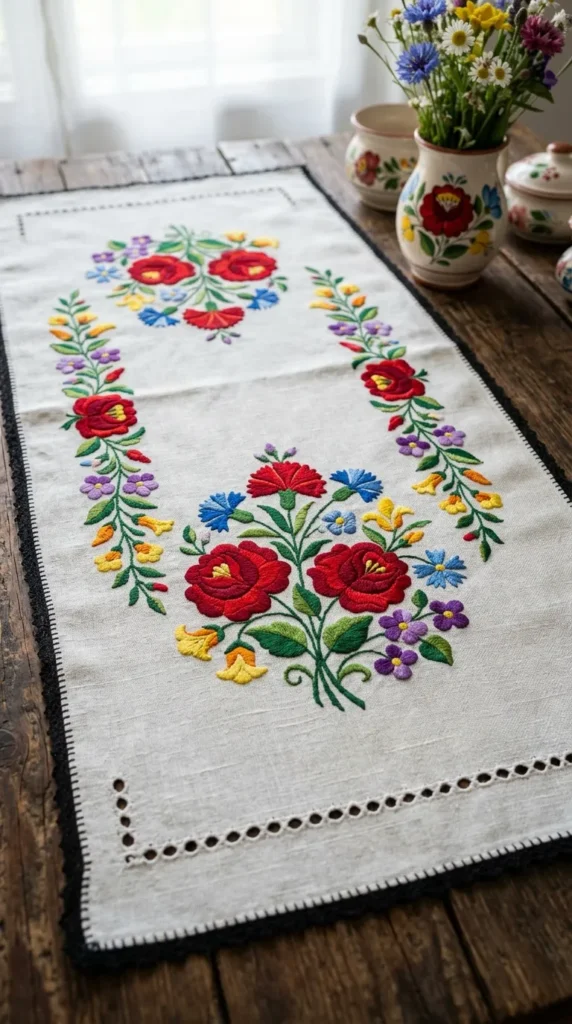
Kalocsa embroidery features bright floral arrangements.
Start with white cotton fabric. Draw floral clusters.
Use satin stitch for petals.
Budget option: cotton napkins or cloth pieces.
Patterns are colorful and decorative.
14. Ukrainian Vyshyvanka Stitch Patterns
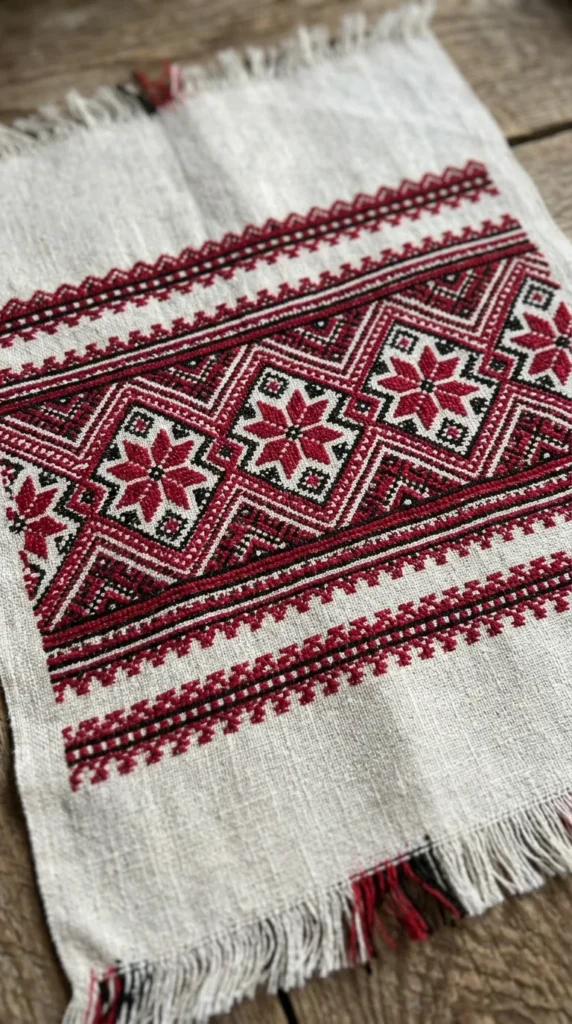
Vyshyvanka uses red and black geometric symbols.
Start with white linen. Use counted stitches for structure.
Keep patterns symmetrical.
Old linen cloth works well.
Designs carry structured visual rhythm.
15. Palestinian Tatreez Stitch Art
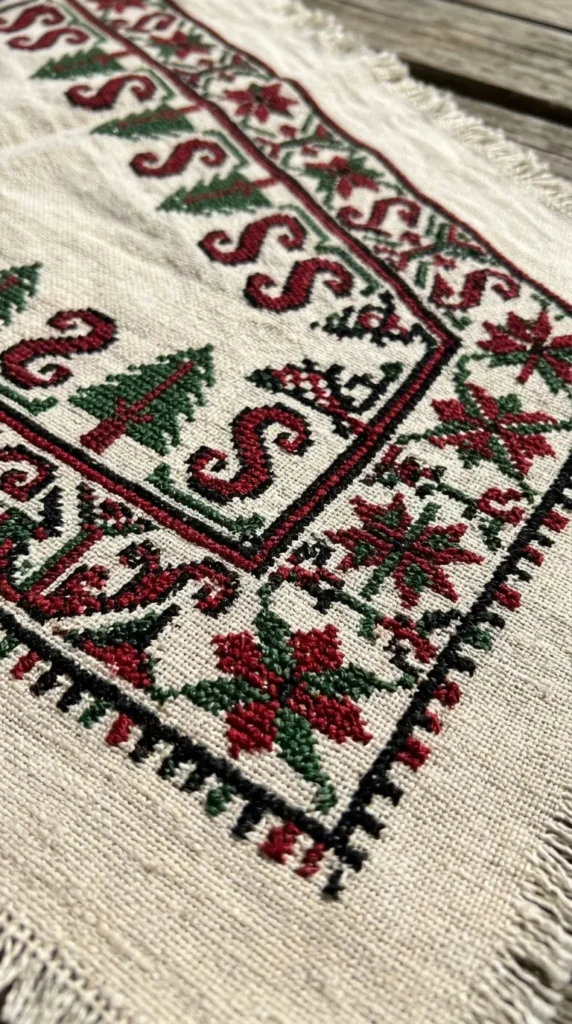
Tatreez uses symbolic geometric patterns.
Start with cotton fabric. Draw repeating shapes.
Use cross-stitch style filling.
Budget-friendly fabric scraps are enough.
Patterns often repeat in bands.
16. Persian Floral Embroidery
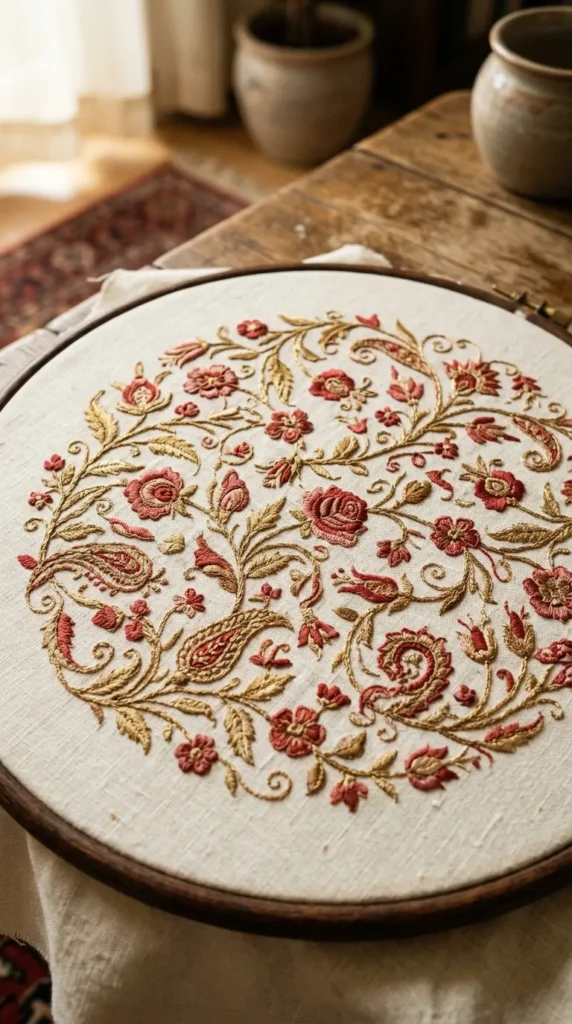
Persian embroidery focuses on flowing floral vines.
Start with light fabric. Sketch curved plant forms.
Use satin stitch for smooth fills.
Simple cotton cloth works well.
Designs feel soft and curved.
17. African Kuba Cloth Stitch Work
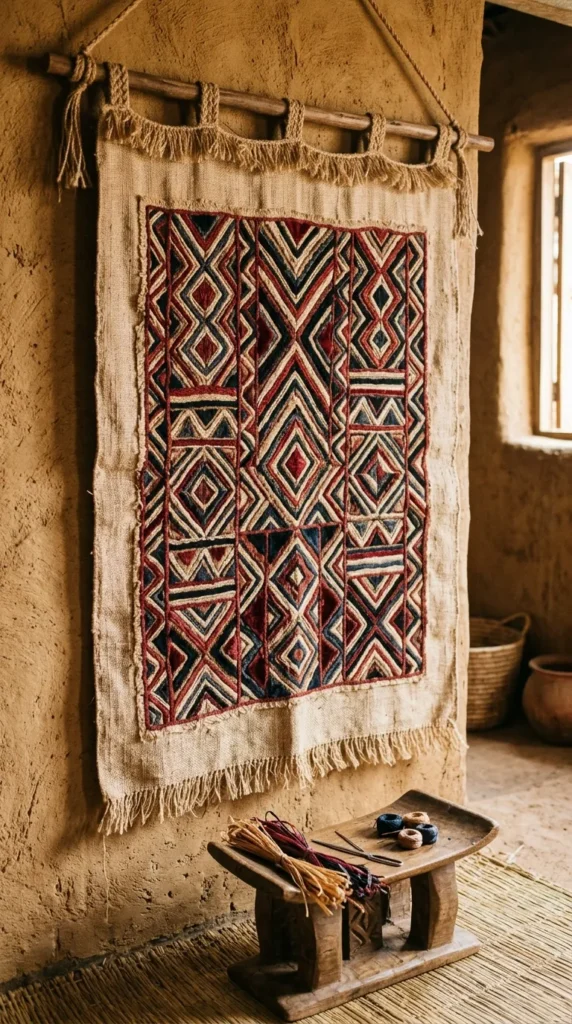
Kuba-inspired designs use bold geometric patterns.
Start with natural fiber fabric. Use thick thread.
Create repeated shapes.
Recycled sack cloth works.
Patterns feel strong and structured.
18. Thai Hill Tribe Embroidery
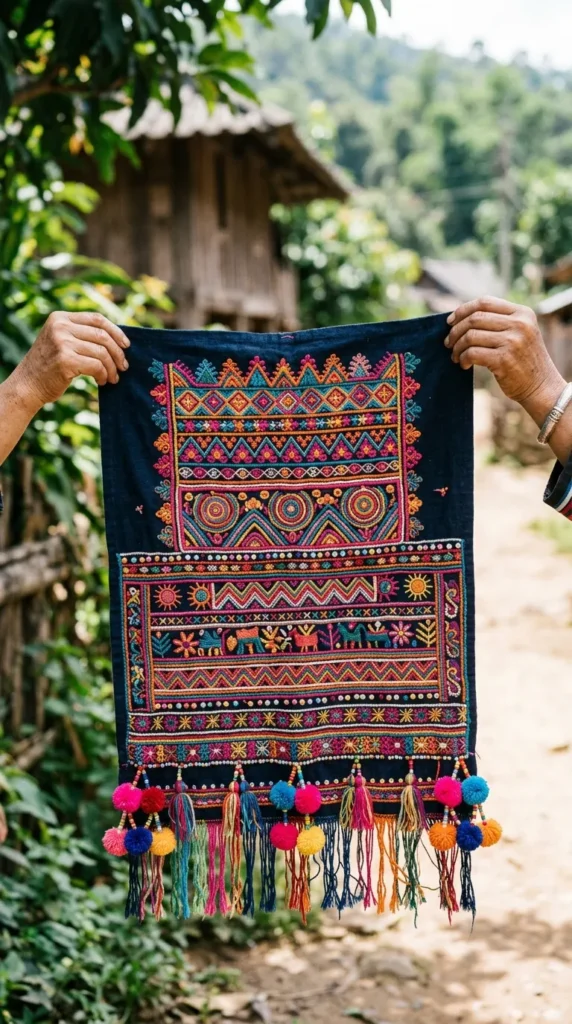
This style uses layered patterns and bright threads.
Start with dark cotton fabric.
Use multiple thread colors.
Simple zigzags and stripes work.
Budget materials include scrap cloth.
19. Indonesian Floral Stitch Art
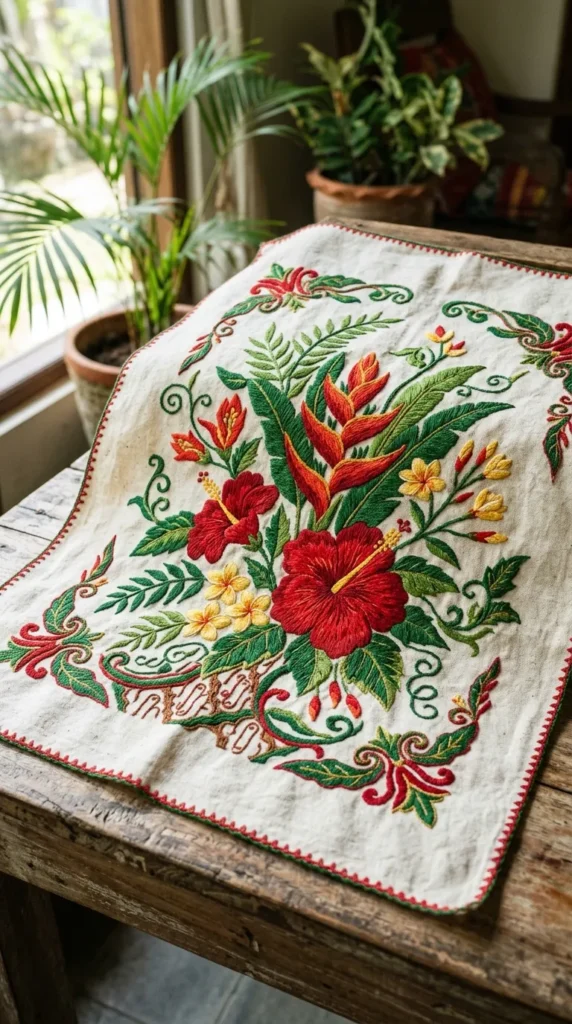
Indonesian embroidery often features tropical flowers.
Start with cotton fabric. Sketch flower outlines.
Use satin stitch for petals.
Old fabric pieces are suitable.
Designs feel lively and natural.
20. Spanish Floral Embroidery
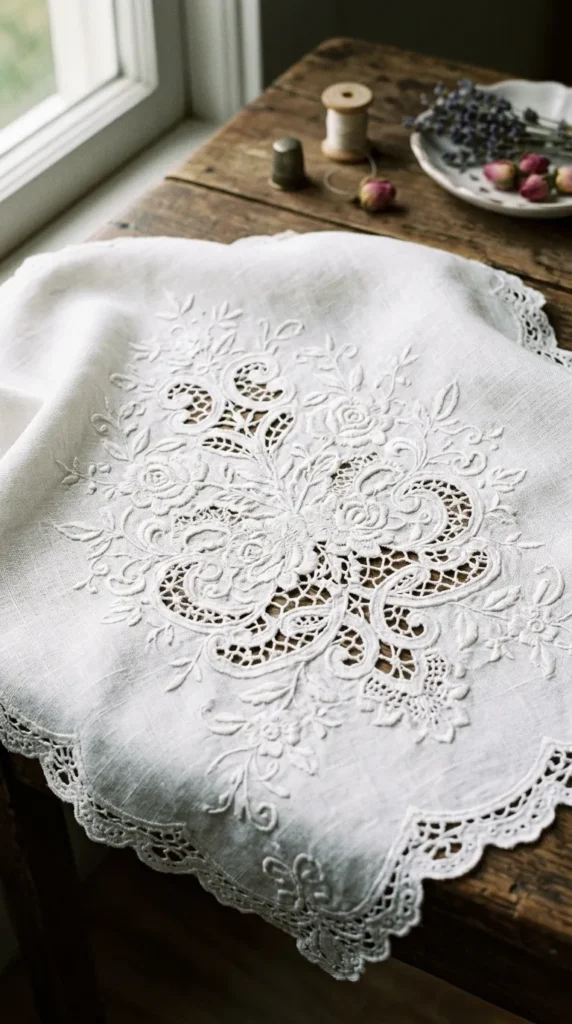
Spanish embroidery includes floral lace patterns.
Start with white cotton or linen.
Use fine thread for detail.
Old tablecloths can be reused.
Designs feel light and decorative.
21. Turkish Ottoman Stitch Art
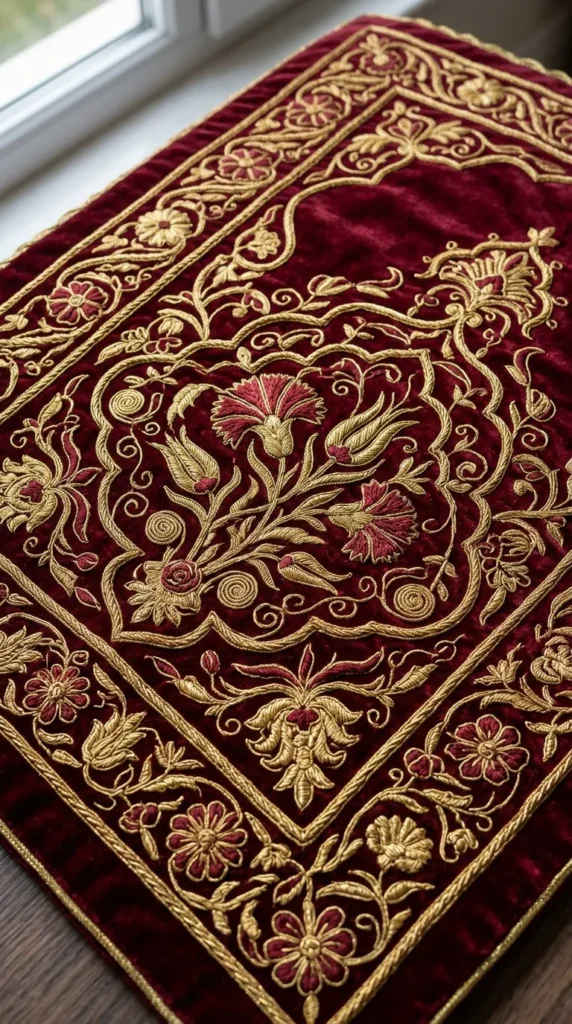
Ottoman embroidery uses rich floral motifs.
Start with velvet or cotton.
Use metallic thread accents.
Simple floral outlines are enough.
Patterns feel decorative and detailed.
22. Greek Island Embroidery
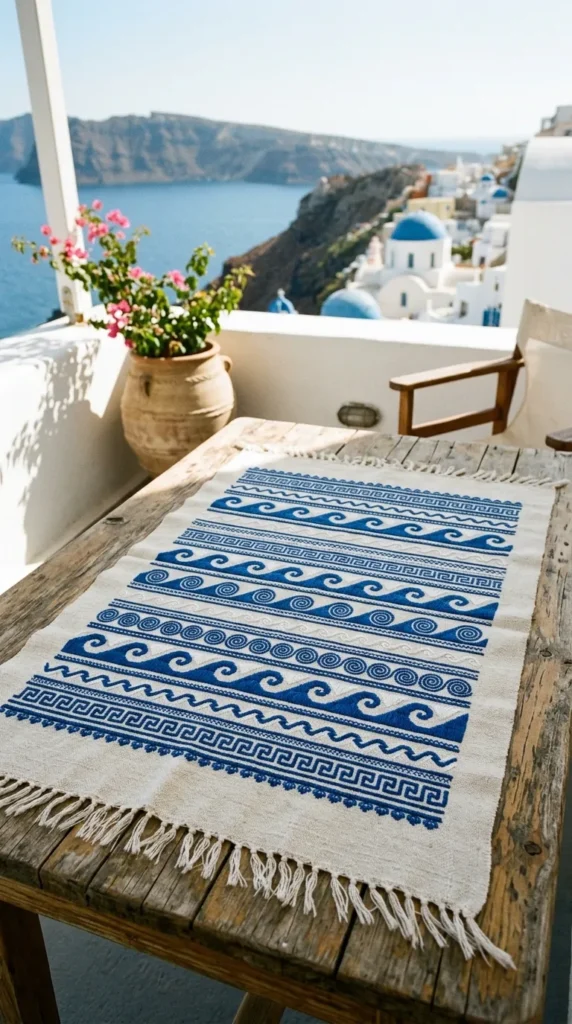
Greek embroidery uses wave and geometric motifs.
Start with cotton fabric. Use blue thread.
Repeat wave shapes.
Old shirts or cloth work well.
Designs feel calm and rhythmic.
23. Moroccan Geometric Stitch Art
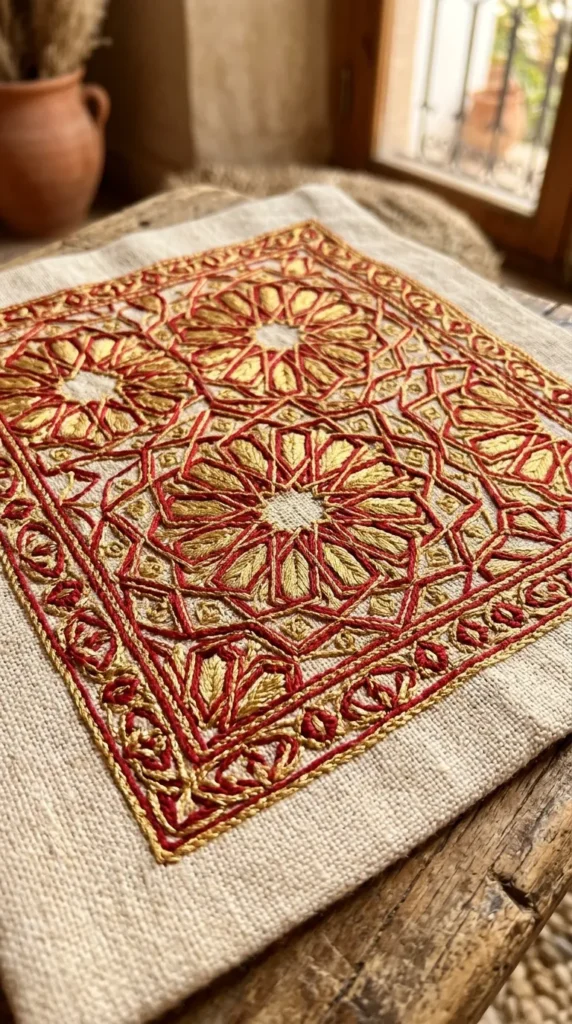
Moroccan embroidery features star-like geometry.
Start with cotton or linen.
Use repeated angular shapes.
Recycled fabric works fine.
Patterns feel structured and bold.
24. Native-Inspired Bead Stitch Work
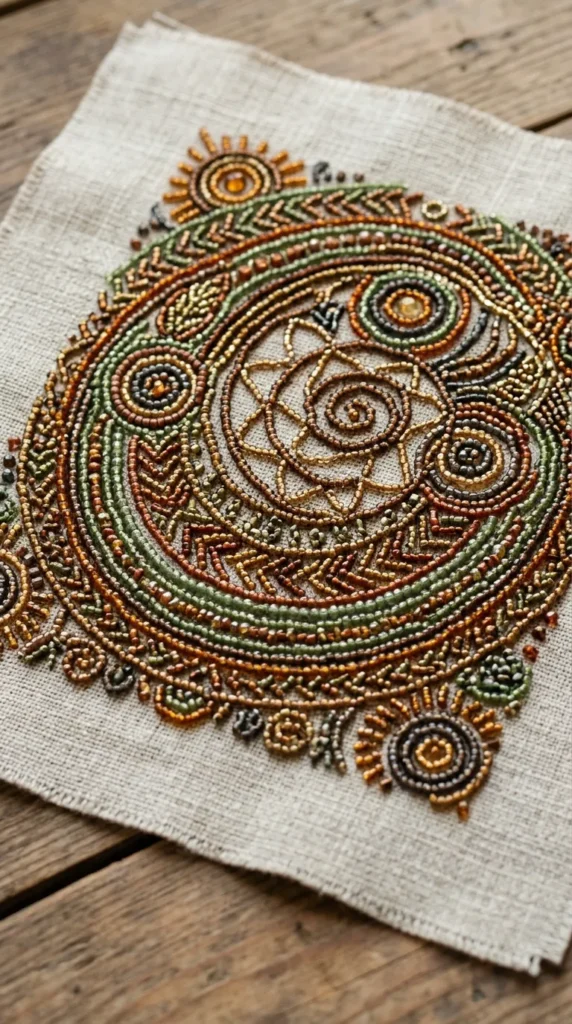
This style uses beads to form symbolic patterns.
Start with strong fabric base.
Stitch beads slowly into shapes.
Old beads from accessories can be reused.
Designs feel textured and expressive.
25. Indian Aari Chain Stitch Embroidery
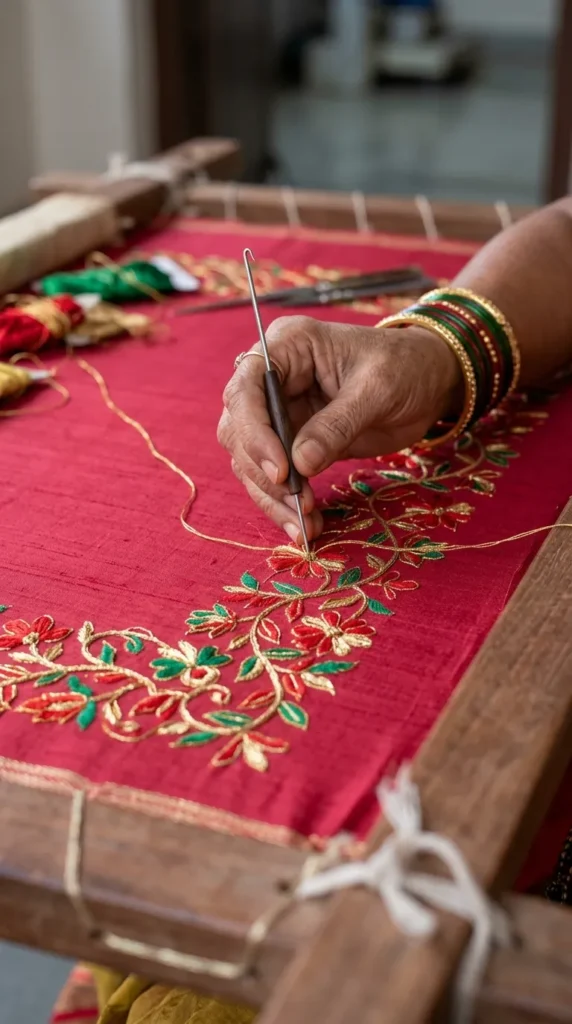
Aari embroidery from India uses a hooked needle to create smooth chain-like stitches. It is often seen on festive clothing and decorative fabric panels. The patterns usually include floral vines, paisley shapes, and curved borders.
Start with silk, cotton, or blended fabric. Stretch the fabric on a hoop to keep it steady. Use a simple chain stitch tool or fine needle if a hook tool is not available.
Begin with light pencil outlines of flowers or leaves. Then fill shapes using continuous chain stitches. Keep spacing even so the design looks clean.
For a budget-friendly setup, plain cotton fabric and basic embroidery thread work well. You can also practice on old scarves or dupattas.
Aari work looks detailed but becomes easier with practice. Small floral borders are a good starting point for beginners who want steady hand control.
26. Pakistani Mirror Border Embroidery
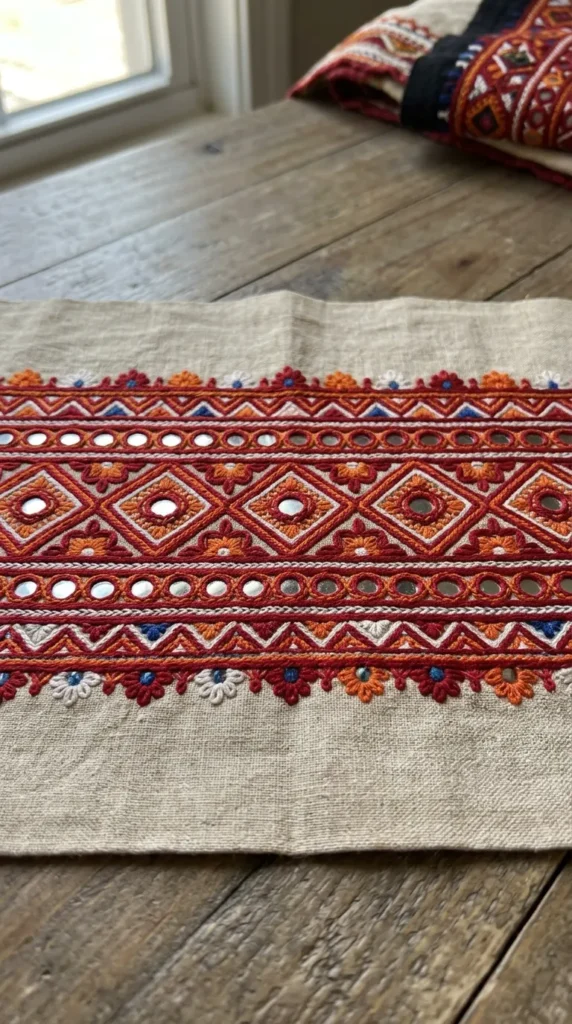
This embroidery style uses small mirrors stitched into fabric borders with bright thread patterns. It is commonly used in rural textile crafts and festive garments.
Start with cotton fabric, preferably in dark or medium tones. Use strong thread and small round mirrors.
Create simple border outlines first. Then stitch mirrors into the fabric using tight circular thread loops. Surround mirrors with geometric shapes like diamonds or triangles.
You can reuse broken mirror craft pieces or inexpensive decorative mirrors. Old clothes or fabric scraps can also be used as practice material.
This style works well on dupattas, bags, or cushion covers. Even simple border designs look vibrant once mirrors are added.
The key is balance—keep mirror spacing even so the pattern stays visually steady and easy on the eyes.
27. Cambodian Silk Thread Floral Art
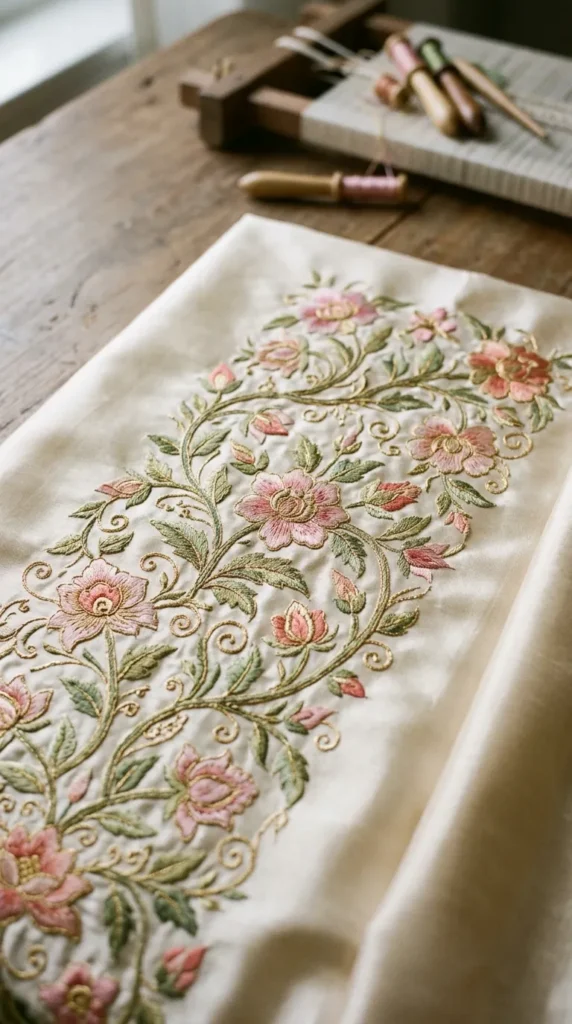
Cambodian embroidery often uses silk thread to create soft floral and nature-inspired designs. The patterns are light, flowing, and carefully spaced.
Start with smooth silk or satin-like fabric. Use thin needles and silk embroidery thread if available, or fine cotton thread as an alternative.
Sketch gentle flower outlines such as lotus or small blossoms. Then fill them using satin stitch or long and short stitch techniques.
For beginners, small flower clusters are easier than full fabric coverage. Practice slow stitching to maintain clean lines.
Budget option: satin fabric from local markets works well as a substitute for pure silk.
This embroidery style feels soft and elegant, perfect for scarves, small wall pieces, or decorative panels.
28. Indonesian Batik-Inspired Stitch Embroidery
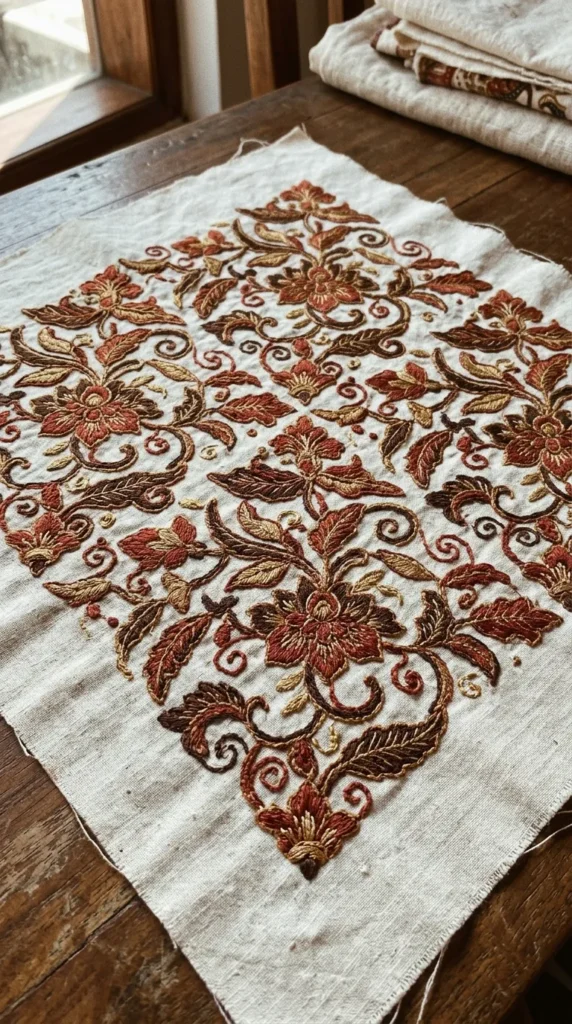
This embroidery style is inspired by batik patterns, featuring repeating floral and leaf shapes arranged in flowing patterns.
Start with cotton or linen fabric. Lightly sketch repeated motifs across the surface to form a continuous design.
Use earthy thread colors like brown, deep red, and gold tones. Simple backstitch and satin stitch combinations work well here.
Keep patterns evenly spaced so the repetition feels natural. Small motifs repeated across the fabric create a strong visual rhythm.
Budget-friendly materials include plain cotton cloth and leftover embroidery thread. Even fabric offcuts can be used for practice panels.
This style is perfect for home decor items like table runners or cushion covers, giving a traditional handcrafted look with simple tools.
Conclusion
Traditional hand embroidery carries meaning through thread, color, and pattern. Each design in this list offers a simple way to practice cultural craft at home using basic tools and low-cost materials. Small steps like reusing fabric, practicing basic stitches, and trying small motifs can help build confidence. Over time, these patterns turn into personal creative work that reflects both patience and expression.